|
Tamil Nadu Forest Department’s Project Nilgiri Tahr
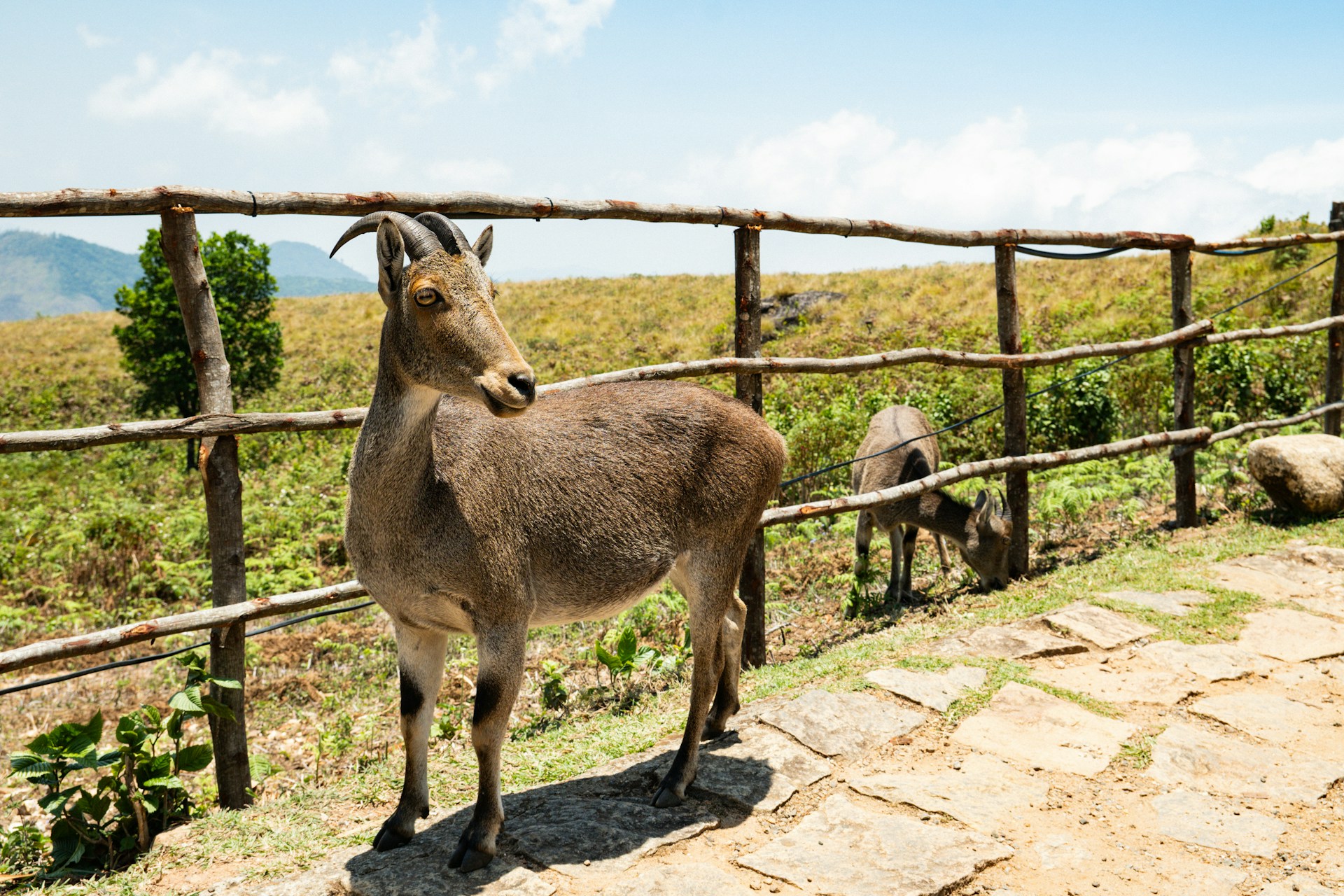
Tamil Nadu’s Nilgiri Tahr population records a steady rise as per the third synchronised population estimation conducted in April 2026. The synchronised estimation is conducted by the Tamil Nadu Forest Department under Project Nilgiri Tahr and covers 14 forest divisions.
Nilgiri Tahr (Project Nilgiri Tahr and Population Estimation 2026):
| Dimension | Key Details |
|---|---|
| Scientific name | Nilgiri Tahr is Nilgiritragus hylocrius. |
| Uniqueness in India | Nilgiri Tahr is the only mountain ungulate found exclusively in the Southern Western Ghats, amongst the 12 species present in India. |
| State animal and local name | Nilgiri Tahr is the state animal of Tamil Nadu and is also known as Varaiaadu in Tamil. |
| Historic mentions | Nilgiri Tahr is mentioned in Tamil Sangam literature, including Silappathigaaram and Seevagasinthamani. |
| Habitat preference | Nilgiri Tahr prefers high-altitude, sub-alpine, open montane grasslands and rocky cliffs, and avoids low-elevation forests. |
| Altitude range | Nilgiri Tahr is typically found between 1,200 and 2,600 meters above sea level. |
| Ecological role | Nilgiri Tahr plays a vital role in nutrient cycling in the high-altitude mountain ecosystem. |
| Distribution | Nilgiri Tahr is primarily found in Tamil Nadu and Kerala, and its distribution stretches from the southern tip of Kanyakumari to the Nilgiri Hills in the north. |
| Fragmented distribution | As per the third estimation report, Nilgiri Tahr no longer exists in a continuous range and survives in scattered populations across suitable habitats. |
| Diet | Nilgiri Tahr is herbivorous and primarily grazes on grasses, shrubs, and other vegetation in its high-altitude environment. |
| Important day | October 7 is Nilgiri Tahr Day in Tamil Nadu. |
| Conservation status | Nilgiri Tahr is listed as Endangered by the IUCN and is in Schedule I of the Wildlife (Protection) Act, 1972. |
| Conducting authority and programme | Synchronised population estimation is conducted by the Tamil Nadu Forest Department under Project Nilgiri Tahr. |
| Estimation dates and coverage | The synchronised population estimation has been conducted from April 24–27, 2026, and covers 14 forest divisions. |
| Population estimates by year | Tamil Nadu records 1,031 individuals in 2024, 1,303 individuals in 2025, and 1,364 individuals in 2026. |
| Confidence interval | The 2026 results carry a 95% confidence interval of 869 to 2,465 individuals. |
| Growth rate | The population shows a 4.68% increase over 2025 and a 32% rise since 2024. |
| Geographic distribution in Tamil Nadu | The Anamalai Hills hold 44.87% of the total Nilgiri Tahr population in Tamil Nadu, and the Nilgiris landscape holds 29.25%. |
| Age and sex composition | Age and sex composition comprises adult females 38.4%; adult males 34.6% with a ratio of 55:100; yearlings 15.5%; young animals 11.5%. |