|
Ground-Level Ozone in Troposphere
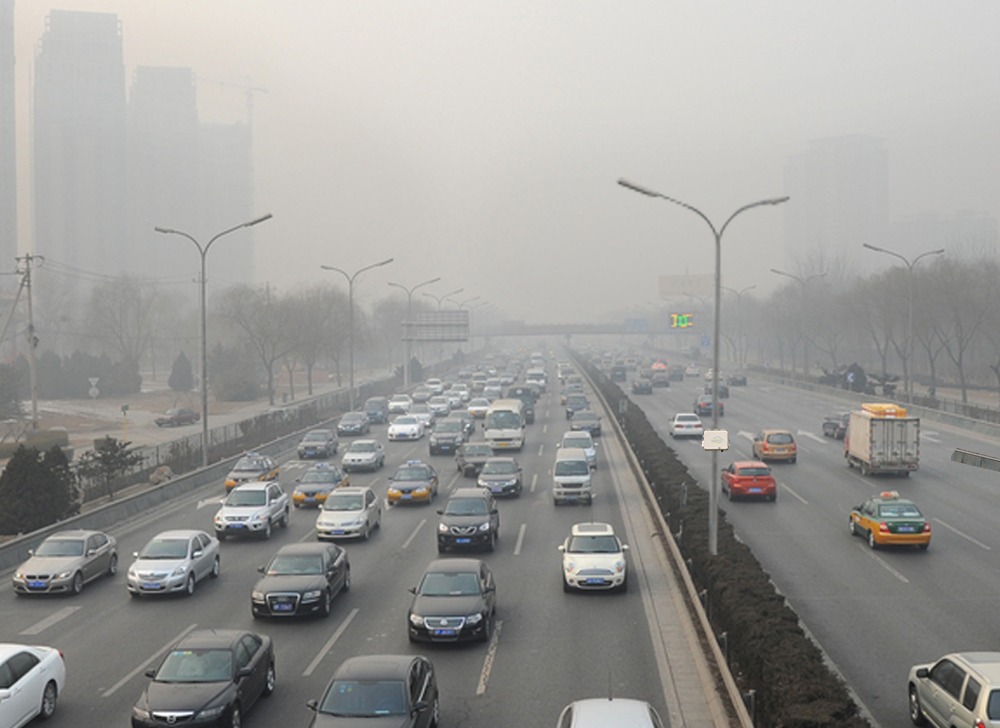
A recent analysis highlights that ground-level ozone is emerging as a major air pollution challenge in Delhi. The news focuses on its formation in the troposphere, key sources, impacts, and safe limits under WHO Standards and National Ambient Air Quality Standard (NAAQS), 2009.
Ground-Level Ozone (O3) in Troposphere:
| Dimension | Key Details |
|---|---|
| Type | Ground-level ozone (O3) comprises a secondary air pollutant found in the troposphere. |
| Formation | Ground-level ozone is formed by reactions between Nitrogen Oxides (NOx) and Volatile Organic Compounds (VOCs) in the presence of sunlight: NOx + VOCs + Sunlight → Ozone (O3). |
| Major sources | Major sources comprise vehicles, industries, and thermal power plants. |
| Seasonal pattern | Ground-level ozone peaks during summer due to intense solar radiation. |
| Impacts | Impacts comprise respiratory ailments, crop damage, and photochemical smog. |
| Ozone type comparison | Stratospheric ozone comprises “Good Ozone” that shields Earth from UV rays, while ground-level ozone comprises a harmful pollutant (“Bad Ozone”). |
| Safe limit | Safe limit provides for 100 µg/m3 for 8-hourly monitored value and 180 µg/m3 for 1-hourly monitored value under WHO Standards and National Ambient Air Quality Standard (NAAQS), 2009. |