|
4th Global Coral Bleaching Event
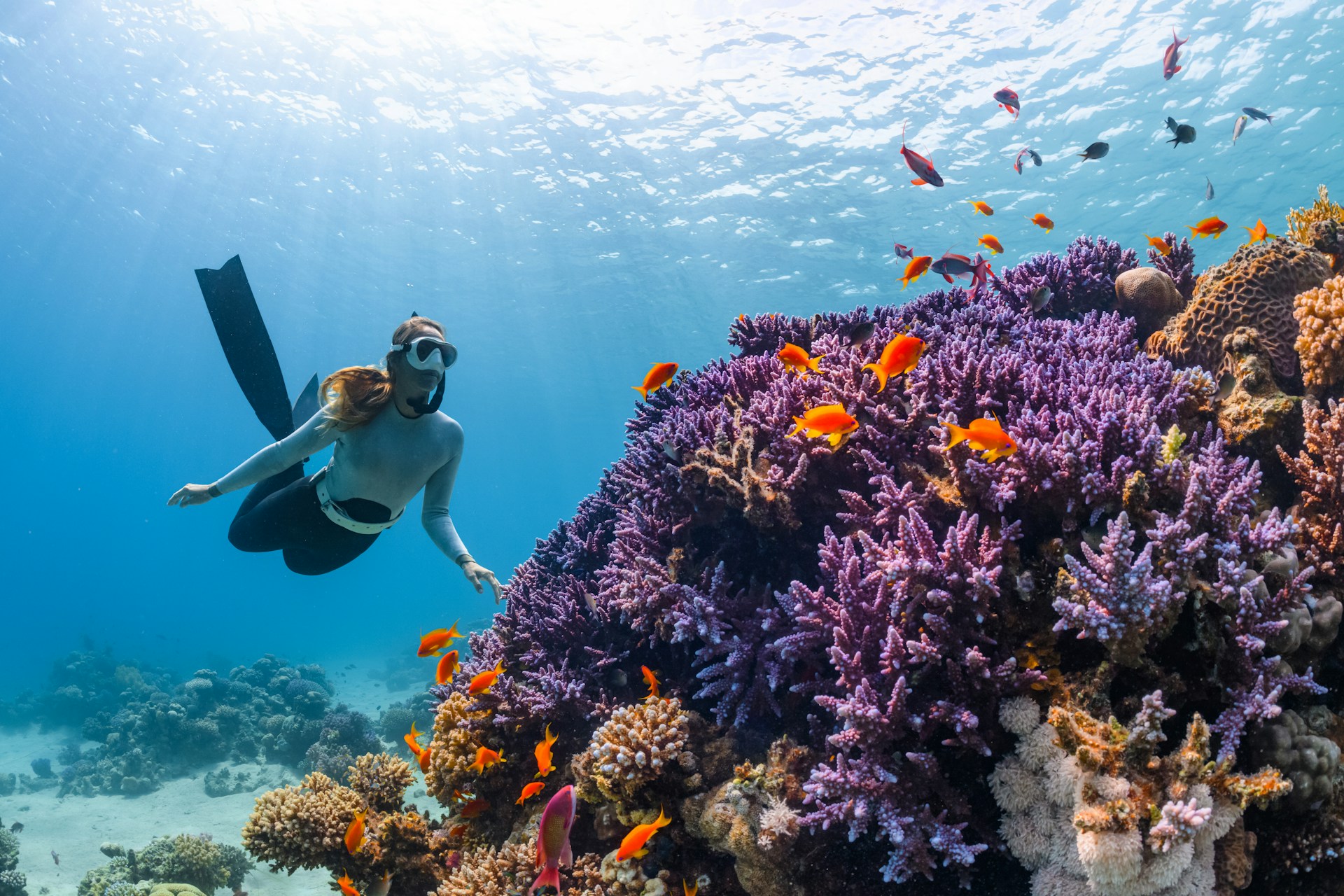
Researchers from the National Oceanic and Atmospheric Administration (NOAA) Coral Reef Watch state the 4th global coral bleaching event as the fastest and widest on record. The 4th global coral bleaching event ends by mid-2025, affecting 84% of reefs across 83 countries, with severe bleaching in Western Australia (early 2025) marking the end.
4th Global Coral Bleaching Event and Coral Reef Conservation Framework:
| Dimension | Key Details |
|---|---|
| Reporting authority | The National Oceanic and Atmospheric Administration (NOAA) Coral Reef Watch states the 4th global coral bleaching event as the fastest and widest on record. |
| Corals | Corals are tiny marine invertebrates (polyps) that build reefs. |
| Reef extent and support | Coral reefs cover 1% of the ocean floor yet support 1/4th of marine life by providing food, shelter, and breeding grounds. |
| Coral bleaching mechanism | Coral bleaching occurs when corals are stressed by changes in conditions such as temperature, light, or nutrients, and they expel symbiotic algae (zooxanthellae) living in their tissues, causing them to turn completely white. |
| Cold stress trigger | Coral bleaching is not only caused by warm water; cold stress can also trigger it, making corals more vulnerable to disease. |
| Event scale | The 4th global coral bleaching event has ended by mid-2025, affecting 84% of reefs across 83 countries. |
| Concluding phase marker | Severe bleaching in Western Australia (early 2025) marks the end of the 4th global coral bleaching event. |
| Heat stress status | Sea surface temperatures remain far above past levels despite a decline. |
| Thermal tipping point | Warm water coral reefs in tropical and sub-tropical regions undergo unprecedented die off. |
| Global Tipping Points Report 2025 | The Global Tipping Points Report 2025 warns that rising greenhouse emissions push the world toward a dangerous new reality near the 1.5°C threshold. |
| El Niño warning | NOAA warns that expected El Niño could raise ocean temperatures and trigger renewed bleaching. |
| Regional outlook | NOAA predicts bleaching risk in North Pacific (Hawai’i), Florida, and the Caribbean during the upcoming summer. |
| Human dependence | Nearly 1 billion people dependent on reefs for food, income, and coastal protection are threatened. |
| Conservation programme | NOAA’s Coral Reef Conservation Program (CRCP) coordinates protection, conservation, and restoration of reefs. |
| Legal basis | NOAA’s Coral Reef Conservation Program (CRCP) is governed by the Coral Reef Conservation Act. |