|
Albino Hog Deer (Axis porcinus) Spotted in Assam’s Kaziranga National Park
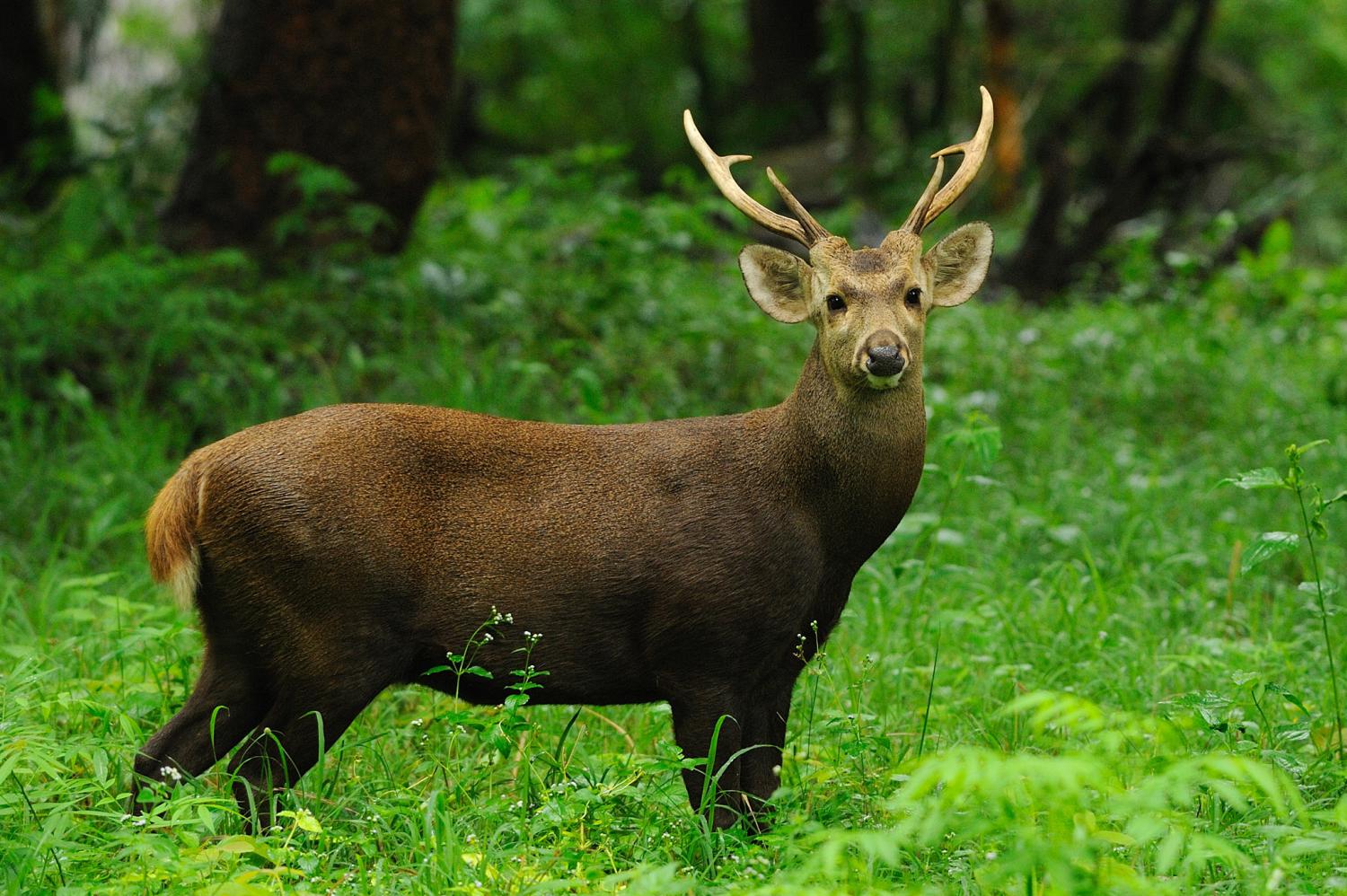
A rare albino hog deer is currently spotted roaming freely inside Assam’s Kaziranga National Park. The species is identified as Albino Hog Deer, with the scientific name Axis porcinus.
Albino Hog Deer (Axis porcinus) :
| Dimension | Key Details |
|---|---|
| Scientific name | The scientific name of hog deer is Axis porcinus. |
| Identification | It is a small, solidly built deer named for its hog-like running style. |
| Habitat | It inhabits dense grasslands, floodplains (Indo-Gangetic plains), and riverine valleys. |
| Distribution | It is found across South Asia and Southeast Asia, including northern India, Nepal, Bangladesh, and western Thailand. |
| Locomotion-based name | Its name comes from a hog-like running style, running with its head lowered to duck under obstacles rather than leaping. |
| Size | Males stand about 70 cm at the shoulder and weigh about 50 kg, while females stand about 61 cm and weigh about 30 kg. |
| Seasonal coat and markings | The coat shifts seasonally: thick dark-brown in winter and reddish-brown in summer, often with a dark dorsal stripe and light spots along the back. |
| Antlers | Males grow three-tined antlers (brow tine plus forked top) and shed them yearly. |
| Behaviour | Hog deer are crepuscular, active in the morning and late afternoon, and may extend nocturnal activity in hotter or threatened zones. |
| Reproduction | They are seasonally breeding; gestation lasts about 220–230 days and generally yields 1 fawn weighing about 2.0–2.7 kg at birth. |
| Predators | Predators include tigers, leopards, dholes, and sometimes the Burmese python. |
| IUCN status | Its IUCN conservation status is Endangered. |
| Wildlife (Protection) Act, 1972 status | It is listed in Schedule I of the Wildlife (Protection) Act, 1972. |
| Threats | Threats include habitat loss, presence of invasive species, and poaching and hunting. |
| Albinism (cause) | Albinism is due to a rare genetic mutation in which the animal entirely lacks melanin pigment. |
| Albino appearance | An albino hog deer has a snow-white coat, pale hooves, pinkish skin features, and translucent, light-colored eyes. |
| Albino rarity | Albino hog deer are almost never seen in the wild, and clear documentation is rare. |
| Other rare white wildlife in India (examples) | Examples listed include albino saltwater crocodiles in Odisha’s Bhitarkanika National Park, and albino Indian bison (gaur) in the Western Ghats. |