|
African Grey Foam‑Nest Tree Frog
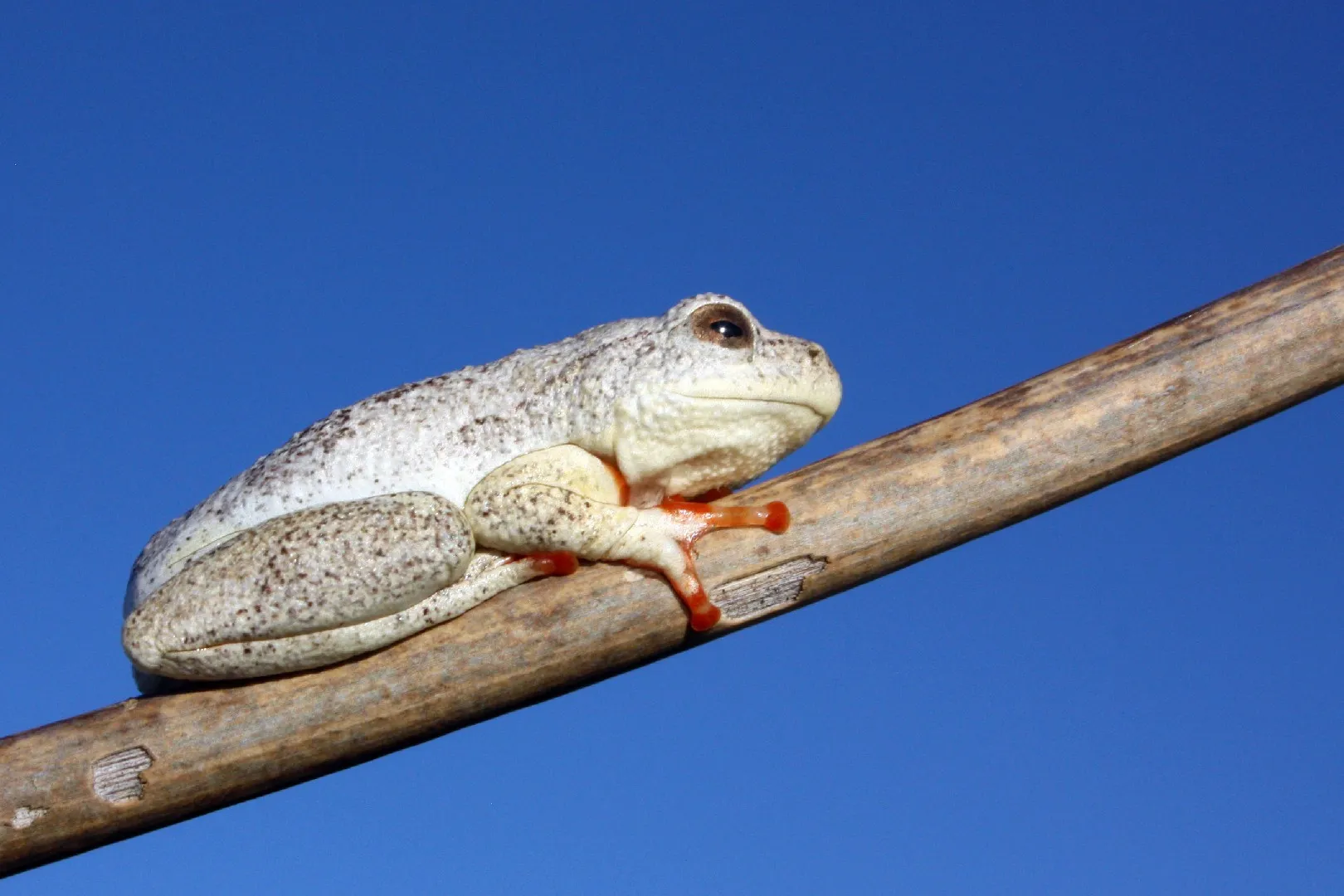
A recent study highlights the communal nesting behaviour of the African grey foam‑nest tree frog and reports that cooperation among multiple frogs enhances offspring survival. The study documents foam-nest construction on tree branches overhanging pools in South Africa and notes shared paternity in communal nests.
African Grey Foam‑Nest Tree Frog (Chiromantis xerampelina):
| Dimension | Key Details |
|---|---|
| Common name | Common name comprises African Grey Foam‑Nest Tree Frog. |
| Scientific name | Scientific name comprises Chiromantis xerampelina. |
| Habitat | Habitat comprises tree branches overhanging pools in South Africa. |
| Adaptation (egg laying) | Adaptation comprises eggs laid in aerial foam nests rather than water. |
| Foam nest construction mechanism | Foam nest construction comprises female secretion of fluid, and male and female mixing it with hind legs into froth. |
| Nesting season | Nests are built during the rainy season, October–February. |
| Hatching and tadpole transfer | Eggs hatch inside the foam nest, and tadpoles drop into the pool below. |
| Cooperative strategy and nest size | Cooperative strategy comprises dozens of males joining a female to create nests up to 3 times larger. |
| Moisture retention benefit | Larger nests retain moisture longer, preventing egg dryness. |
| Paternity in communal nests | Paternity split comprises DNA testing that shows multiple males father offspring in communal nests. |
| Bubble stabilization | Male skin secretions are suspected to contain surfactant compounds that stabilize bubbles, preventing collapse. |
| Evolutionary trade-offs | Evolutionary trade-offs comprise large nests attracting predators, spreading diseases faster, and risking “cheater” females who lay eggs without contributing fluids. |
| Protection comparison | An aerial foam nest provides a safe, moist nursery and drops tadpoles directly into water, while aquatic egg laying leaves immobile embryos exposed to predators and water fluctuations. |