|
India’s Three-Stage Nuclear Programme
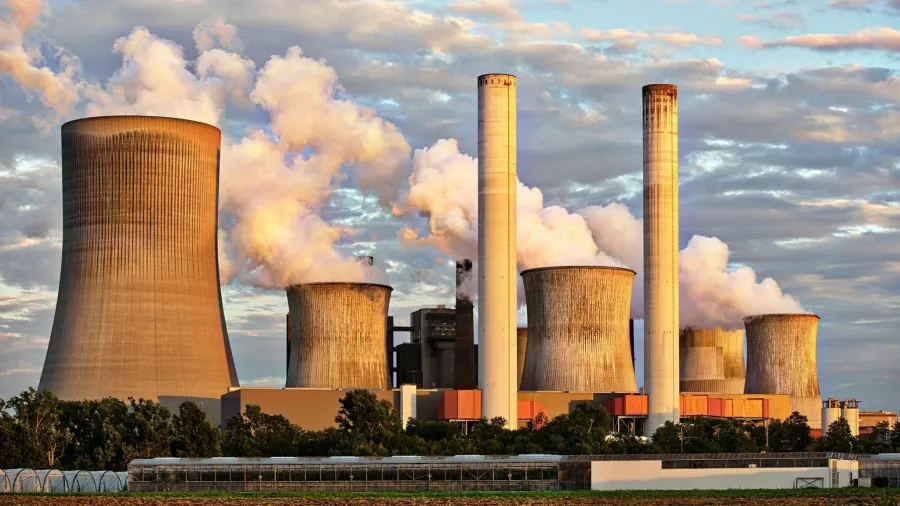
India’s nuclear programme and global debates on advanced reactor technologies remain in focus for energy security and climate goals. The news context highlights India’s three-stage nuclear programme and key reactor types, fuels, and operating mechanisms.
India’s Three-Stage Nuclear Programme and Reactor Technologies:
| Dimension | Key Details |
|---|---|
| Nuclear reactor | A nuclear reactor comprises the core component of a nuclear power plant that initiates and controls a sustained nuclear chain reaction, and the energy released is used as heat to make steam to generate electricity. |
| India’s three-stage programme | India’s three-stage nuclear programme comprises Stage I with Pressurised Heavy Water Reactors (PHWRs), Stage II with Fast Breeder Reactors (FBRs), and Stage III with Advanced Heavy Water Reactors (AHWRs) with a thorium focus. |
| Pressurised Heavy Water Reactors (PHWRs) | PHWRs comprise fuel: natural uranium; moderator and coolant: heavy water (D₂O); capacity: 220–700 MW; mechanism: heavy water slows neutrons to thermal speeds, allowing natural uranium to sustain a chain reaction; India link: backbone of Stage I programme. |
| Fast Breeder Reactors (FBRs) | FBRs comprise fuel conversion: U‑238 to Pu‑239, and Th‑232 to U‑233; neutrons: fast neutrons with no moderator; capacity: 500+ MW; mechanism: fast neutrons convert fertile isotopes into fissile ones, breeding more fuel; India link: crucial for Stage II. |
| Small Modular Reactors (SMRs) | SMRs comprise fuel: low-enriched uranium (3–4% U‑235); capacity: 30–300 Mwe; mechanism: factory-built modules with passive cooling and flexible deployment; global status: emerging technology. |
| Conventional nuclear reactors | Conventional nuclear reactors comprise fuel: enriched uranium (3–4% U‑235); capacity: 500–1000+ MW; mechanism: thermal neutrons moderated by water in large centralized plants; global status: proven backbone of nuclear power. |
| Boiling Water Reactors (BWRs) | BWRs comprise fuel: enriched uranium (3–4% U‑235); capacity: 600–1000 MW; mechanism: water boils inside the reactor core and steam directly drives the turbine; deployment: common in the U.S. and Japan. |
| Pressurised Water Reactors (PWRs) | PWRs comprise fuel: enriched uranium (3–4% U‑235); capacity: 900–1300 MW; mechanism: water is kept under high pressure and heat is transferred to a secondary loop for steam; deployment: most widely used globally. |
| Advanced Heavy Water Reactors (AHWRs) | AHWRs comprise fuel: thorium with small U‑233/U‑235; capacity: 300–700 MW; mechanism: heavy water moderates neutrons to convert fertile thorium into fissile U‑233, while boiling light water (normal water) is used as the coolant to drive the turbine directly; India link: Stage III of the nuclear programme. |