|
India’s first leopard immunocontraception pilot
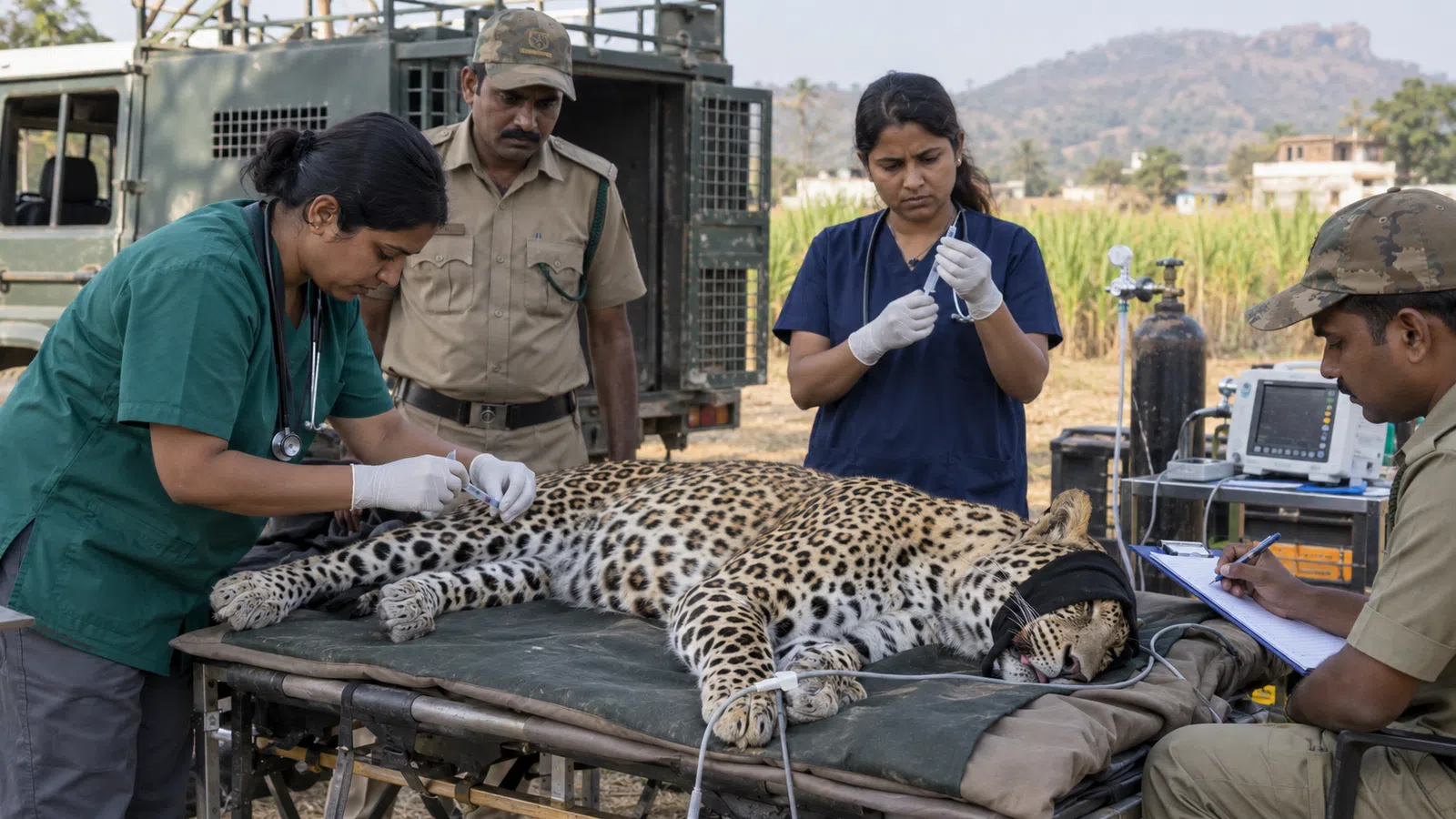
The Junnar Forest Division in Pune district, Maharashtra, launches India’s first pilot initiative to control leopard reproduction through immunocontraception. In early October 2026, 2 female leopards receive an immunocontraceptive drug and are released into the wild.
India’s first leopard immunocontraception pilot :
| Dimension | Key Details |
|---|---|
| Implementing authority | The pilot is launched by the Junnar Forest Division in Pune district, Maharashtra. |
| Immunocontraception | Immunocontraception is a method of controlling reproduction by administering a vaccine or immunological agent that triggers an immune response, temporarily preventing an animal from reproducing. |
| Aim | The pilot assesses whether a non-surgical method can help manage leopard populations and reduce human–leopard conflict. |
| Key characteristics of immunocontraception | Immunocontraception is non-surgical, temporary, and potentially reversible. |
| Wildlife management use | Immunocontraception can be utilized to regulate reproduction within targeted wildlife populations. |
| Monitoring requirement | Scientific evaluation of safety, hormonal changes, reproductive effects, and animal behaviour is necessary. |
| Immunocontraception vs surgical sterilisation | Immunocontraception uses an immunological intervention, is intended to be temporary, does not require reproductive surgery, and mandates monitoring of long-term effects; surgical sterilisation uses a surgical procedure, is generally permanent, requires an operation, and mandates management of surgical risks and recovery. |
| Objectives of the pilot study | The pilot comprises objectives to assess safety and effectiveness, evaluate a non-lethal approach for wildlife population management, reduce human–leopard conflict in high population density areas, monitor hormonal changes and long-term effects, and generate scientific evidence to inform future wildlife management policies. |
| Indian leopard | The Indian leopard has the scientific name Panthera pardus fusca and belongs to the family Felidae. |
| Distribution and habitat in India | Leopards occur across a wide range of habitats in India, including forests, grasslands, scrublands, and some human-dominated landscapes. |
| Diet | The leopard is carnivorous, and its prey includes various mammals and other animals. |
| Ecological role | The leopard is a predator that contributes to ecosystem balance. |
| Conservation status | The leopard is classified as Vulnerable globally on the IUCN Red List. |
| Legal status in India | Under the Wildlife (Protection) Act, 1972, the leopard is listed as “Endangered”. |
| International trade status | Under CITES, the leopard is listed in Appendix I. |