|
European Bee-eater recorded first time in Chennai
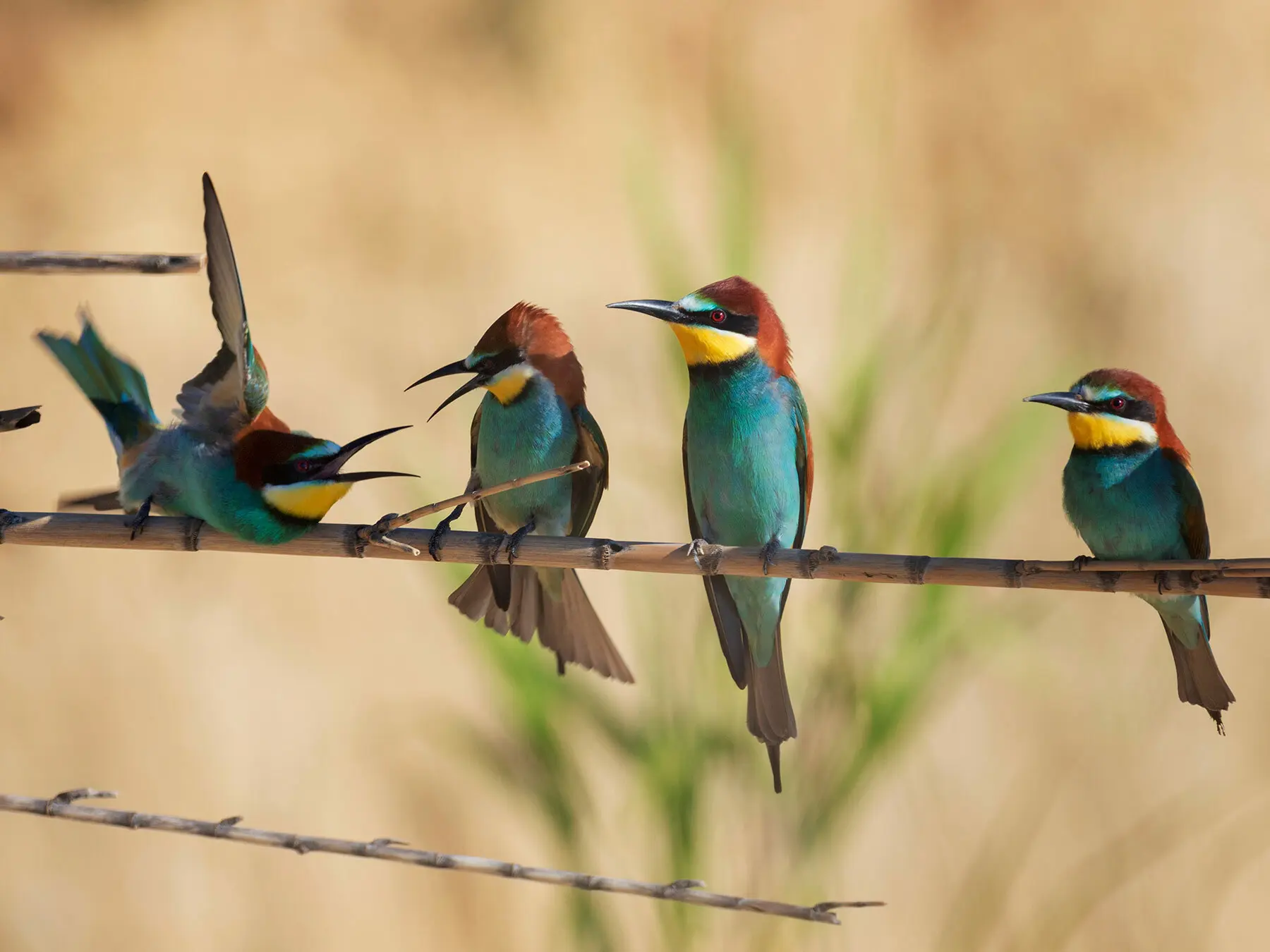
A European bee-eater is documented for the first time in Chennai at Broken Bridge, adjacent to the Adyar River Estuary. The observation is submitted to eBird, where it is reviewed and accepted, and a Eurasian wryneck is also observed on the same day.
European Bee-eater and Eurasian Wryneck:
| Dimension | Key Details |
|---|---|
| European bee-eater identification basis | The bird is identified as a juvenile based on its plumage, distinctive throat markings, and wing markings. |
| European bee-eater identification features | Identification features comprise brightly coloured plumage with blue-green hues, a distinctive yellow throat, and a broad dark trailing edge along the wing. |
| European bee-eater diet | The European bee-eater feeds primarily by capturing flying insects, such as bees. |
| European bee-eater taxonomy | The European bee-eater comprises scientific name Merops apiaster and family Meropidae. |
| Blue-tailed bee-eater taxonomy | The blue-tailed bee-eater comprises scientific name Merops philippinus and family Meropidae. |
| European vs blue-tailed bee-eater distinguishing features | The European bee-eater comprises a yellow throat and a characteristic dark trailing wing edge, while the blue-tailed bee-eater comprises a blue tail and a different combination of plumage markings. |
| Status in Chennai | The European bee-eater is reported as extremely rare with the first recorded sighting, while the blue-tailed bee-eater is seen more regularly. |
| Other rare species observed | A Eurasian wryneck is observed on the same day as another rare species. |
| Eurasian wryneck taxonomy | The Eurasian wryneck comprises scientific name Jynx torquilla and belongs to the woodpecker family, Picidae. |
| Eurasian wryneck camouflage | The Eurasian wryneck uses camouflage to blend into tree bark. |
| Eurasian wryneck diet | The Eurasian wryneck diet consists primarily of ants and other small invertebrates. |
| Eurasian wryneck threat display | When threatened, the Eurasian wryneck exhibits behaviors: elongates and twists its neck, turns its head from side to side, and produces a hissing sound. |
| Classification clarification | Despite its unusual behavior, the Eurasian wryneck is classified as a woodpecker, not a snake or a member of the bee-eater family. |