|
Himachal Pradesh Captive Breeding Reintroduces Cheer Pheasant
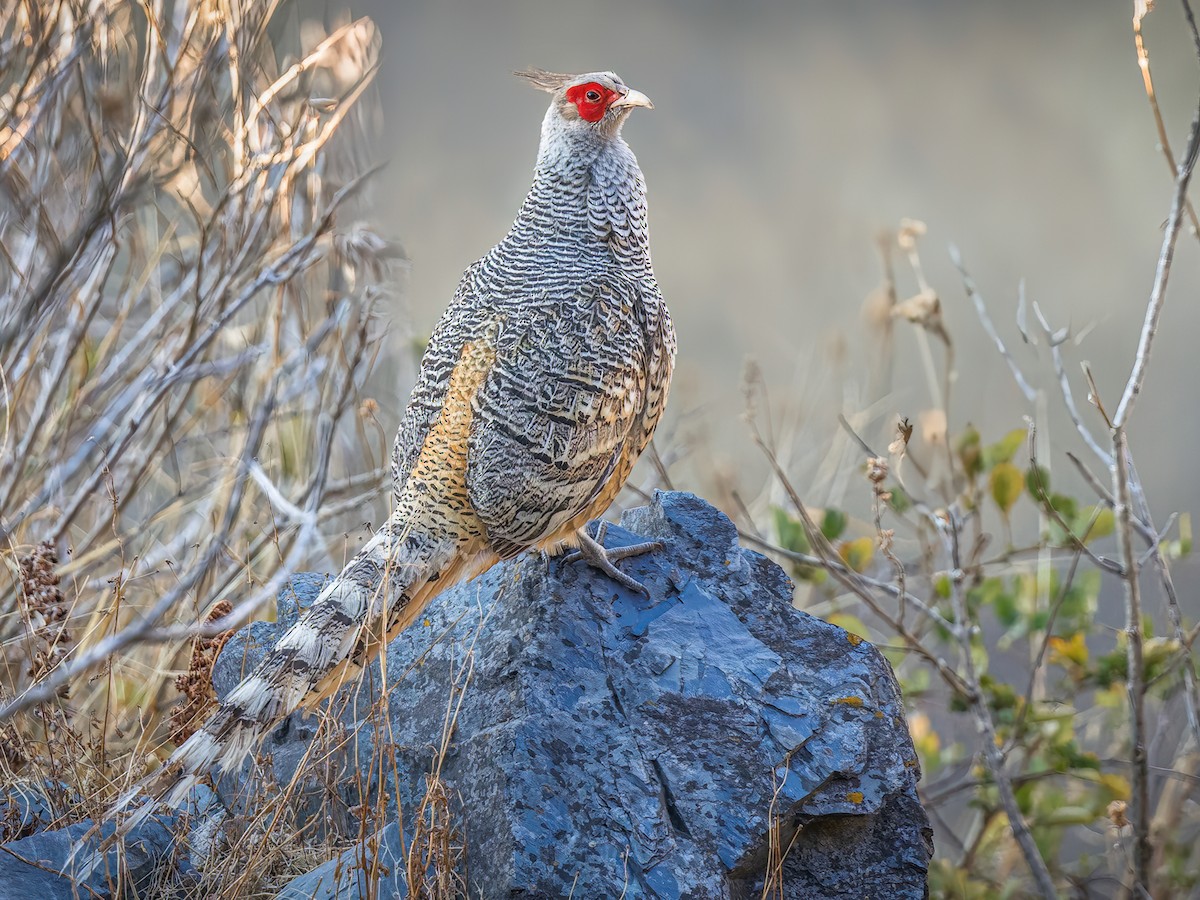
Himachal Pradesh reports a rise in the survival rate of reintroduced Cheer Pheasants from 11.11% in 2019-20 to 100% in 2024-25 through a scientifically managed captive-breeding and reintroduction programme. The programme releases captive-bred birds into the wild and uses multiple monitoring and release strategies, including a latest release during Wildlife Week 2026.
Cheer Pheasant (Catreus wallichii) and Captive-Breeding Reintroduction Programme
| Dimension | Key Details |
|---|---|
| Species | Cheer Pheasant is a vulnerable Himalayan bird species locally known as ‘Chir Tittar’. |
| Scientific name | Scientific name is Catreus wallichii. |
| Taxonomy | It belongs to the family Phasianidae and comprises the only member of its genus, Catreus. |
| Habitat | It depends on grasslands, often mixed with shrubs and short trees, in parts of the northwestern and central Himalayas. |
| Appearance | It has buff-brown plumage heavily barred with black and grey, a prominent messy crest, a long untidy tail, and crimson-red patches of bare skin around the eyes in both sexes; the male is slightly larger with a longer tail and a more pronounced crest. |
| Diet | As a ground-dwelling forager, it uses strong curved bills to dig up roots, tubers, bulbs, seeds, berries, and small insects. |
| IUCN status | IUCN Red List status is Vulnerable. |
| Legal protection in India | Wildlife (Protection) Act, 1972 status is Schedule I. |
| Threats | Threats comprise grassland degradation, forest fires, overgrazing, fodder collection, and other human disturbances. |
| Programme lead institution and location | The reintroduction programme is led by the Khadiyun Cheer Pheasant Breeding Centre in Chail, Solan district. |
| Total releases to date | So far, 77 captive-bred birds have been released into the wild. |
| Latest release (Wildlife Week 2026) | The latest phase has released 12 birds near Koti in Shimla district: 2 males, 2 females, and 8 chicks. |
| Key conservation strategies | Strategies comprise parent-rearing technique, soft release method, radio telemetry monitoring using Very High Frequency (VHF) transmitters fitted to the male leading each released family, and camera trap surveillance. |