|
Experiments Show Bleached Corals Recover via Zooxanthellae Transfer
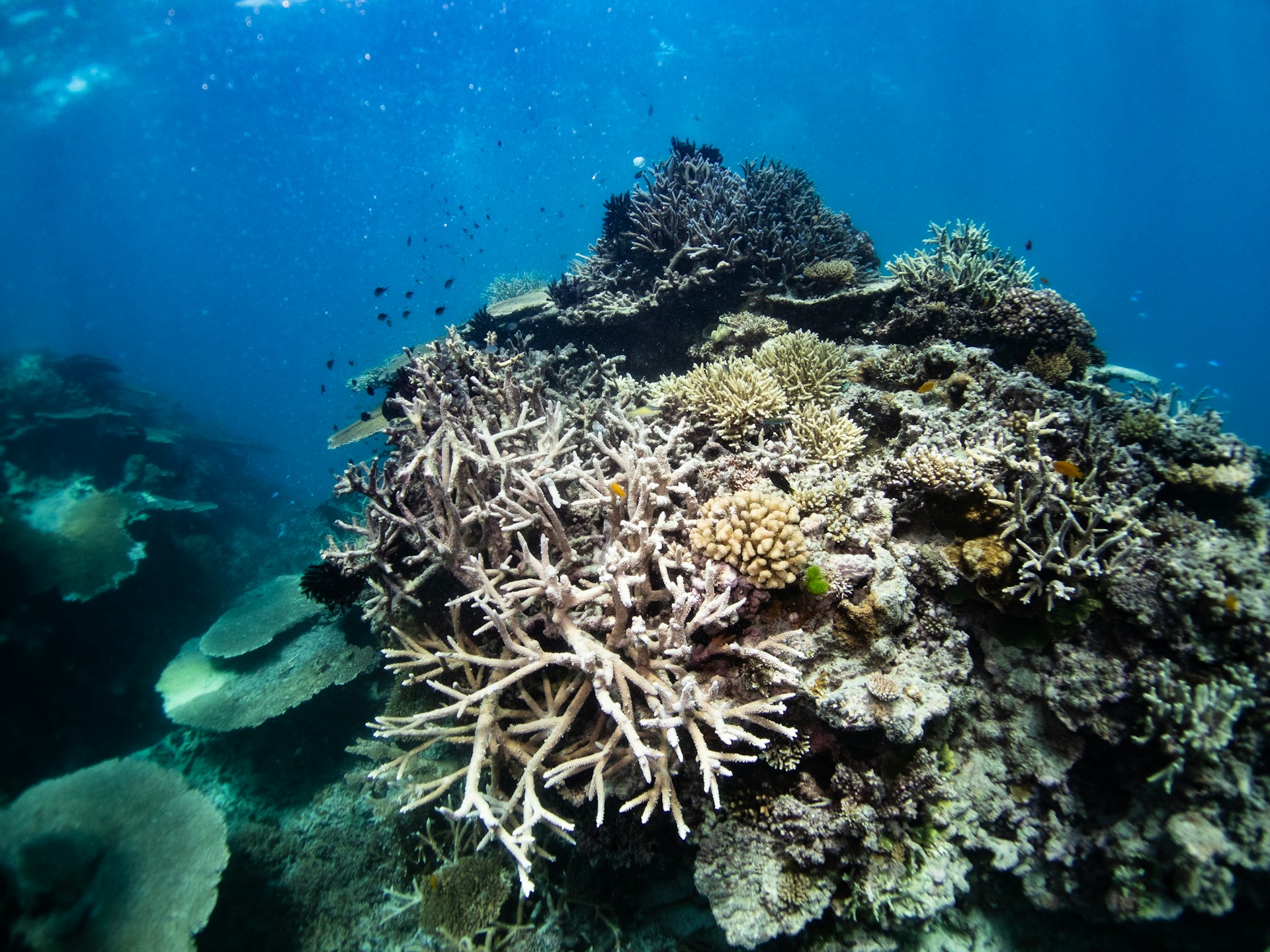
Recent experiments highlight recovery pathways for bleached corals that have expelled their symbiotic algae. The experiments show that physical proximity or contact with unbleached corals enables transfer of symbiotic microalgae, supporting re-establishment of photosynthetic function.
Zooxanthellae Transfer in Bleached Corals & India's Coral Reef Region:
| Dimension | Key Details |
|---|---|
| Functional significance of algal transfer | Transfer of symbiotic microalgae provides for re-introduction of the photosynthetic engine necessary for long-term survival and nutrient uptake of the coral animal. |
| Bleaching optics and internal light stress | Expulsion of algae provides for excess light bouncing off the stark white calcium carbonate skeleton, causing severe internal light stress. |
| Fluorescent pigments | Coral response to expelling algae comprises production of vibrant fluorescent pigments that act as an “optical sunscreen”. |
| Role of photoprotective layer | The photoprotective layer provides for a favorable light environment inside coral tissue, aiding return and survival of newly acquired algal symbionts. |
| India: major coral reef regions | India comprises 4 major coral reef regions: Lakshadweep Archipelago; Andaman and Nicobar Islands; Gulf of Mannar and Palk Bay (Tamil Nadu); Gulf of Kutch (Gujarat). |
| Heat stress driver in India | Heightened stress due to marine heatwaves applies to India’s 4 major coral reef regions, and events like El Niño provide for exacerbation of these marine heatwaves. |
| Lakshadweep Archipelago | Lakshadweep Archipelago comprises ring-shaped coral atolls exceptionally vulnerable to rising sea surface temperatures. |
| Andaman and Nicobar Islands | Andaman and Nicobar Islands comprise rich fringing reefs, including those inside the Mahatma Gandhi Marine National Park. |
| Gulf of Mannar and Palk Bay | Gulf of Mannar and Palk Bay (Tamil Nadu) comprise diverse fringing and patch reefs. |
| Gulf of Kutch | Gulf of Kutch (Gujarat) comprises high-turbidity, shallow coral communities. |
| Restoration approach | Active restoration provides for assisted re-symbiosis, moving beyond static protection or shading to active biological rescue. |
| Reef rehabilitation tool | Marine nursery designs provide for co-culturing healthy “donor” corals alongside bleached corals to accelerate recovery following marine heatwaves. |