|
Kshipra River
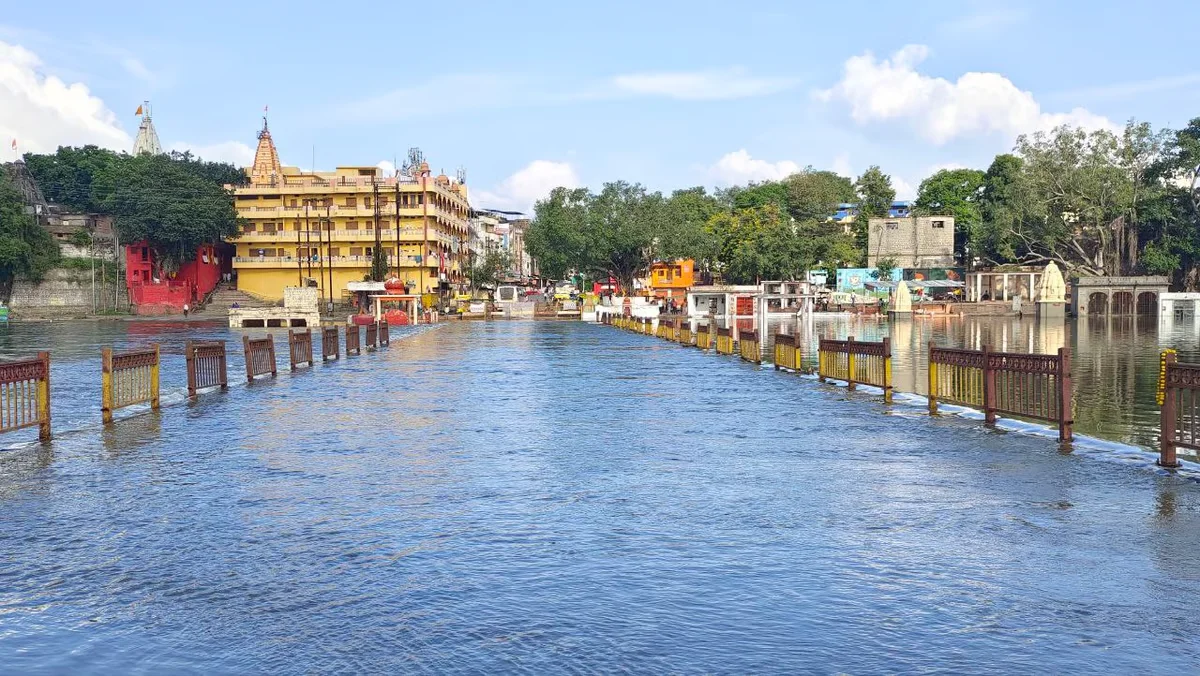
The Kshipra riverine system in Madhya Pradesh faces a crisis marked by the drying up of its tributaries. The issue is relevant now because these tributaries fail to maintain a perennial flow.
Kshipra (Shipra) River:
| Dimension | Key Details |
|---|---|
| Alternate name | Shipra. |
| State | Flows in Madhya Pradesh. |
| River system linkage | The Kshipra River comprises a tributary of the Chambal River. |
| Perennial and sacred status | The Kshipra River comprises a perennial river and comprises a sacred status comparable to the Ganga River among Hindus. |
| Origin | The Kshipra River comprises an origin in the Vindhya Range near Ujjain, Madhya Pradesh. |
| Course | The river comprises a flow across the Malwa Plateau to join the Chambal River. |
| Length | Length of 195 kilometers. |
| Ujjain stretch | The river comprises a significant portion passing through Ujjain. |
| Major tributaries | The Kshipra River comprises major tributaries: Khan and Gambhir. |
| Ujjain location on river bank | The holy city of Ujjain comprises a location on the right bank of the Shipra River. |
| Scriptural mentions | The Shipra River comprises mention in ancient Hindu texts, Buddhist scriptures, and Jain scriptures. |
| Puranic origin account | The Puranas comprise an account that the Shipra originates from the heart of Varaha, Lord Vishnu’s incarnation as a boar. |
| Sage Sandipani’s ashram | The banks of the Shipra comprise Sage Sandipani’s ashram, where Krishna, Lord Vishnu’s eighth incarnation, had studied. |
| Kumbha Mela periodicity | The famous Kumbha Mela comprises an occurrence in the ghats of Ujjain once every 12 years. |
| Shrines along banks | The banks of the Shipra River comprise hundreds of Hindu shrines. |