|
Complex Communication System among Sperm Whales
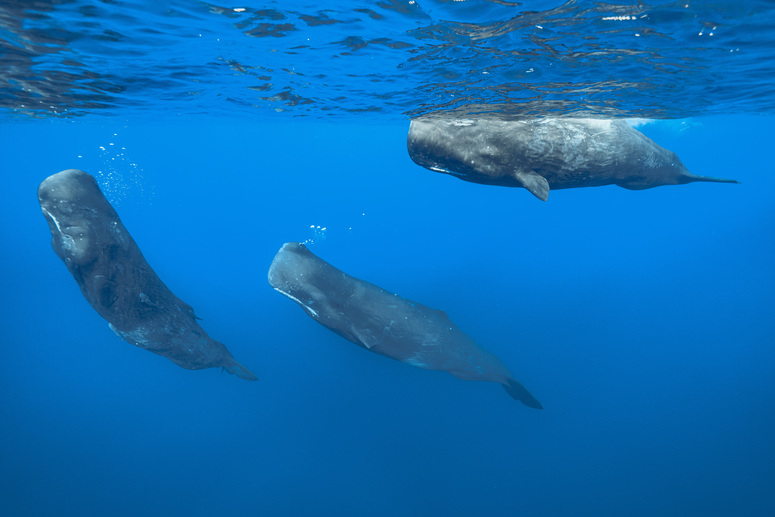
Scientists using artificial intelligence (AI) uncover a complex communication system among sperm whales, identifying phonetic building blocks. Project CETI leads the analysis and links vocal patterns with observed physical behaviours. The finding highlights a distinct regional dialect among sperm whales in the eastern Mediterranean Sea compared with populations in the west.
Sperm Whales: AI-Based Findings on Communication (Project CETI)
| Dimension | Key Details |
|---|---|
| Species characteristics | Sperm whales are highly social, deep-diving marine mammals that live in close family units. |
| Analysis led by | Analysis is led by Project CETI (Cetacean Translation Initiative). |
| Project CETI approach | Project CETI is to cross-reference newly discovered phonetic building blocks with observed physical behaviours. |
| Acoustic labels (codas) | While hunting for prey like giant squid thousands of feet below the surface, sperm whales maintain constant contact by emitting rapid bursts of clicks called codas. |
| Earlier scientific view | Historically, scientists view these sounds as basic acoustic labels. |
| AI-identified vocal adjustments | Computer models identify that sperm whales alter vocalizations through specific structural adjustments. |
| Rubato | Whales deliberately manipulate tempo and rhythm, a feature researchers call rubato. |
| Ornamentation | Whales frequently append an extra click to the end of a sequence, termed ornamentation. |
| 3+1 coda (identical vocal signature) | The 3+1 coda comprises 3 rapid clicks, a brief pause, and a final 4th click. |
| Western Mediterranean pattern | Whales living in the western Mediterranean, near Spain's Balearic Islands, strictly maintain the traditional 3+1 pattern. |
| Eastern Mediterranean dialect | The population residing in the eastern Mediterranean, near the Hellenic Trench off Crete, utilises a sped-up version of the same 3+1 sequence. |
| Regional dialect finding | Sperm whales living in the eastern Mediterranean Sea have developed a distinct regional dialect that separates them from populations living in the west. |
| Unknowns (current limitation) | The precise meaning of the 156 Caribbean codas and the underlying purpose of the Mediterranean dialect shift remain unknown. |
| Modern threats | Modern threats comprise hunting, ship strikes, entanglement in heavy commercial fishing gear, rising ocean noise levels, and changing marine ecosystems driven by climate change. |
| Conservation linkage | Unlocking their communication system could alter how human conservation programs protect these vulnerable populations. |