|
Centre of Excellence on Human–Wildlife Conflict
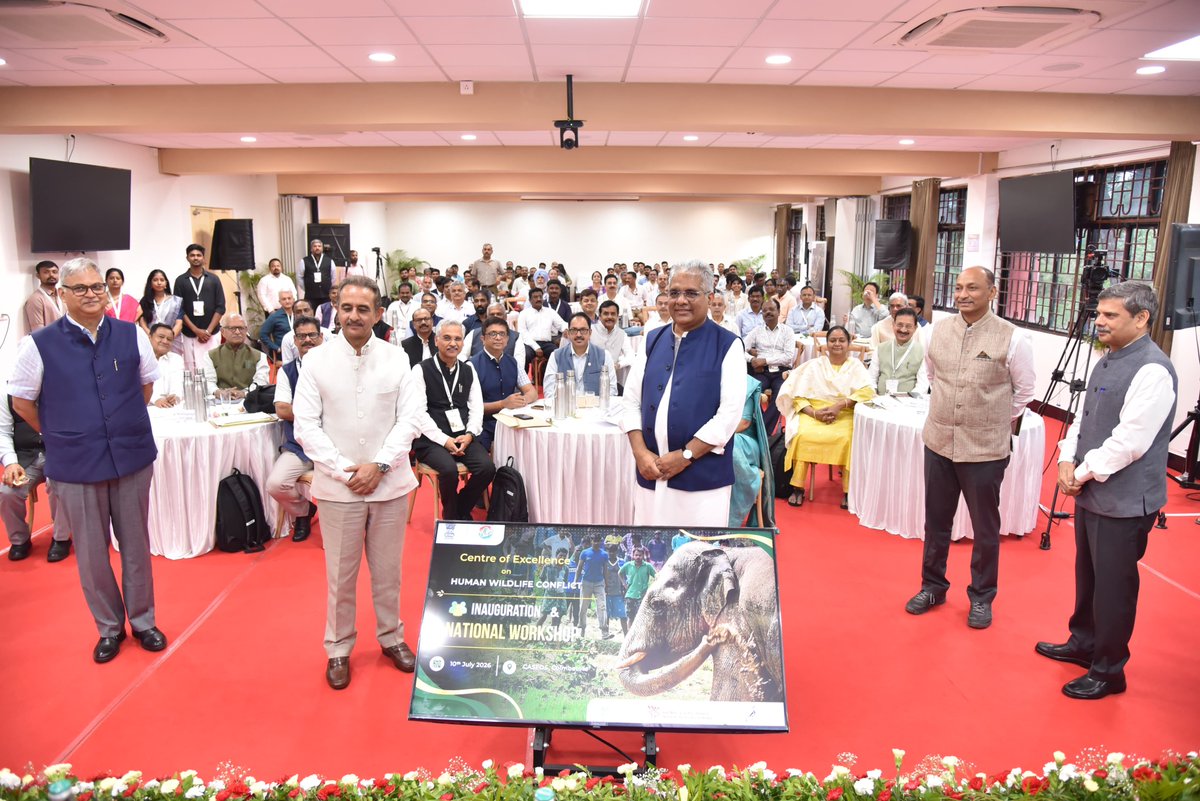
The Centre of Excellence (CoE) on Human–Wildlife Conflict is inaugurated on 10 July 2026 at Coimbatore. It is established by the Wildlife Institute of India (WII) and the Salim Ali Centre for Ornithology and Natural History (SACON) to strengthen India’s capacity to address human–wildlife conflict.
CoE on Human–Wildlife Conflict :
| Dimension | Key Details |
|---|---|
| Inauguration | The Centre of Excellence (CoE) on Human–Wildlife Conflict is inaugurated on 10 July 2026 at Coimbatore. |
| Established by | The CoE is established by the Wildlife Institute of India (WII) and the Salim Ali Centre for Ornithology and Natural History (SACON). |
| Role | The CoE functions as the national nodal institution for research, innovation, policy formulation, capacity building, and dissemination of best practices related to human–wildlife conflict management. |
| Approach | The CoE promotes science-based and evidence-driven decision-making by integrating ecological research, technological interventions, and community-based conservation strategies. |
| Dedicated portal | The National Human–Wildlife Conflict Portal has been launched as a centralized digital platform for data collection, analysis, knowledge sharing, and decision support. |
| Portal functions | The portal provides for real-time documentation of conflict incidents, coordination among forest departments, researchers, and local communities, and support for informed policy interventions. |
| Priority species and focus | The CoE prioritises species-specific and region-specific conflict mitigation strategies for elephants, tigers, and leopards, including management of tigers dispersing outside notified tiger reserves. |
| Conflict impacts addressed | The CoE emphasises preventive measures, awareness generation, and stakeholder participation to reduce damage to crops, livestock, property, and human lives while ensuring wildlife conservation. |
| Inaugural workshop themes | The inaugural workshop comprises three themes: Human–Elephant Conflict, Human–Big Cat Conflict, and Technology and Innovation for Human–Wildlife Conflict Mitigation. |
| Technologies used | Technologies used comprise artificial intelligence (AI), GIS, remote sensing, drones, camera traps, GPS telemetry, and digital databases. |