|
UN Convention Grants International Protection to Snowy Owl
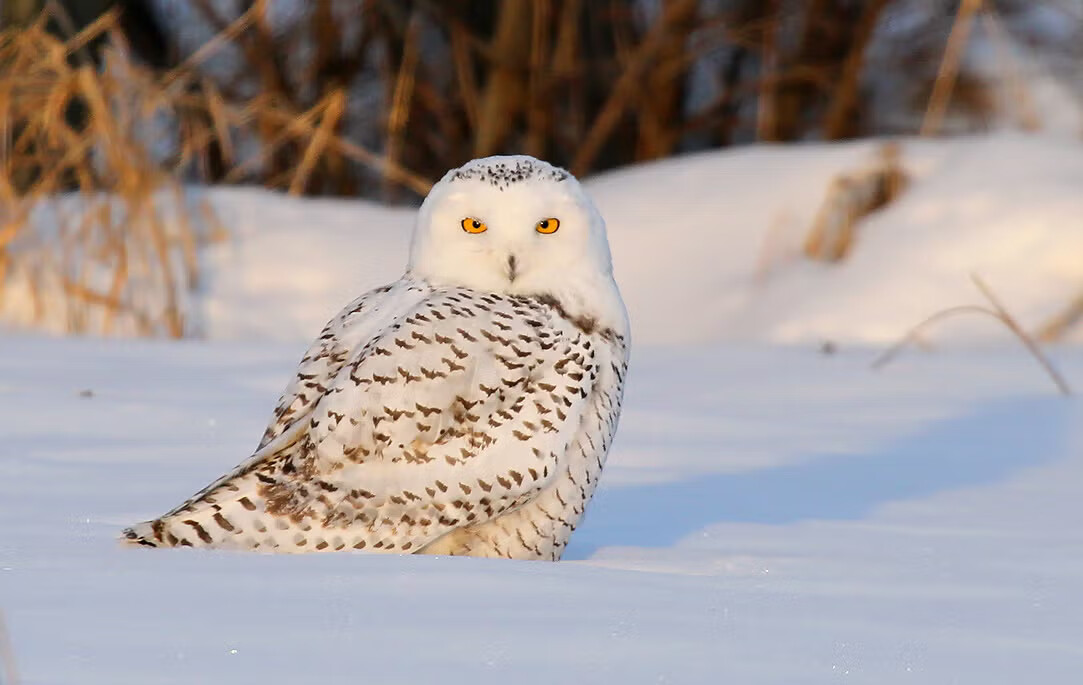
The United Nations Convention grants international protection to the Snowy Owl along with 40 other species. The move highlights increased global focus on conservation of vulnerable species.
Snowy Owl:
| Dimension | Key Details |
|---|---|
| Scientific Name | Is known as Bubo scandiacus. |
| Distribution | Is native to Arctic regions of North America, Europe, and Asia. |
| Migration | Occurs during winters to southern Canada, northern United States, and parts of Eurasia. |
| Habitat | Applies to breeding in Arctic tundra, grasslands, and coastal habitats, and wintering in marshes, beaches, and agricultural fields. |
| Size | Provides for length of 52–71 cm, wingspan of 125–150 cm, and weight of 1.6–3 kg. |
| Appearance | Is a large white owl with black or brown markings, thick feathers, and feathered feet for insulation. |
| Sexual Dimorphism | Provides for males being whiter than females, while females retain brownish markings. |
| Behaviour | Is diurnal and territorial, with activity during daytime and defence of breeding and wintering grounds. |
| Diet | Comprises lemmings, small rodents, birds, and small mammals. |
| IUCN Status | Is classified as Vulnerable. |
| CITES Status | Is listed under Appendix II. |
| Threats | Comprises climate change affecting Arctic ecosystems, habitat disturbance, and prey decline. |