|
Bioluminescence in India
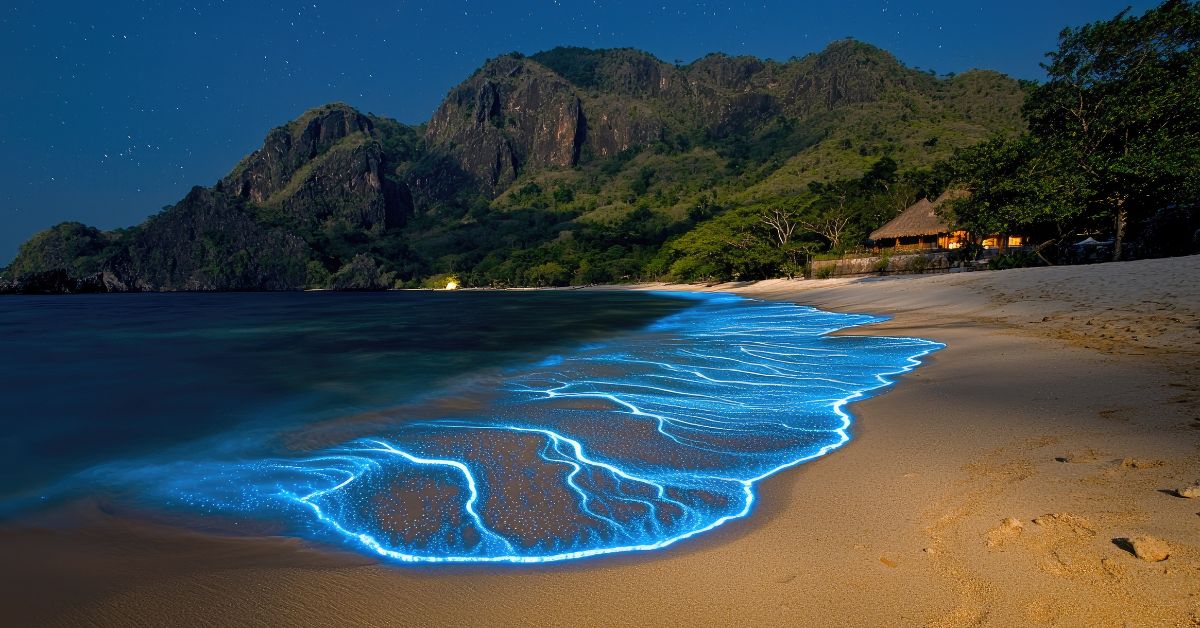
Bioluminescence is increasingly observed in Indian coastal regions such as Goa and Maharashtra and in forests of the Western Ghats. The phenomenon highlights ecological conditions influencing light-producing organisms.
Bioluminescence
| Dimension | Key Details |
|---|---|
| Definition | Is the ability of living organisms to produce and emit light through chemical reactions. |
| Mechanism | Provides for luciferase enzyme enabling luciferin to react with oxygen to release light energy. |
| Alternative Mechanism | Comprises use of symbiotic bioluminescent bacteria in some species such as squid and anglerfish. |
| Distribution | Applies to about 76% of marine animals and is absent in freshwater animals except rare cases. |
| Nature of Light | Provides for cold light without heat emission. |
| Functions | Comprises attraction of prey and mates, camouflage, defence through glowing mucus, and spore dispersal in fungi. |
| Examples | Comprises fireflies for mating signals; dinoflagellates in Indian beaches; anglerfish and squid with bacteria; railroad worm with red and green glow; vampire squid with glowing mucus; Latia neritoides releasing glowing slime; and Mycena fungi producing foxfire. |
| Historical Use | Provides for use by soldiers in World War I to read maps using glow worms. |
| Environmental Concern | Provides for disruption due to light pollution from artificial lighting affecting natural bioluminescent cycles. |