|
Self-Powered Wearable Ammonia Sensor
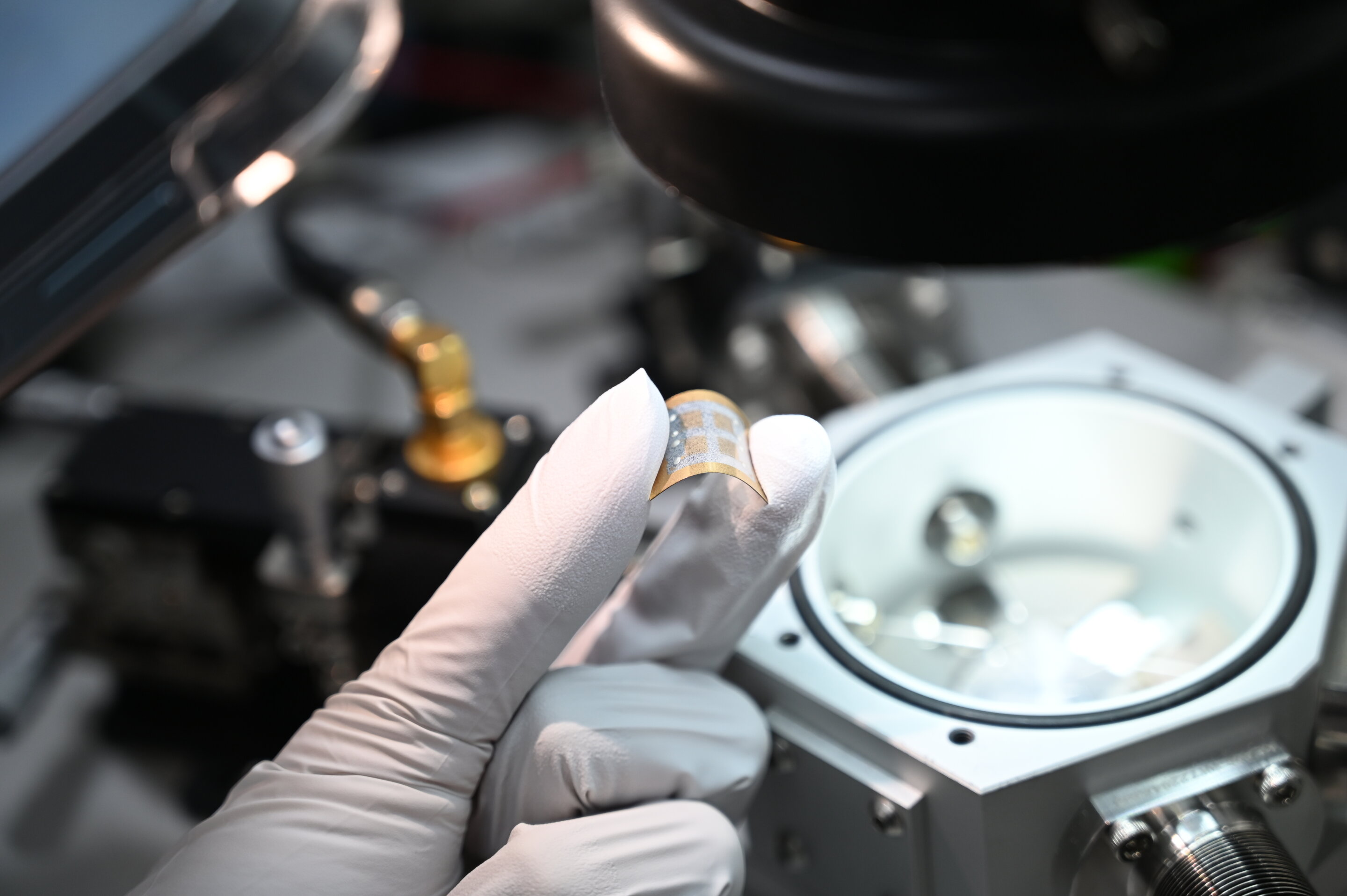
The news comprises an advanced ammonia sensor from the Centre for Nano and Soft Matter Sciences (CeNS), Bengaluru. CeNS, Bengaluru, established under the Department of Science and Technology (DST), provides for this sensor development. The sensor comprises a self-powered wearable design and provides for ammonia monitoring at extremely low concentrations.
Self-Powered Wearable Ammonia Sensor (CeNS):
| Dimension | Key Details |
|---|---|
| Developing institution | The sensor is developed by the Centre for Nano and Soft Matter Sciences (CeNS), Bengaluru. |
| Institutional status | CeNS, Bengaluru, comprises an autonomous institute under the Department of Science and Technology (DST). |
| Function | The sensor provides for detection of toxic gas at extremely low concentrations. |
| Sensor design | The sensor comprises a hybrid vanadium oxide–vanadium sulfide (VOx/VS2) heterostructure. |
| Engineering method | The heterostructure is engineered via controlled surface transformation. |
| Detection limit | The sensor provides for ammonia detection as low as 319 parts per billion (ppb), well below occupational safety limits. |
| Selectivity | The sensor provides for excellent selectivity against other common gases. |
| Stability over cycles | The sensor provides for stable performance over repeated cycles. |
| Long-term reliability | The sensor provides for long-term reliability of more than 10 weeks. |
| Concentration range | The sensor provides for effective performance across wide concentration ranges. |
| Operating condition | The sensor provides for operation at room temperature, unlike conventional sensors requiring high temperatures. |
| Prototype: portable monitoring device | The prototype provides for a threshold-triggered system and auto-classifies ammonia levels as safe, warning, and danger zones. |
| Deployment settings | The prototype applies to industrial plants, storage facilities, laboratories, and agricultural settings with high ammonia leakage risk. |
| Self-powered mechanism | The sensing platform comprises a flexible piezoelectric nanogenerator and provides for energy harvesting from human movements. |
| Wearable substrates | Wearable versions comprise polymer, paper, and textile substrates and provide for sensing capability when bent or folded. |
| Smart applications | Prototype applications comprise smart bands, smart-home warning systems, and electronic textiles for personal safety and intelligent environmental sensing. |
| Industrial relevance | Ammonia use applies to fertiliser manufacturing, refrigeration, chemical production, and agriculture. |
| Health risks (as listed) | Ammonia exposure comprises severe irritation to eyes, skin, and the respiratory system; prolonged exposure comprises serious complications. |