|
NASA’s James Webb Telescope Discovers Beta Pictoris d Exoplanet
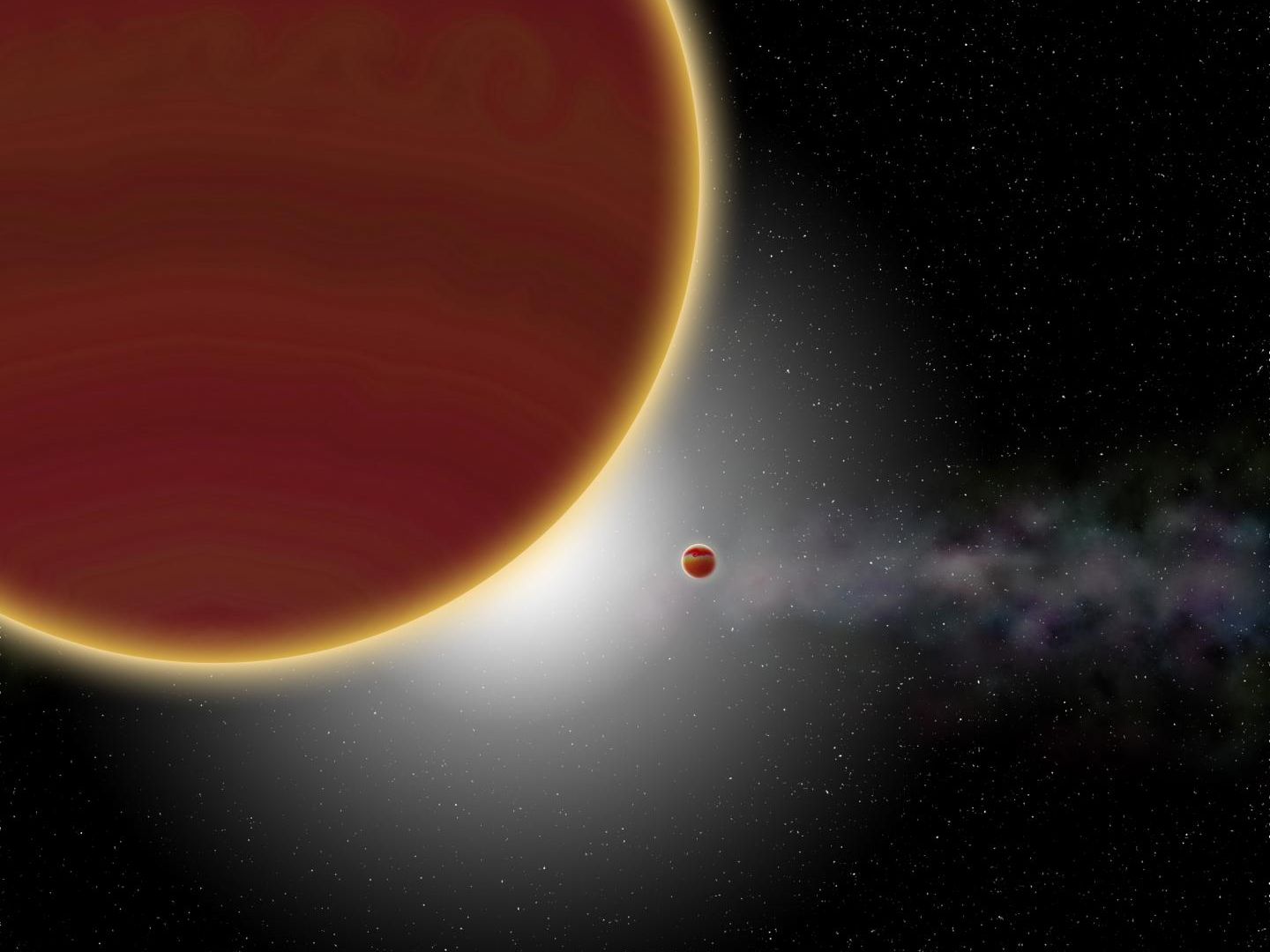
Astronomers using NASA’s James Webb Space Telescope (JWST) discover a new giant exoplanet, Beta Pictoris d, in the Beta Pictoris system. The discovery uses spectroscopy with Webb instruments, and it identifies the planet via atmospheric “fingerprints” rather than traditional imaging.
Beta Pictoris d Exoplanet Discovery (JWST):
| Dimension | Key Details |
|---|---|
| Beta Pictoris system | Beta Pictoris is a nearby system in the Milky Way known for its bright debris disc and role as a “laboratory” for planetary formation. |
| Distance and age of system | The Beta Pictoris system is 63 light-years away and is 23 million years old. |
| Imaged planets in the system | The Beta Pictoris system comprises three imaged planets: Beta Pictoris b, Beta Pictoris c, and Beta Pictoris d. |
| Uniqueness claim | The Beta Pictoris system becomes only the 2nd system with three imaged planets. |
| Primary detection method and instrument | Beta Pictoris d is discovered using spectroscopy with Webb’s NIRSpec (Near-Infrared Spectrograph). |
| Initial identification marker | Beta Pictoris d is identified by carbon monoxide lines. |
| Confirmation markers and instrument | Beta Pictoris d is later confirmed with water vapor and methane by Webb’s MIRI. |
| Detection approach | The discovery shows a way to detect planets through atmospheric fingerprints instead of traditional imaging. |
| Mass | Beta Pictoris d has a mass of 2× Jupiter and is the smallest of the three planets in the system. |
| Orbit | Beta Pictoris d orbits at 30 astronomical units. |
| Location relative to debris disc | Beta Pictoris d lies inside the inner edge of the debris disc. |
| Debris disc implication | Beta Pictoris d explains the sharp inner edge and structures of the debris disc. |
| Prediction validation | The discovery validates predictions of a hidden planet influencing disc dynamics. |
| First-of-its-kind claim | Beta Pictoris d is the first planet discovered primarily through moderate-resolution spectroscopy. |