|
SEHAT Mission
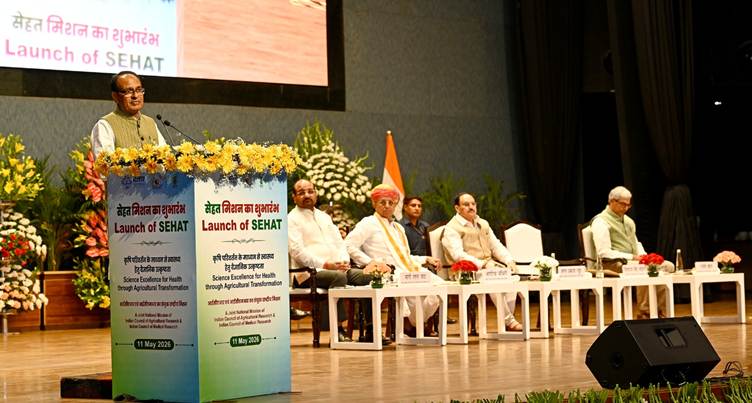
SEHAT has been launched as a joint initiative of ICMR and ICAR to link agriculture with nutrition, health, and well-being. The initiative is for addressing malnutrition, non-communicable diseases, and One Health preparedness.
SEHAT Initiative:
| Dimension | Key Details |
|---|---|
| Full Form | SEHAT stands for Science Excellence for Health through Agricultural Transformation. |
| Institutional Partnership | SEHAT is a joint initiative of the Indian Council of Medical Research and the Indian Council of Agricultural Research. |
| Vision | The initiative provides for transforming agriculture from a food production system into a driver of nutrition, health, and well-being. |
| Priority Areas | The initiative comprises 5 priority areas: biofortified crops, integrated farming systems, occupational health risks, non-communicable diseases, and One Health preparedness. |
| Biofortified Crops | The initiative provides for development and evaluation of biofortified and nutrient-dense crop varieties to address malnutrition. |
| Biofortification | Biofortification increases nutrient density of food crops through conventional plant breeding, agronomic practices, or modern biotechnology. |
| Integrated Farming Systems | Integrated farming systems provide for dietary diversification, higher farm incomes, and resilience. |
| Occupational Health | The initiative provides for targeted and evidence-based interventions to address occupational health risks among agricultural workers. |
| Non-Communicable Diseases | The initiative provides for agriculture-enabled strategies through functional foods and nutritionally superior crop varieties. |
| One Health | One Health preparedness provides for integrated surveillance, diagnostics, and research at the human-animal-environment interface. |
| Significance | The initiative provides for a proactive, preventive, and holistic healthcare approach and addresses undernutrition, overnutrition, and non-communicable diseases. |
| Governance Approach | The initiative follows a whole-of-government and whole-of-systems approach integrating science, policy making, and implementation. |