|
Ministry of Agriculture Bans Paraquat Dichloride Registration
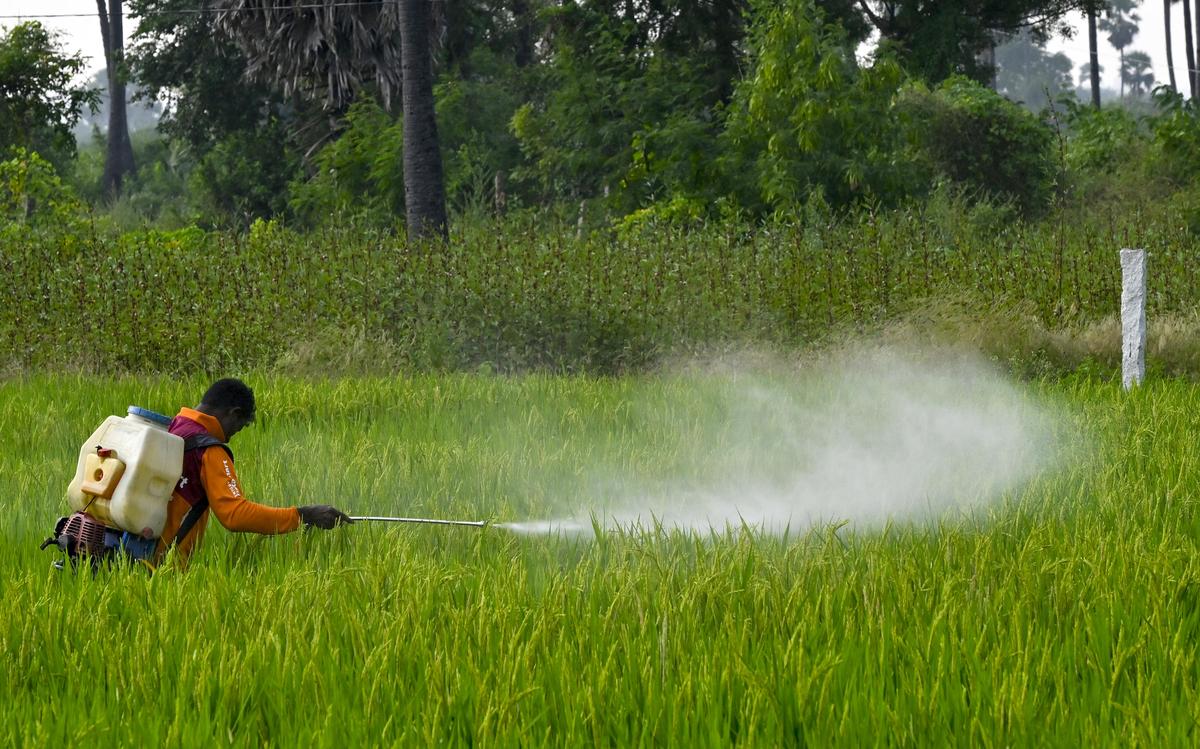
The Ministry of Agriculture and Farmers Welfare prohibits the registration of Paraquat Dichloride, a widely used non-selective contact herbicide in India. The prohibition is promulgated under provisions of the Insecticides Act, 1968, and directs recall of registration certificates and enforcement by State Governments.
Paraquat Dichloride:
| Dimension | Key Details |
|---|---|
| Chemical type and action | Paraquat Dichloride is a fast-acting, non-selective ammonium herbicide that disrupts plant photosynthesis by generating reactive oxygen species, and destroys plant cell membranes upon contact with sunlight. |
| Agricultural utility | Paraquat Dichloride is widely utilized for pre-emergence weed control, zero-tillage field preparation, and desiccation in crops such as cotton, paddy, tea, maize, and sugarcane. |
| Statutory power invoked | The prohibition is promulgated under Section 27(2) read with Section 28 of the Insecticides Act, 1968, which empowers the Central Government to ban or cancel registrations of toxic substances if their continued use poses unacceptable health risks. |
| Immediate certificate recall | The order directs the Registration Committee to recall all active Section 9 registration certificates from manufacturers and distributors, and failure to return certificates is punishable under the Act. |
| State-level enforcement | The order mandates State Governments to take executive and administrative enforcement measures under the Act to halt the supply, trade, and application of the herbicide. |
| Toxicity: antidote and fatal dose | Paraquat Dichloride has no specific antidote, and ingestion of 10–15 ml can be fatal, making medical intervention largely ineffective. |
| Toxicity: organ damage | Paraquat Dichloride causes progressive pulmonary fibrosis, renal failure, and liver necrosis. |
| Poisoning and self-harm risk | Paraquat Dichloride accounts for a disproportionate share of accidental agricultural poisonings and intentional self-harm cases across rural India. |
| Global regulatory status | Paraquat Dichloride is already banned or severely restricted in over 60 countries including the European Union, China, Brazil, and the UK, due to its acute lethal toxicity and absence of a specific antidote. |
| Linkage with NMNF and alternatives | The prohibition accelerates the transition toward sustainable weed management under India's National Mission on Natural Farming (NMNF), and directs agricultural extension services to promote less toxic alternatives such as Glufosinate-ammonium or targeted selective pre-emergence herbicides. |