|
MHA Extends AFSPA in Manipur, Nagaland and Arunachal Pradesh for 6 Months
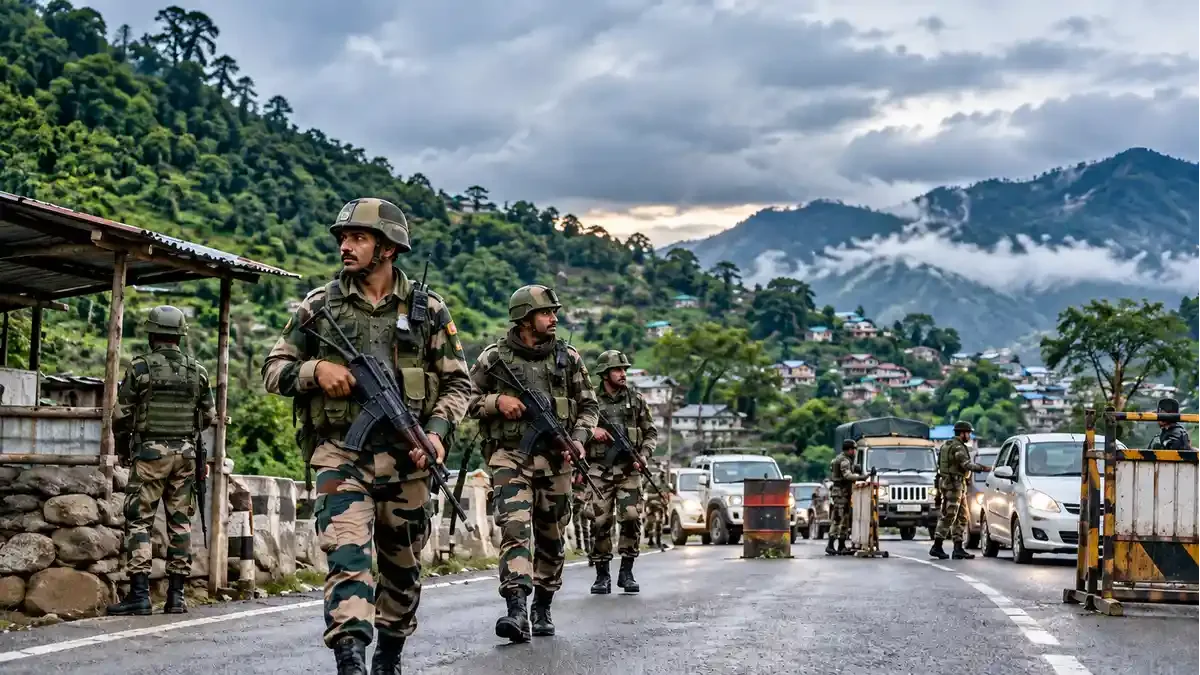
The Ministry of Home Affairs extends the Armed Forces (Special Powers) Act (AFSPA), 1958 in specified “disturbed areas” across Manipur, Nagaland, and Arunachal Pradesh for an additional 6 months. The extension applies from October 1, 2026, to March 31, 2027, following periodic security reviews by the Central Government.
AFSPA Extension in Manipur, Nagaland, and Arunachal Pradesh:
| Dimension | Key Details |
|---|---|
| Review basis | The decision follows periodic security reviews by the Central Government assessing persistent ethnic friction, residual insurgent movement, and border security along the Indo-Myanmar frontier. |
| Manipur: geographic scope | AFSPA applies to the entire state except areas under the jurisdiction of 13 police stations across 5 valley districts: parts of Imphal East, Imphal West, Bishnupur, Thoubal, and Kakching. |
| Nagaland: geographic scope | AFSPA applies to 9 full districts, Dimapur, Niuland, Chümoukedima, Mon, Kiphire, Noklak, Phek, Peren, and Meluri, and to 21 police stations across 5 other districts, Kohima, Mokokchung, Longleng, Wokha, and Zunheboto. |
| Arunachal Pradesh: geographic scope | AFSPA applies to 3 eastern districts, Tirap, Changlang, and Longding, and to areas under 3 police stations, Namsai, Mahadevpur, and Chowkham, in Namsai district bordering Assam. |
| AFSPA, 1958: Section 3 | Section 3 authorises the Governor of a State, the Administrator of a UT, or the Central Government to declare an area “disturbed” if civil authorities are deemed insufficient to handle internal violence or insurgency. |
| AFSPA, 1958: Section 4 | Section 4 authorises commissioned officers, warrant officers, and non-commissioned officers in designated areas to: open fire, including lethal force, after due warning against individuals acting in contravention of law and order or carrying arms; arrest suspects without a warrant based on reasonable suspicion; enter and search any premises without a warrant to arrest persons or recover arms and ammunition; destroy arms dumps, fortified positions, or structures used as hideouts. |
| AFSPA, 1958: Section 6 | Section 6 mandates that no prosecution, suit, or legal proceeding is instituted against security personnel for actions performed under the Act except with the prior sanction of the Central Government. |
| Naga People’s Movement for Human Rights v. Union of India | The ruling mandates that a “disturbed area” declaration is reviewed periodically, at least once every 6 months, mandates security forces to follow the Army’s internal “Do’s and Don’ts,” and mandates handing over arrested persons to the nearest civil police station with minimum possible delay. |
| EEVFAM v. Union of India (2016) | The Supreme Court ruling states that immunity under Section 6 is not absolute, does not provide blanket protection against extrajudicial killings or excessive force, and orders CBI or SIT investigations into alleged fake encounters in Manipur. |
| Justice Jeevan Reddy Committee | The committee recommends repealing AFSPA, describes it as a “symbol of oppression,” and advocates incorporating its necessary provisions into the Unlawful Activities (Prevention) Act (UAPA). |
| 2nd Administrative Reforms Commission | The commission concurs with the Justice Jeevan Reddy Committee and advises repeal to bridge the psychological gap between the Northeast and mainstream administration. |