|
Constitutional Basis of Voting in India
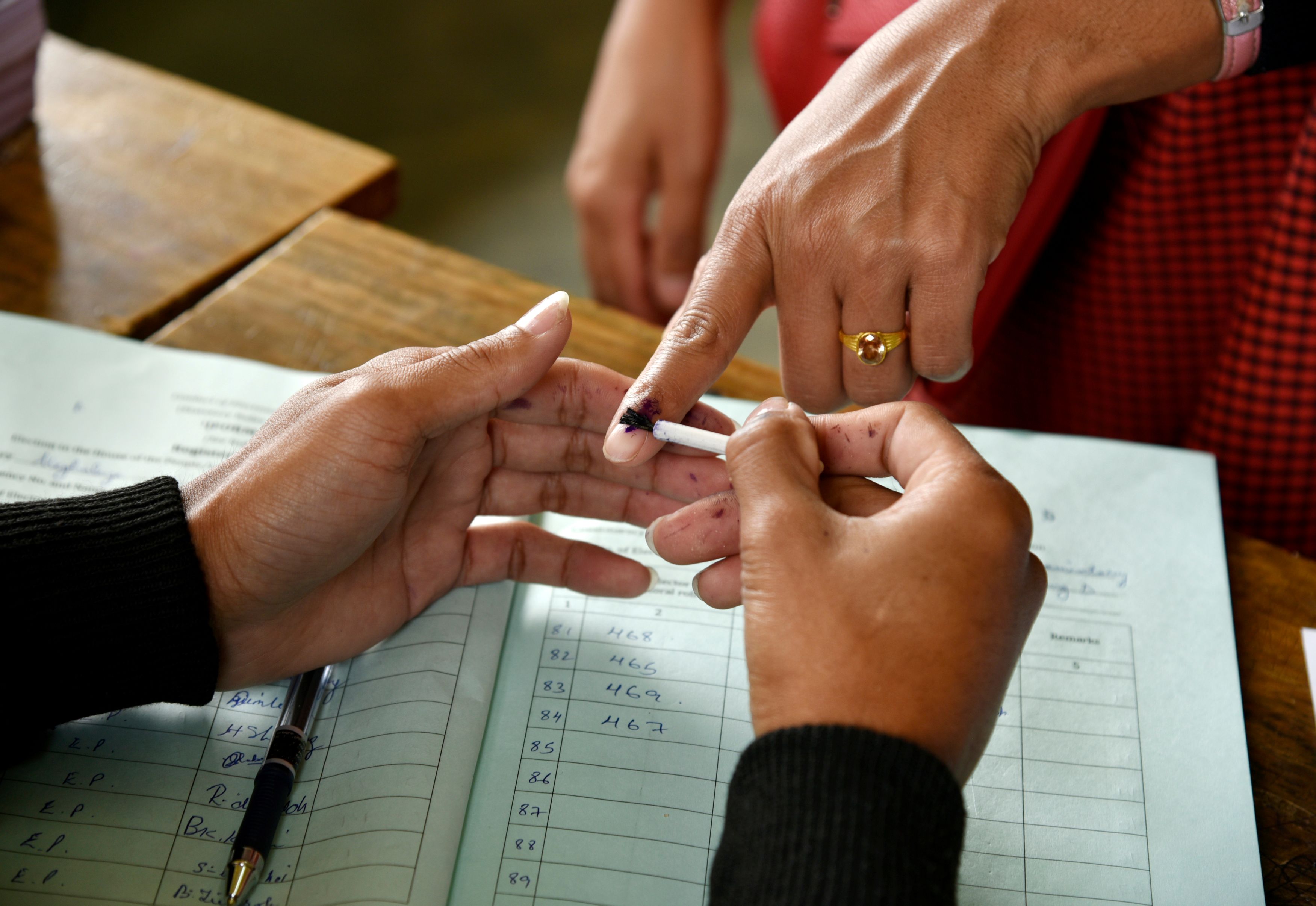
Recent concerns over electoral roll management and the functioning of the Election Commission of India (ECI) renew discussion on the legal status and protection of the right to vote in India. The issue is discussed through Article 326, the Representation of the People Acts, and Supreme Court rulings on whether the “right to elect” is fundamental, constitutional, or statutory.
Constitutional and Statutory Basis:
| Dimension | Key Details |
|---|---|
| Universal adult suffrage (India) | India adopts universal adult suffrage from the beginning of the Republic, granting adult citizens the right to participate in elections without restrictions based on gender, caste, religion, education, or property. |
| Constitutional provision | Article 326 grants every adult citizen the right to vote regardless of gender, caste, religion, education, or property. |
| Statutory operationalisation | Article 326 is operationalised through the Representation of the People Act, 1950 and the Representation of the People Act, 1951. |
| Representation of the People Act, 1950 | The Representation of the People Act, 1950 governs preparation and revision of electoral rolls. |
| Representation of the People Act, 1951 | The Representation of the People Act, 1951 regulates election conduct, candidature, and electoral offences. |
| First general election | The first general election comprises around 173 million voters, many of whom are illiterate. |
| Election symbols | The Election Commission, under the first Chief Election Commissioner Sukumar Sen, introduces election symbols to make participation accessible to voters. |
| Constituent Assembly position | The Constituent Assembly considers whether voting should form part of the Fundamental Rights chapter, but the proposal is not adopted. |
| Supreme Court ruling | In Kuldip Nayar v. Union of India (2006), a five-judge Constitution Bench of the Supreme Court holds that the “right to elect” is a statutory right deriving from Section 62 of the Representation of the People Act, 1951, rather than a fundamental or constitutional right. |
| Supreme Court reference | In Rajbala v. State of Haryana (2015), a two-judge Bench refers to the right to vote as a constitutional right. |
| Supreme Court stance | In Anoop Baranwal v. Union of India (2023), the Supreme Court does not revisit the issue, noting the existing position established by Kuldip Nayar. |
| Dissenting view | Justice Ajay Rastogi, in his dissent, argues that the right to vote could be viewed as an expression of Article 19(1)(a) and connected with Article 21. |
| Electoral rolls and franchise | The right to participate in elections depends in practice on an accurate electoral roll. |
| RPA, 1950 (Section 19: entitlement to registration) | Section 19 provides that a citizen who is at least 18 years old, ordinarily resident in a constituency, and not otherwise disqualified is entitled to registration. |
| RPA, 1950 (Section 21: ECI power) | Under Section 21, the Election Commission is empowered to direct the preparation and revision of electoral rolls. |
| Electoral roll errors | Errors include omission of eligible voters, inclusion of ineligible persons, duplicate entries, and incorrect voter details. |
| Constitutional role of ECI | The Election Commission exercises constitutional powers under Article 324 relating to the superintendence, direction, and control of elections. |
| Parliament’s authority | The existing legal framework gives Parliament the authority to regulate electoral participation through legislation. |