|
Ladakh's Sixth Schedule demand and proposal for Article 371-K
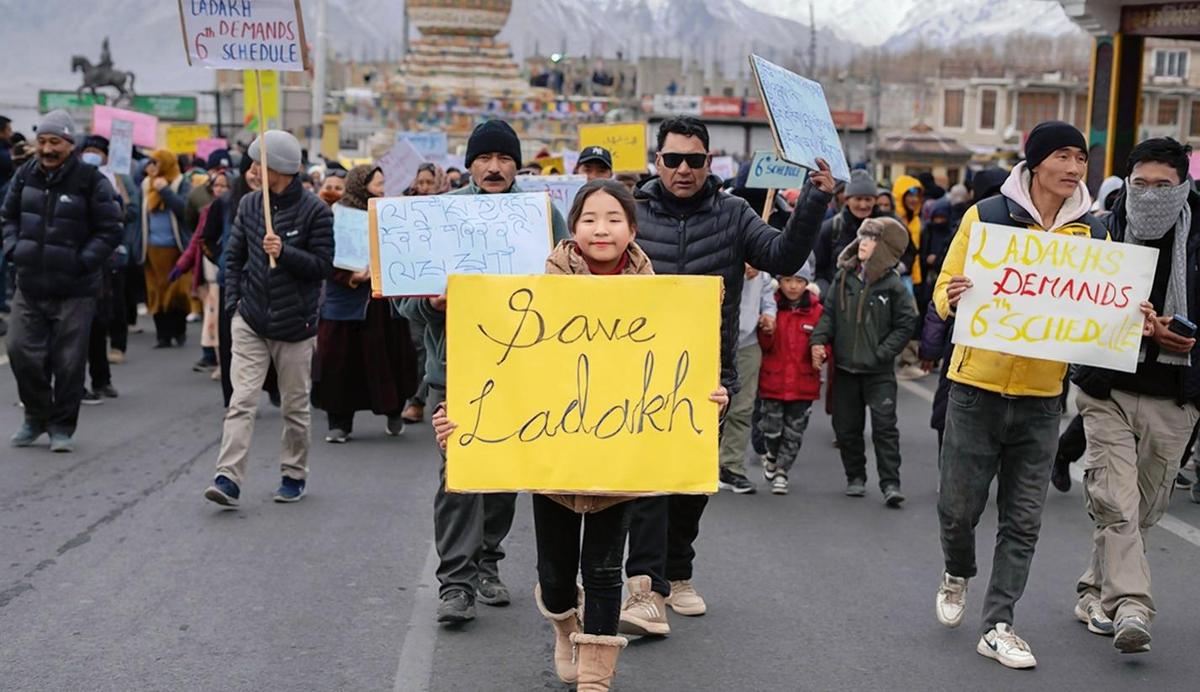
Ladakh’s demand for Sixth Schedule status is accompanied by a proposal to create a directly elected legislative body through a new constitutional provision, Article 371-K. The debate continues because Ladakh is a Union Territory without a Legislative Assembly under the Jammu and Kashmir Reorganisation Act, 2019, and local groups raise concerns on cultural protection, land rights, and political representation.
6th Schedule Demand and Proposed Article 371-K:
| Dimension | Key Details |
|---|---|
| Demand | The demand comprises concerns relating to protection of culture, language, traditions, and customary practices; safeguarding land rights against excessive acquisition by outsiders; greater political representation; and greater participation in decisions affecting development and governance. |
| Sixth Schedule constitutional basis | The Sixth Schedule is implemented through Articles 244(2) and 275(1) of the Constitution. |
| Sixth Schedule applicability | The Sixth Schedule applies to specified tribal areas in Assam, Meghalaya, Tripura, and Mizoram. |
| Institution under Sixth Schedule | The Sixth Schedule provides for Autonomous District Councils with substantial powers over local governance. |
| Autonomous District Council composition limit | A district council can have a maximum of 30 members. |
| Proposed alternative to Sixth Schedule for Ladakh | The Central Government has proposed inserting Article 371-K into Part XXI of the Constitution, which deals with temporary, transitional, and special provisions. |
| Proposed Article 371-K framework | The proposed framework provides for a directly elected legislative authority for Ladakh while maintaining the Union Territory’s existing constitutional position. |
| Placement vis-à-vis existing institutions | The proposed institution authorises a structure that could potentially be placed above the existing Ladakh Autonomous Hill Development Councils (LAHDCs) while retaining panchayats and other district-level institutions. |
| Special constitutional arrangements for Union Territories | Parliament has previously created special arrangements for Union Territories, including the National Capital Territory of Delhi under Articles 239AA and 239AB. |