|
Mimeusemia kali
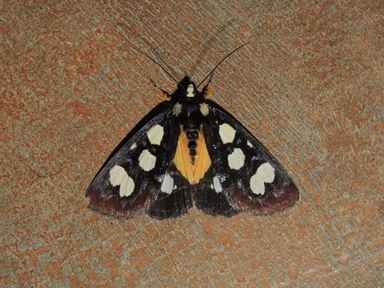
Scientists from the Zoological Survey of India (ZSI), Pune, in collaboration with the Natural History Museum, London, discover a new forester moth species in Kali Tiger Reserve, Karnataka. The species is named Mimeusemia kali and is reported as a new addition to the genus Mimeusemia in nearly 30 years.
Mimeusemia kali (Forester moth) :
| Dimension | Key Details |
|---|---|
| Discovering institutions | The discovery is reported by scientists from the Zoological Survey of India (ZSI), Pune, in collaboration with the Natural History Museum, London. |
| Common name | The common name is forester moth. |
| Scientific name | The scientific name is Mimeusemia kali Kalawate & László, 2026. |
| Genus | The species belongs to the genus Mimeusemia (forester moth group). |
| Family | The family is Noctuidae. |
| Distribution | The distribution includes Western Ghats, Karnataka (Kali Tiger Reserve). |
| Genus update | The species is a new addition to the genus Mimeusemia in nearly 30 years. |
| Global context: genus composition | The genus now includes 30 taxa worldwide: 23 species and 7 subspecies. |
| India coverage in the genus | India hosts 6 species in the genus, including the new find. |
| Activity pattern | The group is primarily day-active, and some species are active at dusk. |
| Distinct traits | The species has unique physical characteristics, reproductive structures, and genetic features. |
| Validation method | Phylogenetic analyses validate it as a separate species. |
| Phylogenetic analyses (definition) | Phylogenetic analyses comprise the study of an organism's evolutionary family tree using DNA and physical traits. |
| Ecological role of moths | Moths act as pollinators, herbivores, and food sources for birds, bats, reptiles, and other animals. |
| Indicator species status | Moths are sensitive to environmental changes and are useful for assessing ecosystem health. |