|
Election Commission of India under Article 324
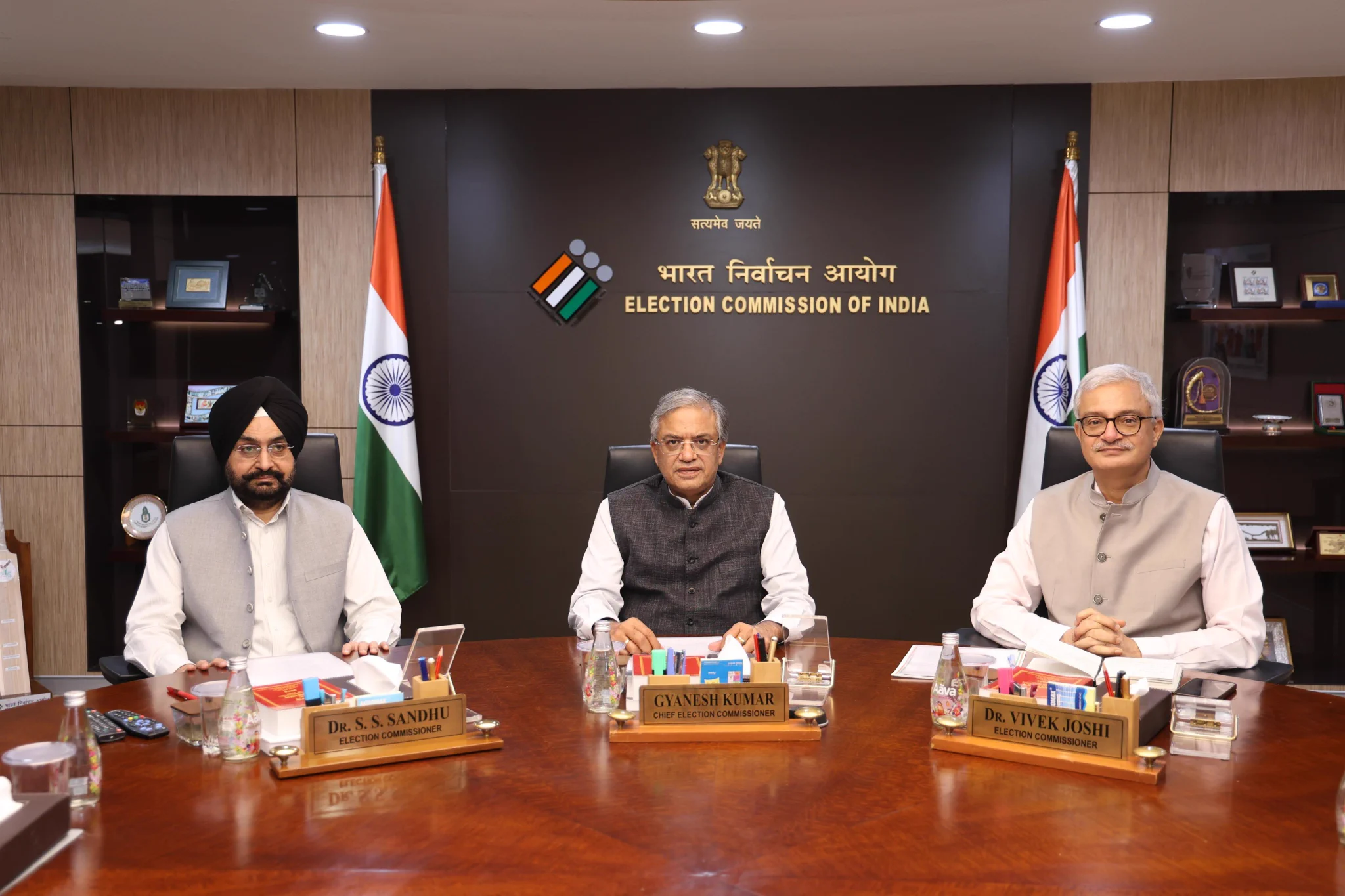
The Election Commission of India’s decision-making process is governed by the Chief Election Commissioner and Other Election Commissioners (Appointment, Conditions of Service and Term of Office) Act, 2023, amid recent reports of differing views among Election Commissioners. The ECI is established under Article 324, which provides for its role in elections and electoral roll preparation.
ECI : Article 324 and Decision-Making Framework
| Dimension | Key Details |
|---|---|
| Constitutional status | The Election Commission of India (ECI) is established under Article 324 of the Constitution. |
| Mandate under Article 324 | Article 324 provides for the ECI to exercise “superintendence, direction and control” of the preparation of electoral rolls and the conduct of elections. |
| Election coverage under Article 324 | Article 324 applies to elections to Parliament, State Legislatures, and the offices of the President and Vice-President. |
| Composition | The Constitution provides for a Chief Election Commissioner (CEC) and such number of other Election Commissioners (ECs) as the President may determine, subject to legislation. |
| Multi-member commission (1993) | The ECI comprises 3 members from 1993: the CEC and 2 Election Commissioners. |
| Governing law for decision-making | The decision-making process is governed by the Chief Election Commissioner and Other Election Commissioners (Appointment, Conditions of Service and Term of Office) Act, 2023. |
| Section 17 (Act, 2023) | Section 17 provides that the business of the Commission is conducted according to the provisions of the Act. |
| Section 18 (Act, 2023): decision rule | Section 18 provides that the Commission should, as far as possible, conduct its business unanimously, and if members differ in their opinions, the matter is decided by majority. |
| Voting mechanism | The Commission comprises 3 members, each member has 1 vote, and the CEC does not possess a casting vote that can override the other Commissioners. |
| Judicial clarification (1995) | T.N. Seshan v. Union of India (1995) provides for equality of status among the three members in decision-making, while the CEC serves as chairperson. |
| Dissent and deliberations | The internal deliberation process comprises observations recorded during deliberations and final dissents against a Commission decision, and Commissioners can record disagreement on files while the final decision can be unanimous or based on majority opinion. |
| Instances of differing views mentioned | The examples of intra-ECI differences comprise: disagreements involving T.N. Seshan with M.S. Gill and G.V. Krishnamurthy; a 2009 request by CEC N. Gopalaswami to the President seeking removal of Election Commissioner Navin Chawla; and Ashok Lavasa’s dissent notes in 2019 followed by resignation from the ECI in 2020. |
| Special Intensive Revision (SIR) of electoral rolls (2025) | The SIR of electoral rolls in 2025 comprises an internal observation by Election Commissioner Sukhbir Singh Sandhu on avoiding harassment of vulnerable groups, including elderly persons, persons with disabilities, and poor citizens, and a final SIR decision that is unanimous, as per the ECI. |