|
Kunming Institute of Botany Reports Dianjunus rex Giant Fungus
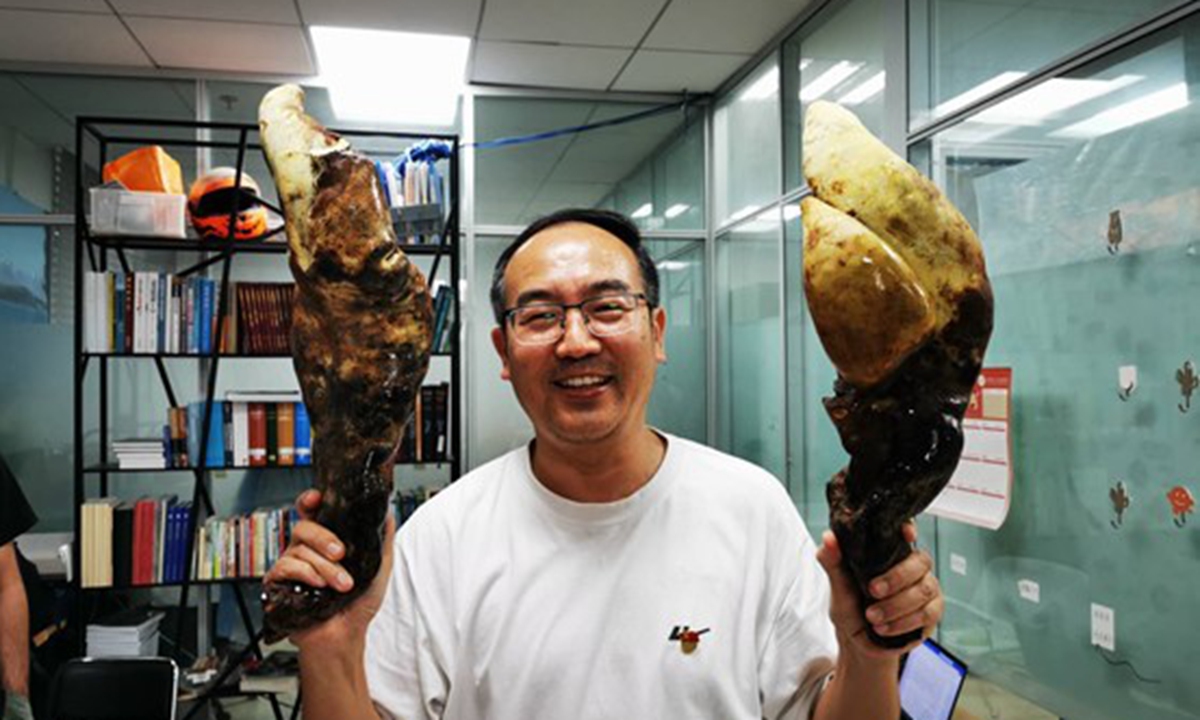
Researchers from the Kunming Institute of Botany, with international collaborators, announce the discovery of a previously unknown giant fungus species in Yunnan Province, China. The species is named Dianjunus rex (popularly dubbed “D-Rex”) and is reported as establishing a new genus and family within the order Xylariales.
Dianjunus rex (“D-Rex”) Giant Fungus:
| Dimension | Key Details |
|---|---|
| Geographical location | Specimens comprise collections from forests in Yunnan Province, China. |
| Habitat types in Yunnan | Specimens comprise collections from temperate coniferous forests and tropical rainforests. |
| Taxonomic placement | Dianjunus rex comprises a new genus and a new family, Dianjunaceae, within the order Xylariales. |
| Evolutionary lineage | Molecular clock analyses comprise a divergence timeline of Dianjunaceae to roughly 65 million years ago. |
| Linkage to K-Pg event | The 65 million-year timeline comprises an emergence immediately following the Cretaceous-Paleogene (K-Pg) mass extinction event. |
| Height | Specimens comprise a height range of 20–50 centimetres. |
| Weight (most specimens) | Most specimens comprise a weight range of 250–600 grams. |
| Weight (exceptional specimen) | An exceptionally large specimen comprises a weight of 2.2 kilograms. |
| Spore-producing structure record | The species comprises the largest spore-producing structure (stromata) recorded among fungi belonging to Ascomycota. |
| Ascomycota | Ascomycota comprises a major phylum in the fungal kingdom, comprising over 64,000 species. |
| Etymology | The name “Dianjunus” comprises a reference to the ancient Dian Kingdom in Yunnan and the Chinese word for fungus (“jun”), and “rex” comprises “king” in Latin. |
| Observed emergence substrate | Findings comprise fungi emerging from the roots of recently dead trees and surrounding soil. |
| Hypothesised life strategy | The hypothesis comprises an endophytic residence inside healthy trees followed by saprotrophic feeding upon host death. |