|
Indian Study Identifies Martian Analogue Sites in Tamil Nadu and Chile’s Atacama Desert
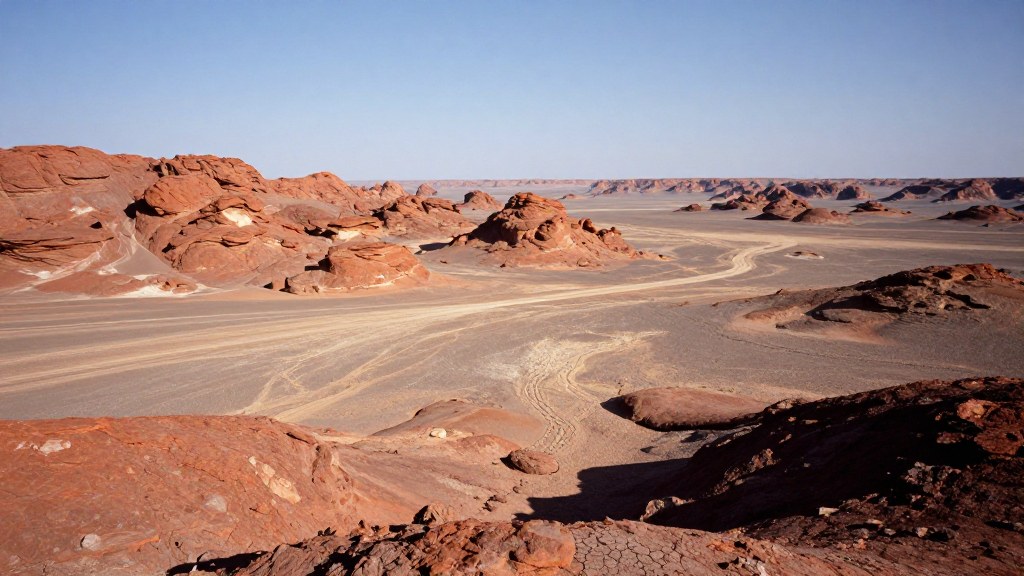
A recent study provides for the identification and characterisation of terrestrial geological formations in Tamil Nadu, India, and the Atacama Desert, Chile, as prime Martian analogue sites. The study remains in news in the context of planetary exploration preparation, rover testing, and astrobiological detection protocol validation.
Martian Analogue Sites Identified in Tamil Nadu and Chile’s Atacama Desert:
| Dimension | Key Details |
|---|---|
| Martian analogue sites | Martian analogue sites comprise terrestrial environments that replicate geological, physical, chemical, or biological conditions found on Mars. |
| Replicated Mars-like conditions | Martian analogue sites comprise conditions such as extreme aridity, high ultraviolet radiation, specific mineral compositions, and volcanic basements. |
| Utility for space agencies | Martian analogue sites authorise testing of rover hardware, drill mechanisms, and astrobiological detection protocols prior to extraterrestrial deployment. |
| Tamil Nadu analogue | The Tamil Nadu analogue comprises specialized ultramafic and basaltic rock formations undergoing extreme weathering that replicate the iron- and magnesium-rich basaltic crust of Mars. |
| Tamil Nadu analogue (minerals and process parallel) | The Tamil Nadu analogue comprises secondary minerals, such as clay minerals and iron oxides, that replicate aqueous alteration processes believed to have occurred on early Mars. |
| Atacama Desert analogue | The Atacama Desert analogue comprises hyper-aridity, extreme UV exposure, and perchlorate-bearing soils that replicate Martian regolith chemistry. |
| Significance for India | The identified analogue sites provide for field-testing of India’s future planetary rover concepts, autonomous navigation algorithms, and drill assemblies under rugged, unpaved conditions. |
| Significance for India (astrobiology and biosignature detection) | The identified analogue sites provide for study of extremophiles within rocks and soils, and refine protocols for detecting microbial life or past biosignatures on Mars. |
| Indian institutions | The study provides for collaborative research among Indian scientific institutions such as ISRO, PRL, and academic institutes in comparative planetology and astrogeology. |