|
Wildlife Crossings Explained
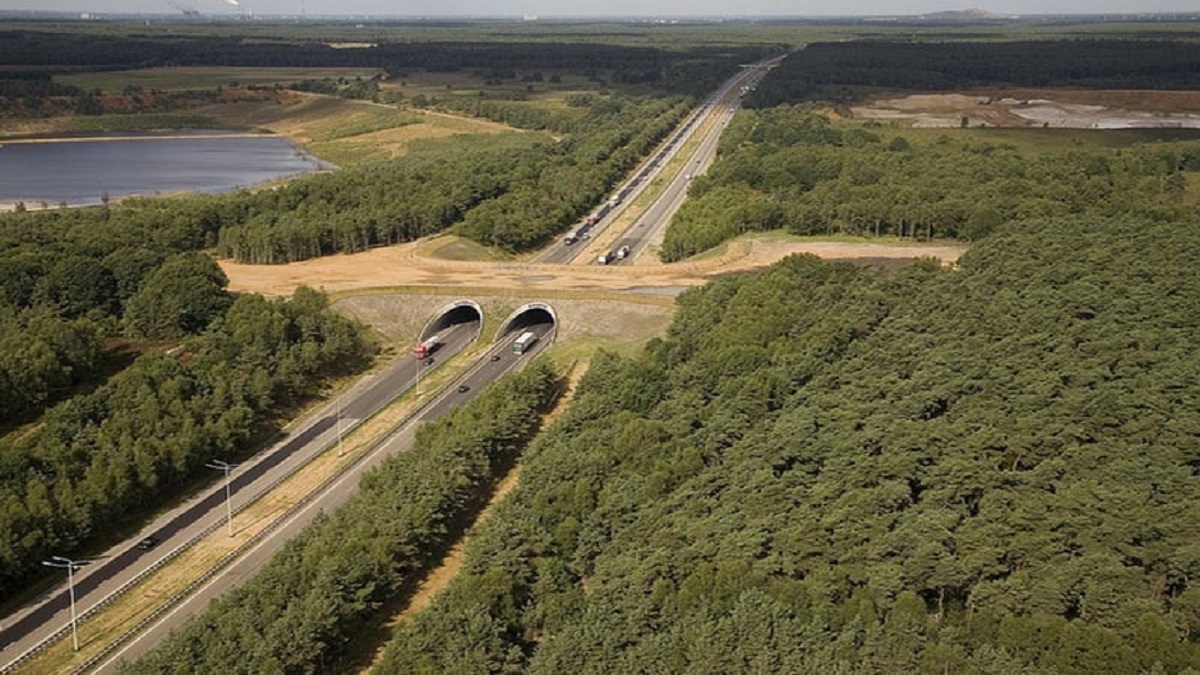
Habitat fragmentation caused by roads, railway lines, and other linear infrastructure poses threats to wildlife populations in India. The news focus is on wildlife crossings as mitigation measures and on examples where infrastructure fragments habitats.
Wildlife Crossings and Habitat Fragmentation :
| Dimension | Key Details |
|---|---|
| Habitat fragmentation | Habitat fragmentation refers to the process by which a large, continuous habitat is divided into smaller, isolated patches as a result of human activities or natural processes. |
| Primary causes | Primary causes comprise the construction of highways and expressways, expansion of railway networks, development of dams, mining operations, and other infrastructure projects, and conversion of forests into agricultural plantations and human settlements. |
| Other impacts | Other impacts comprise elevated rates of roadkill and wildlife mortality, limited access to food resources, potential mates, and breeding habitats, heightened incidence of human–wildlife conflict, and increased risk of local extinction among small, isolated populations. |
| Canopy bridges | Canopy bridges comprise trees planted or maintained to create continuous overhead vegetation, and they help arboreal animals cross roads or railway lines. |
| Rope bridges | Rope bridges comprise ropes stretched between trees or across roads, and they assist squirrels and other tree-dwelling species. |
| Wildlife overpasses | Wildlife overpasses comprise vegetated structures built above roads or railways, and they allow animals to cross safely over infrastructure. |
| Wildlife underpasses | Wildlife underpasses comprise tunnels or passages beneath roads and railways, and they facilitate movement of terrestrial animals. |
| Green bridges / ecoducts | Green bridges, also called ecoducts, comprise broad, vegetation-covered structures connecting habitats, and they restore habitat connectivity across major infrastructure. |
| Suitability by species type | Canopy and rope bridges are particularly suitable for arboreal species, whereas underpasses and overpasses are typically constructed to facilitate movement for terrestrial mammals, reptiles, and other wildlife. |
| Hoollongapar Gibbon Sanctuary (Assam) | Hoollongapar Gibbon Sanctuary provides for conservation of western hoolock gibbons, and its habitat is fragmented by railway infrastructure. |
| Valparai (Tamil Nadu) | Valparai comprises lion-tailed macaque habitat that is affected by plantations and roads. |
| Melghat Tiger Reserve (Maharashtra) | Melghat Tiger Reserve comprises an example where rope bridges are used to help arboreal wildlife. |
| Srivilliputhur Grizzled Squirrel Sanctuary (Tamil Nadu) | Srivilliputhur Grizzled Squirrel Sanctuary comprises an important habitat for the grizzled giant squirrel. |
| Netherlands (Europe) | The Netherlands is known for wildlife overpasses and ecological connectivity measures. |