|
FSSAI Draft Regulations Propose New MRLs for Acetamiprid, Imidacloprid in Tea
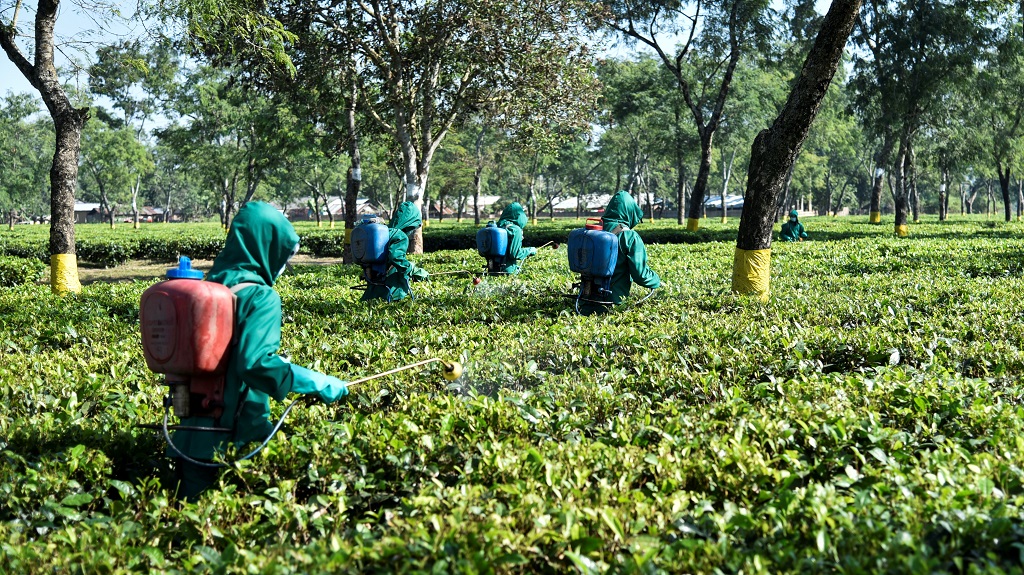
FSSAI publishes draft regulations on October 16, 2026, proposing revised Maximum Residue Limits (MRLs) for Acetamiprid and Imidacloprid in tea. The proposed limits remain subject to finalisation under the regulatory framework of the Food Safety and Standards Act, 2006.
Draft MRLs for Acetamiprid and Imidacloprid in Tea (FSSAI):
| Dimension | Key Details |
|---|---|
| Authority | FSSAI is the statutory authority established under the Food Safety and Standards Act, 2006. |
| Nodal Ministry | FSSAI is governed by the Ministry of Health and Family Welfare. |
| Proposed MRLs in Tea | The proposed MRLs in tea comprise: Acetamiprid 20 mg/kg (20 ppm), and Imidacloprid 50 mg/kg (50 ppm). |
| Status of Limits | These MRLs are proposed standards and remain subject to finalisation. |
| Maximum Residue Limit (MRL) Definition | MRL is the highest legally permissible concentration of pesticide residues in a food commodity, established through scientific risk assessments. |
| Acetamiprid | Acetamiprid is a neonicotinoid insecticide used to control insect pests in crops. |
| Imidacloprid | Imidacloprid is a neonicotinoid insecticide used to control various agricultural insect pests. |
| International Standards (Acetamiprid) | The proposed Acetamiprid limit is lower than the cited limits of Japan (30 ppm) and the United States (50 ppm). |
| International Standards (Imidacloprid) | The proposed Imidacloprid limit is formulated with reference to international Codex standards. |
| Codex Alimentarius | Codex Alimentarius is a collection of international food standards developed by the Codex Alimentarius Commission, established by the FAO and WHO. |
| Earlier Regulatory Measures | FSSAI has revised pesticide residue standards in 2024 and has previously delisted 13 pesticides identified as having higher toxicity. |
| India Pesticide Consumption | India's average pesticide consumption is reported to be below 0.5 kg per hectare, compared with the cited global average of 2.38 kg per hectare. |