|
India’s First Hydrogen-Powered Train
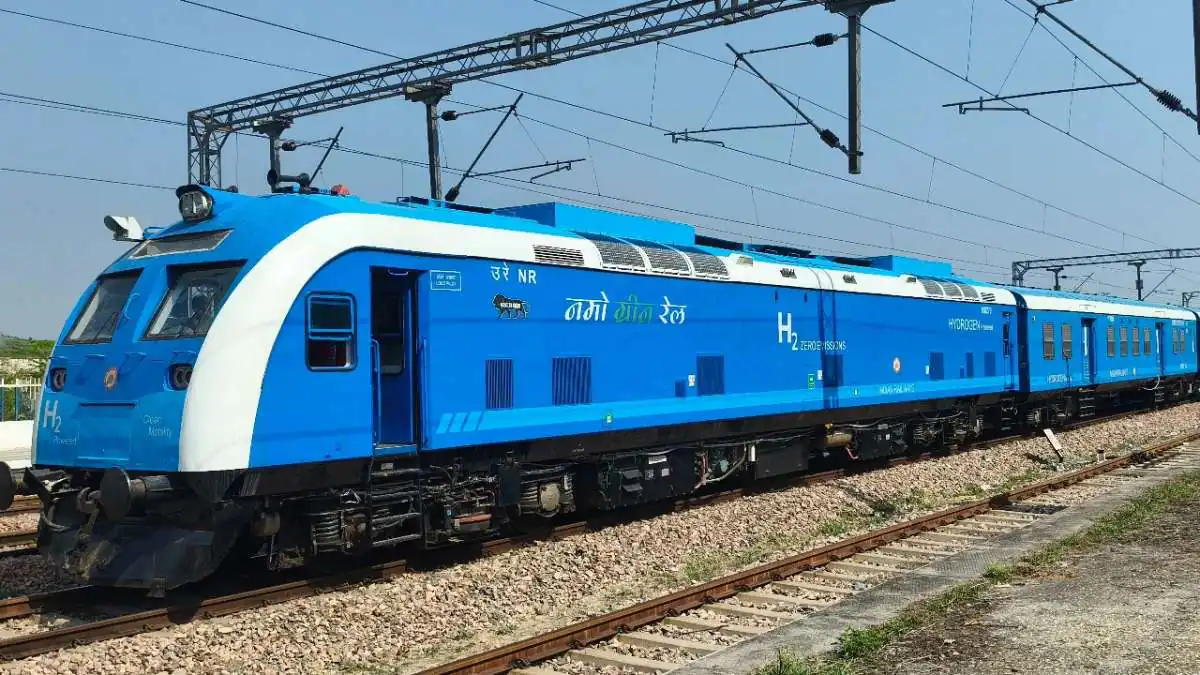
Indian Railways approves the introduction of a 10-car hydrogen fuel cell-based trainset. India’s first hydrogen-powered train is operated on the Jind–Sonipat route in Haryana and is developed by Chennai-based Integral Coach Factory.
India’s First Hydrogen-Powered Train :
| Dimension | Key Details |
|---|---|
| Approving authority | Indian Railways approves the introduction of a 10-car hydrogen fuel cell-based trainset. |
| Route | The country’s first hydrogen-powered train runs between Jind and Sonipat in Haryana. |
| Developed by | The hydrogen-powered trainset is developed by Chennai-based Integral Coach Factory (ICF). |
| Hydrogen fuel cell technology | Hydrogen fuel cell technology generates electricity through a chemical reaction using hydrogen, with water vapour as the only emission. |
| Alternative to fossil fuel | Hydrogen fuel cell technology provides for a clean alternative to conventional fossil fuel-based traction systems. |
| Net-zero reference | Decarbonisation of the railways is linked to attaining the net-zero goal by 2070. |
| Hydrogen for Heritage | Indian Railways under “Hydrogen for Heritage” envisages deploying 35 hydrogen-powered trains on heritage and hill routes across the country. |
| Capacity and engine | The system comprises a 10-car train with a 1200 KW engine. |
| Maximum speed | It operates at a maximum speed of 75 kmph. |
| Hydrogen storage and refuelling facility | An indigenous hydrogen storage and refuelling facility is set up at Jind for the trainset. |
| Licence for hydrogen | The Petroleum and Explosives Safety Organisation (PESO) has granted the required licence for storage and dispensing of compressed hydrogen gas at the site. |
| Hydrogen compression system | A hydrogen compression system is provided for refuelling operations, along with technical support and critical spares, and a standby compressor unit is ensured. |
| Maintenance facility and safety provisions | Safety provisions, regular audits, and standard operating procedures are ensured for the proposed maintenance facility at Shakurbasti. |
| Safety and operational protocols | Protocols comprise 24x7 monitoring of the hydrogen refuelling system, deployment of trained and certified personnel for critical operations, and regular inspection and maintenance schedules. |
| Safety sensors | Safety sensors, including hydrogen leak detectors and flame detectors, are installed at the hydrogen production. |
| Manuals and approving body | Operation and maintenance manuals for the hydrogen train-set and hydrogen plant are approved by RDSO (Research Designs and Standards Organisation) and are made available. |