|
IIT Madras Releases ANCHOR, 3D Human Brainstem Atlas at Cellular Resolution
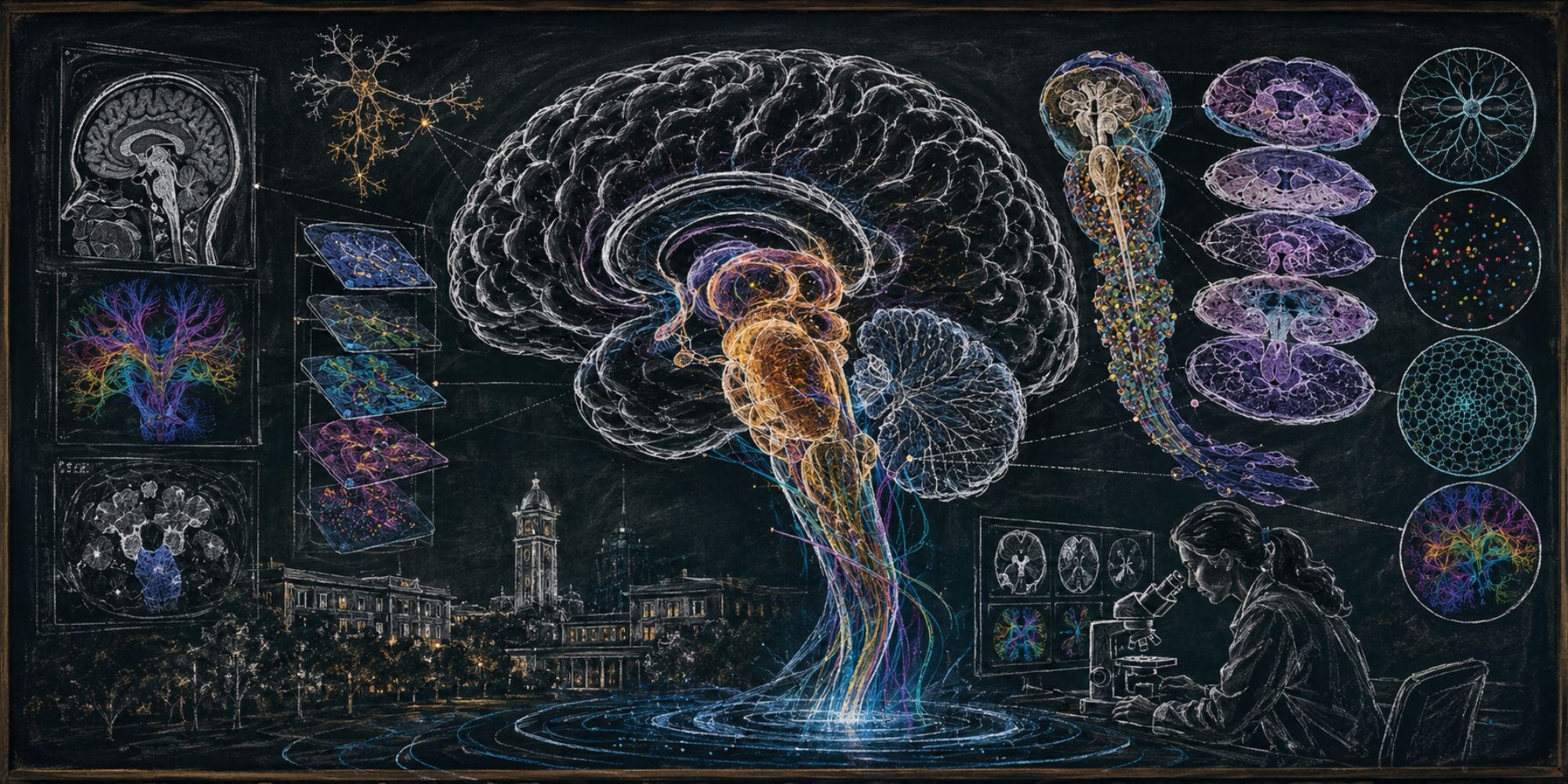
The Indian Institute of Technology Madras (IIT Madras) releases ANCHOR, described as the world’s most detailed three-dimensional atlas of the human brainstem at cellular resolution. ANCHOR is made publicly accessible through an online portal and is presented as a comprehensive, multimodal digital atlas mapping the brainstem from the prenatal stage to adulthood.
ANCHOR (Atlas of Neurochemical Characterization of the Human Brainstem with 3D Reconstruction):
| Dimension | Key Details |
|---|---|
| Full form | ANCHOR comprises Atlas of Neurochemical Characterization of the Human Brainstem with 3D Reconstruction. |
| Released by | ANCHOR is released by the Indian Institute of Technology Madras (IIT Madras). |
| Core feature | ANCHOR comprises a three-dimensional atlas of the human brainstem at cellular resolution. |
| Atlas coverage | ANCHOR maps the human brainstem from the prenatal stage to adulthood. |
| Type of atlas | ANCHOR comprises a comprehensive, multimodal digital atlas. |
| Technologies integrated | ANCHOR integrates Magnetic Resonance Imaging (MRI), histology, and detailed chemo-architectural analysis. |
| Reconstructed structures | ANCHOR comprises more than 200 brainstem nuclei and fiber tracts reconstructed from hundreds of serial brain sections. |
| Immunostaining dataset | To identify distinct neurochemical cell types, researchers have overlaid 8 complementary immunostains across more than 500 sections. |
| Visualization capability | ANCHOR enables visualization at nearly microscopic resolution. |
| Development platform | ANCHOR is developed using IIT Madras’ high-throughput brain imaging and computing platform. |
| Access mode | ANCHOR has been made publicly accessible through an online portal. |
| Brainstem functions mentioned | The brainstem regulates essential bodily functions: breathing, sleep, wakefulness, cardiovascular control, and motor coordination. |
| Conditions mentioned for cell-population identification | ANCHOR can help identify specific cell populations affected by conditions such as Alzheimer's disease, dementia, and other neurodegenerative disorders. |