|
Department of Atomic Energy Inaugurates Nuclear Process Heat Hydrogen Facility
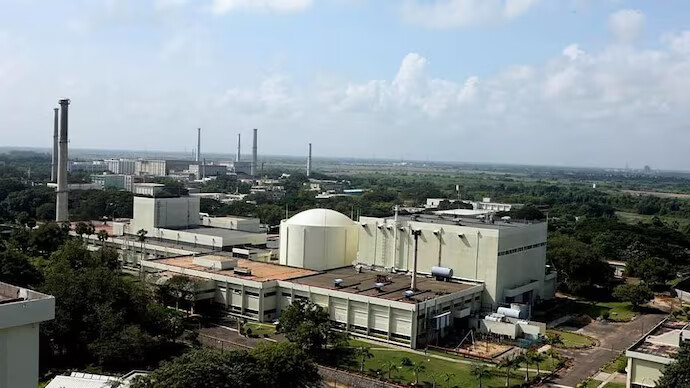
The Department of Atomic Energy (DAE) inaugurates a Nuclear Process Heat Hydrogen Facility as a technology demonstrator for hydrogen production using nuclear energy. The facility uses an indigenously developed copper-chlorine thermochemical process by Bhabha Atomic Research Centre (BARC) and nuclear process heat generated from the Fast Breeder Test Reactor (FBTR) at IGCAR, Kalpakkam.
Nuclear Process Heat Hydrogen Facility (DAE):
| Dimension | Key Details |
|---|---|
| Inaugurating authority | The facility is inaugurated by the Department of Atomic Energy (DAE). |
| Role | The facility serves as a technology demonstrator for production of hydrogen using nuclear energy. |
| Process used | The facility uses the copper-chlorine (Cu-Cl) thermochemical process developed indigenously by Bhabha Atomic Research Centre (BARC). |
| Heat source and location | It utilises nuclear process heat generated from the Fast Breeder Test Reactor (FBTR) at Indira Gandhi Centre for Atomic Research (IGCAR), Kalpakkam. |
| Cu-Cl process mechanism | The Cu-Cl thermochemical process uses high-temperature heat from a nuclear reactor to split water into hydrogen and oxygen. |
| Cu-Cl process characteristics | The Cu-Cl cycle operates at lower temperatures while offering relatively high efficiency, and is considered one of the more promising thermochemical routes. |
| IGCAR status and administrative control | Indira Gandhi Centre for Atomic Research (IGCAR) is established in 1971 and is under the Department of Atomic Energy (DAE). |
| FBTR contributions | FBTR serves as a platform for development and validation of fuels, materials, and sodium technologies, and plays a pivotal role in development of the 500 MWe Prototype Fast Breeder Reactor (PFBR). |
| PFBR reference | The 500 MWe Prototype Fast Breeder Reactor (PFBR) is described as the flagship of the second stage of India's three-stage nuclear power programme. |
| Other hydrogen production methods mentioned | Methods mentioned comprise thermochemical processes, electrolytic processes, and photoelectrochemical (PEC) water splitting. |
| Thermochemical processes (general) | Thermochemical processes use the energy in resources like natural gas, coal, or biomass, to release hydrogen from their molecular structure. |
| Steam Methane Reforming (SMR) | In SMR, natural gas reacts with high-temperature steam (at 700-1000 °C) under 3-25 bar pressure in presence of a catalyst to produce carbon monoxide, carbon dioxide, and hydrogen. |
| Electrolytic processes | Electrolysers use electricity to split water into hydrogen and oxygen. |
| Photoelectrochemical (PEC) water splitting | Hydrogen is produced from water using sunlight and specialised semiconductors called photoelectrochemical materials. |