|
Opposition Plans Parliament Motion to Remove CEC
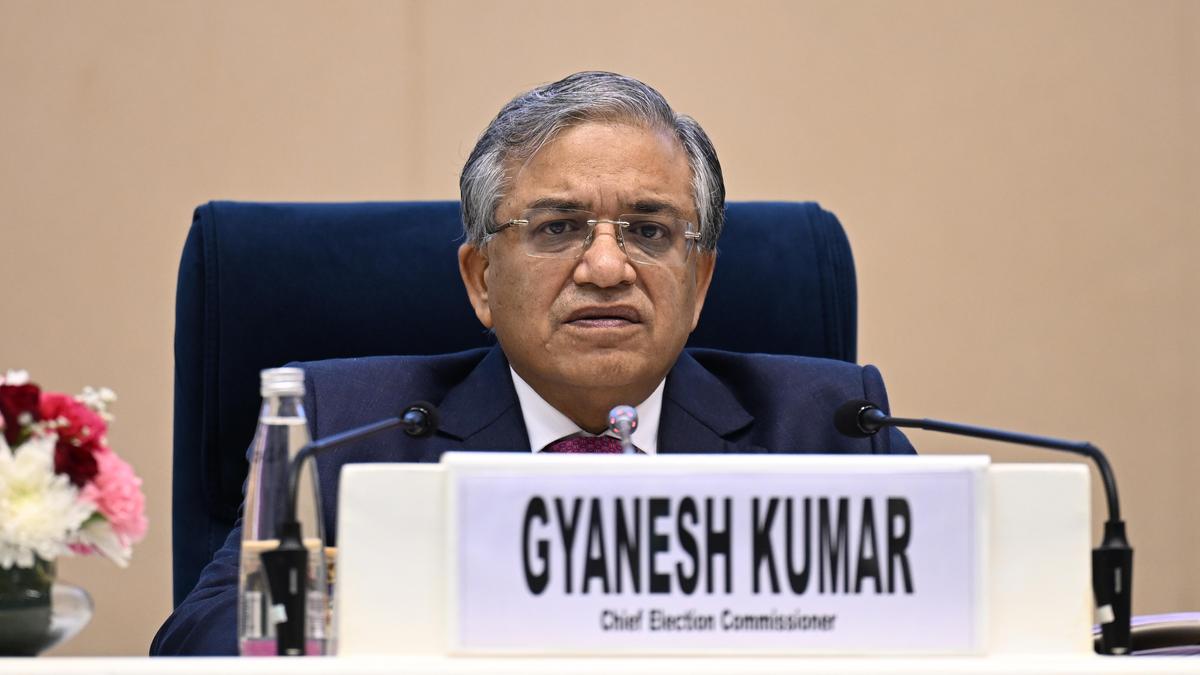
The Opposition is preparing to move a motion in both Houses of Parliament to remove Chief Election Commissioner (CEC) Gyanesh Kumar. The move comes after an Indian Express investigation reports internal criticisms by Election Commissioners Sukhbir Singh Sandhu and Vivek Joshi regarding ECI decisions and SIR-related processes.
Removal of Chief Election Commissioner:
| Dimension | Key Details |
|---|---|
| ECI composition | The Election Commission of India (ECI) comprises 3 Election Commissioners, including the CEC. |
| Status of CEC within ECI | The CEC is “first among equals” and is not necessarily the seniormost member. |
| Decision-making in ECI | Decisions are governed by a norm of unanimity among all 3 Election Commissioners, as far as possible. |
| Constitutional basis for appointments | Appointment of the CEC and Election Commissioners is governed by Article 324 of the Constitution. |
| Statutory basis for appointments | Appointment, conditions of service, and term of office are governed by the CEC and Other Election Commissioners (Appointment, Conditions of Service and Term of Office) Act, 2023. |
| Appointing authority and selection committee | The President appoints the CEC and Election Commissioners on the recommendation of a 3-member selection committee comprising the Prime Minister, the Leader of Opposition, and one Union Cabinet Minister. |
| Eligibility conditions | Appointees must have previously held secretary-level positions in government and must be “persons of integrity” with knowledge and experience in election management. |
| Tenure | The term of office provides for 6 years, or until age 65, whichever comes first. |
| Service conditions of CEC | The CEC enjoys the same service conditions and monetary benefits as a Supreme Court judge. |
| Constitutional basis for CEC removal | Article 324(5) provides for removal of the CEC only “in like manner and on the like grounds as a Judge of the Supreme Court.” |
| Statutory basis for CEC removal | Section 11(2) of the 2023 Act provides for the same removal standard as Article 324(5). |
| Removal of other Election Commissioners | Any other Election Commissioner can be removed only on the CEC’s recommendation. |
| Grounds for removal | The removal standard is governed by “proved misbehaviour or incapacity.” |
| Notice of motion requirement | The process mandates that Members of Parliament bring a notice of motion explicitly alleging misbehaviour or incapacity. |
| Admission threshold for motion | The motion mandates signatures from at least 100 MPs in the Lok Sabha or 50 MPs in the Rajya Sabha for admission. |
| Role of presiding officer at admission stage | The process authorises the Speaker or Chairman to consult people and materials before deciding whether to admit or reject the motion. |
| Inquiry mechanism after admission | If admitted, the process mandates formation of a committee to investigate evidence of misbehaviour or incapacity. |
| Parliamentary voting requirement | The motion mandates passage by a two-thirds majority of members “present and voting” in both Houses. |
| Presidential order after parliamentary passage | Once Parliament passes the motion, the President orders removal and has no discretion at this final stage. |
| Impeachment status of CECs | No Chief Election Commissioner has ever been impeached in India. |
| Recent attempt and outcome (2026) | In March 2026, impeachment motions have been submitted in both Houses with 130 Lok Sabha signatures and 63 Rajya Sabha signatures, and in April 2026, the Rajya Sabha Chairman and Lok Sabha Speaker have rejected these motions without assigning any reason. |