|
Centre Proposes GST Standing Committee with 12-State
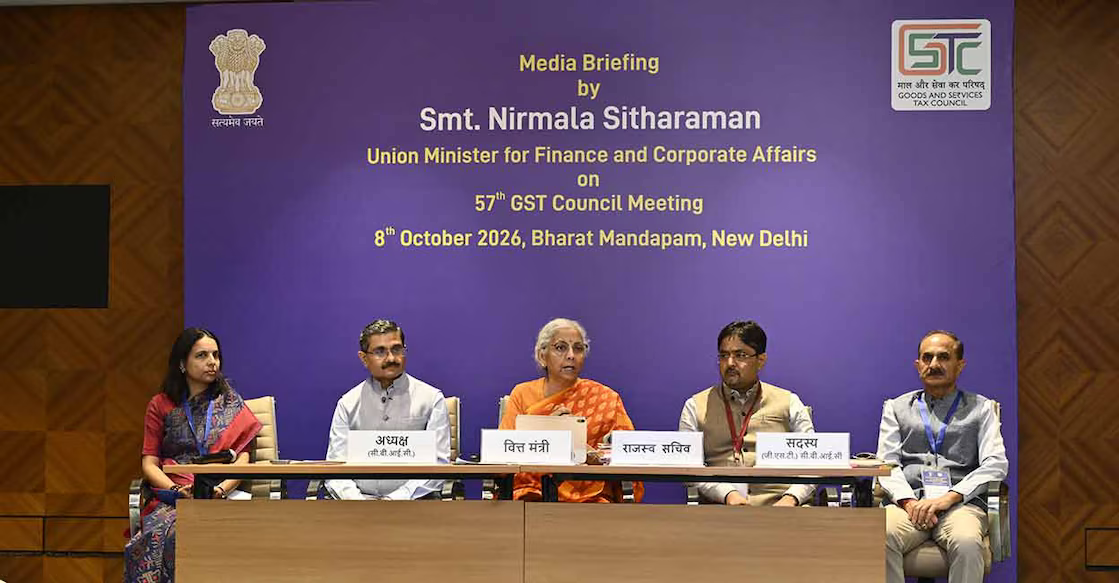
The central government proposes a new Standing Committee within the GST framework with representatives from 12 states. Karnataka, Maharashtra, Uttar Pradesh, Gujarat, and Tamil Nadu are designated as the five permanent members, and the proposal focuses on expanding the GST tax base using technology and data analytics.
GST Standing Committee (Proposed):
| Dimension | Key Details |
|---|---|
| Permanent members | Designates five permanent state members: Karnataka, Maharashtra, Uttar Pradesh, Gujarat, and Tamil Nadu. |
| Aim | Provides for expanding the GST tax base, improving tax compliance, and reducing tax leakages through technology and data analytics. |
| Registered taxpayers | States that India has approximately 17 million registered taxpayers. |
| Support to states | Authorises the central government to assist states by providing data analytics and technological support. |
| Compliance focus areas | Concentrates on identifying unregistered businesses and addressing gaps in tax compliance. |
| Compliance approach | Mandates enhancing the quality of tax disclosures while ensuring that compliance processes do not become unnecessarily intrusive. |
| B2C e-invoicing timeline | States are expected to implement Business-to-Consumer (B2C) e-invoicing beginning April 1. |
| GSTN B2C application | Provides that the Goods and Services Tax Network (GSTN) intends to introduce a B2C application that enables customers to generate invoices. |
| Adoption mechanism for B2C e-invoicing | Provides that businesses are likely to be offered incentives to adopt the system rather than being subject to an immediate mandatory requirement. |
| Expected benefits | Comprises: enhanced tracking of transactions, increased transparency throughout the supply chain, reduction in tax evasion and revenue leakages, and improved reconciliation of invoices and tax returns. |
| Constitutional amendment | Provides that GST is governed by the 101st Constitutional Amendment Act, 2016. |
| Article 246A | Confers power to make GST laws, and provides special legislative powers upon Parliament and state legislatures to enact GST laws. |
| Article 269A | Governs the levy and collection of GST on inter-state trade or commerce, and specifies that imports are classified as inter-state supplies for this purpose. |
| Article 279A | Provides for the establishment and composition of the GST Council, and provides for the GST Council to establish a mechanism to adjudicate disputes arising out of its recommendations or implementation. |
| Article 366(12A) | Defines GST as a tax imposed on the supply of goods, services, or both, while explicitly excluding taxes on the supply of alcoholic liquor for human consumption. |
| Article 270 | Addresses the distribution of certain taxes, including the framework for distributing GST revenues. |
| Nature of GST | Comprises a destination-based, value-added indirect tax. |
| Implementation date in India | Provides that GST is implemented in India on 1 July 2017. |
| GSTN role | Provides the technological and IT infrastructure for GST administration. |
| GST Council Chairperson | Provides that the GST Council Chairperson is the Union Finance Minister. |
| GST Council members | Comprises the Union Minister of State in charge of Revenue/Finance, and the Finance/Taxation Minister or other nominated minister of each state. |
| Types of GST | Comprises CGST collected by the central government on intra-state supplies; SGST collected by the respective state government on intra-state supplies; UTGST applying to intra-Union Territory supplies within relevant Union Territories; and IGST generally applicable to inter-state supplies and imports. |