|
Union Environment Ministry Releases Great Indian Bustard Report
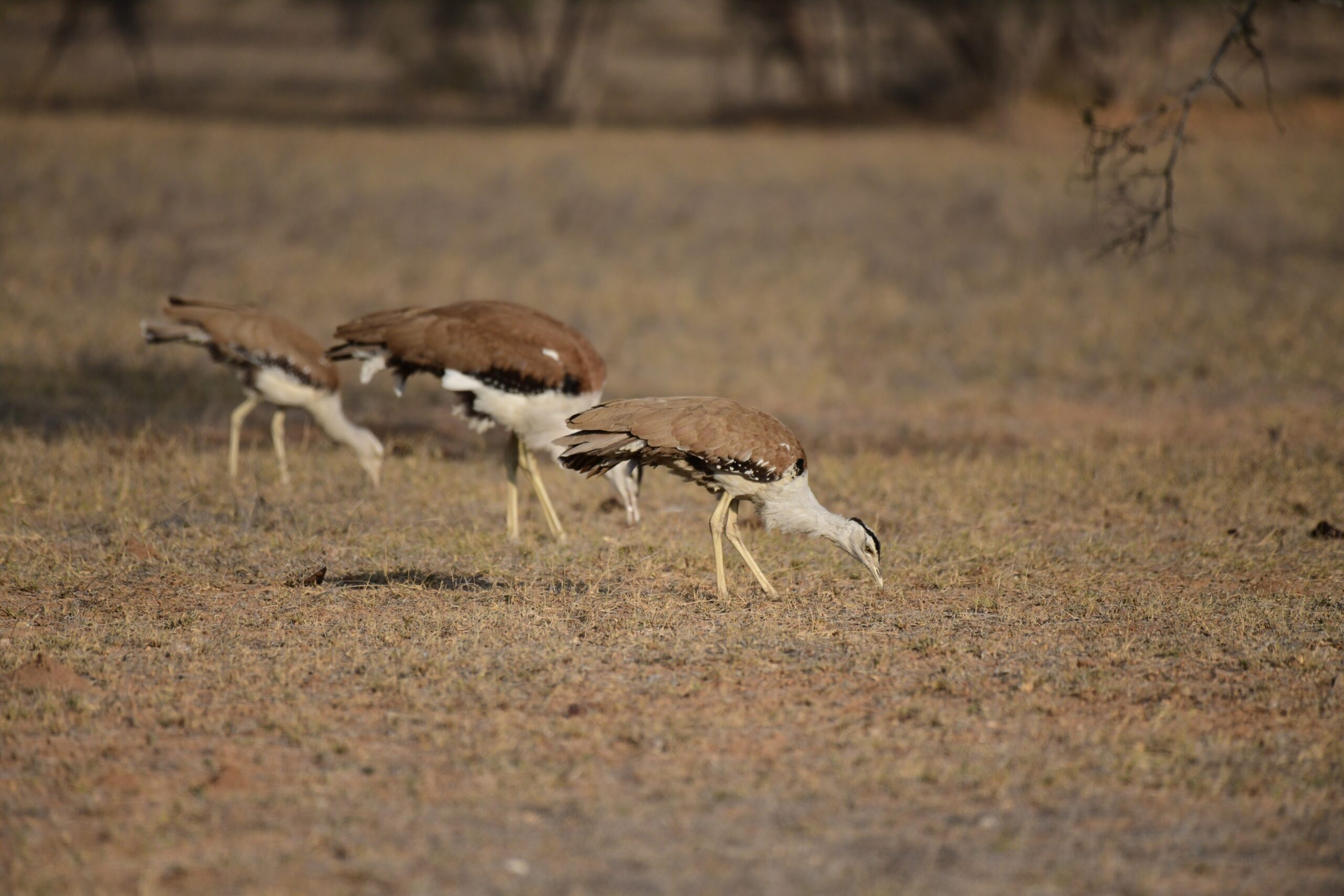
The Union Environment Ministry releases the first official assessment of the Great Indian Bustard (GIB) in 7 years. The assessment is conducted by the Wildlife Institute of India (WII) in collaboration with the Rajasthan Forest Department, and it reports the current population and habitat status of the species.
Great Indian Bustard (GIB):
| Dimension | Key Details |
|---|---|
| Conducted By | The assessment is conducted by the Wildlife Institute of India (WII) in collaboration with the Rajasthan Forest Department. |
| Population Estimate | The assessment provides for an estimate of 130 birds (±21), and the population comprises stabilisation between 110 and 150 birds. |
| Current Range | The current range comprises 16% of its historical, potential habitat in the Thar Desert. |
| Energy Target Mentioned | India’s push toward 500 GW of non-fossil fuel energy by 2030 comprises rapid solar and wind farm expansion in the Thar Desert. |
| Collision Vulnerability | The species comprises poor frontal vision, and this trait applies to susceptibility to fatal collisions with overhead power transmission lines. |
| Grassland Classification Issue | Grasslands are frequently classified as “wastelands” under Indian land-use policy, and this classification authorises diversion for agricultural expansion, fencing, roads, and infrastructure. |
| Invasive and Predator Pressures | Pressures comprise a rise in free-ranging domestic dogs, feral pigs, and nilgai, alongside native predators like the desert fox, and these pressures apply to GIB nests that comprise simple depressions directly on the ground. |
| Judicial Intervention | The Supreme Court of India mandates the re-routing or undergrounding of overhead power lines in designated priority GIB areas. |
| Project GIB (Ex-Situ Conservation) | “Project GIB” comprises a joint initiative of the Centre and the Rajasthan Government, and it provides for captive breeding to build a genetically secure captive pool for eventual release into the wild. |
| Captive Breeding Centres | Captive breeding centres have been established in Jaisalmer. |
| Key Refuge Zones Highlighted | Key refuge zones comprise areas in and around the Desert National Park (DNP) and the Pokhran Range in Jaisalmer, due to absence of heavy renewable energy grids. |
| Scientific Name | Great Indian Bustard comprises the scientific name Ardeotis nigriceps. |
| Species Characteristics | The Great Indian Bustard comprises one of the heaviest flying birds in the world, and it comprises an indicator species for the health of grassland ecosystems. |
| Conservation Status (Listings) | Status comprises: IUCN Red List, Critically Endangered; Wildlife (Protection) Act, 1972, Schedule I; CITES, Appendix I; and CMS (Convention on Migratory Species), Appendix I. |