|
Sloth Bear Identification
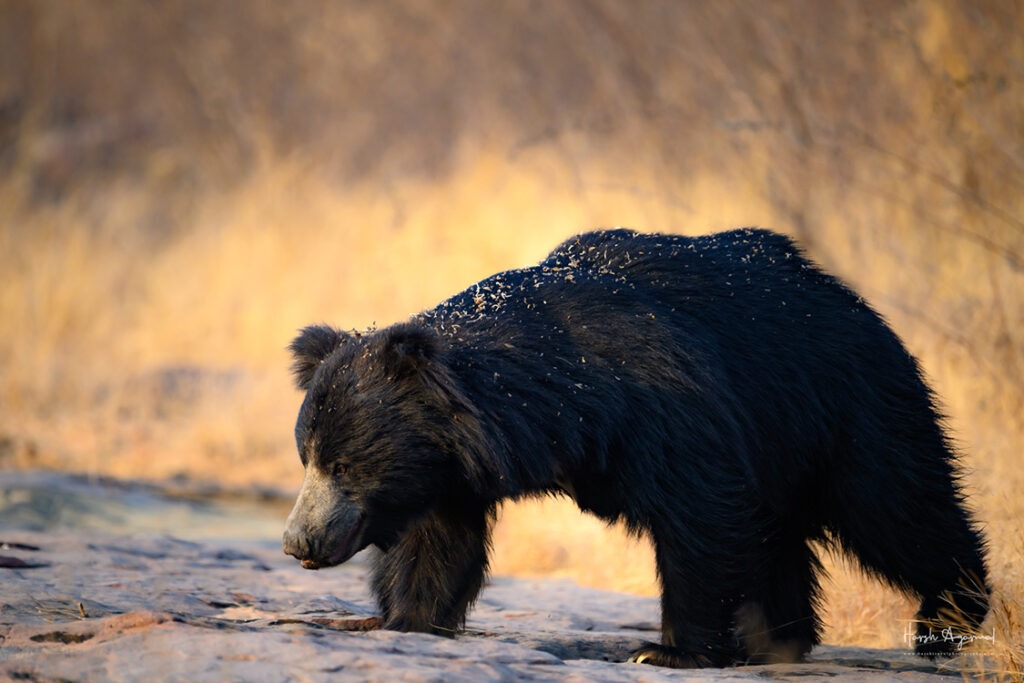
A sloth bear was recently captured by Karnataka Forest Department officials near Shivamogga after being spotted in nearby villages. The incident highlights human wildlife interaction and monitoring using GPS collars.
Sloth Bear (Melursus ursinus) :
| Dimension | Key Details |
|---|---|
| Scientific Name | Melursus ursinus |
| Common Name | Also known as Indian bear and classified as myrmecophagous species feeding on ants and termites |
| Distribution | Found in India Nepal Bhutan Sri Lanka and Bangladesh |
| Habitat | Occurs in tropical lowland forests and tall grasslands with dense cover |
| Appearance | Includes shaggy black or dark brown fur white or cream chest patch light coloured snout and ability to close nostrils |
| Special Features | Lacks upper incisors enabling suction feeding and footprints resemble humans |
| Size | Grows 5 to 6 feet long and weighs 55 to 145 kilograms with males larger than females |
| Behaviour | Mostly nocturnal or crepuscular does not hibernate and carries young on its back |
| Diet | Primarily feeds on termites and ants along with honey sugarcane fruits flowers and eggs |
| Conservation Status | Listed as Vulnerable in IUCN Schedule I under Wildlife Protection Act 1972 and Appendix I of CITES |
| Threats | Includes habitat encroachment poaching human conflict and capture of cubs for entertainment |