|
Sistan Sand Boa (Eryx sistanensis) Recorded in India for First Time
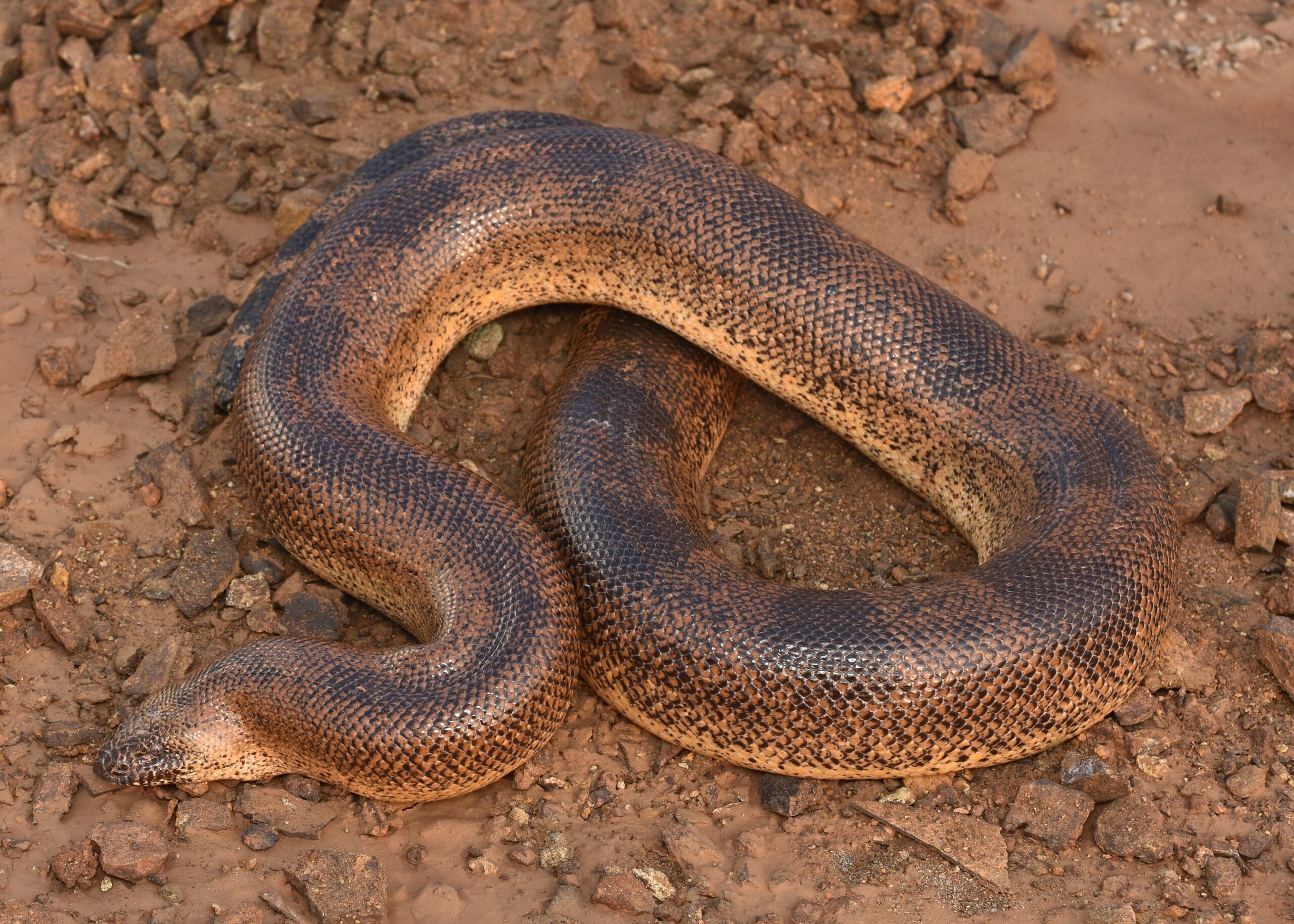
A new herpetological study reports the first confirmed record of the Sistan sand boa (Eryx sistanensis) in India. Researchers document 3 live individuals from the northern Thar Desert in Rajasthan, officially adding a 4th sand boa species to India’s native reptile database.
Sistan Sand Boa (Eryx sistanensis):
| Dimension | Key Details |
|---|---|
| Scientific name | The Sistan sand boa is Eryx sistanensis. |
| Type | It is a small, non-venomous, burrowing snake. |
| Habitat | Most verified records place it in farmlands, scrublands, and compact sandy soils located close to human habitations. |
| Indian distribution record | Researchers document 3 live individuals from the northern Thar Desert in Rajasthan. |
| Previously known distribution | It is previously known to inhabit parts of Iran and Pakistan. |
| India’s sand boa species list | India’s native reptile database comprises 4 distinct sand boa species: Red sand boa (Eryx johnii), Rough-scaled sand boa (Eryx conicus), Whitaker’s boa (Eryx whitakeri), and Sistan sand boa (Eryx sistanensis). |
| Distinguishing characteristics | It can be distinguished from the common red sand boa by persistent dark, sooty body bands and a tail that gradually tapers toward the tip; it retains body band markings throughout its lifespan. |
| Coloration | Juveniles are typically buff-colored, while sub-adults and fully grown adults exhibit a tan to tan-brown coloration. |
| Behavioral traits | The species is notoriously docile, exhibits a high tolerance to ambient temperature variations, and has low metabolic maintenance requirements. |
| IUCN Red List status | It is not yet evaluated (NE) on the IUCN Red List. |
| Wildlife (Protection) Act, 1972 status | It is listed under Schedule II, granting it high legal protection against hunting, poaching, and commercial trade. |
| Threats | Threats comprise illegal wildlife trade and exploitation, ill-advised rescues and ecological dislocation, and expatriate herping tourism and pet markets. |