|
President Droupadi Murmu Visits Hidimba Temple in Manali
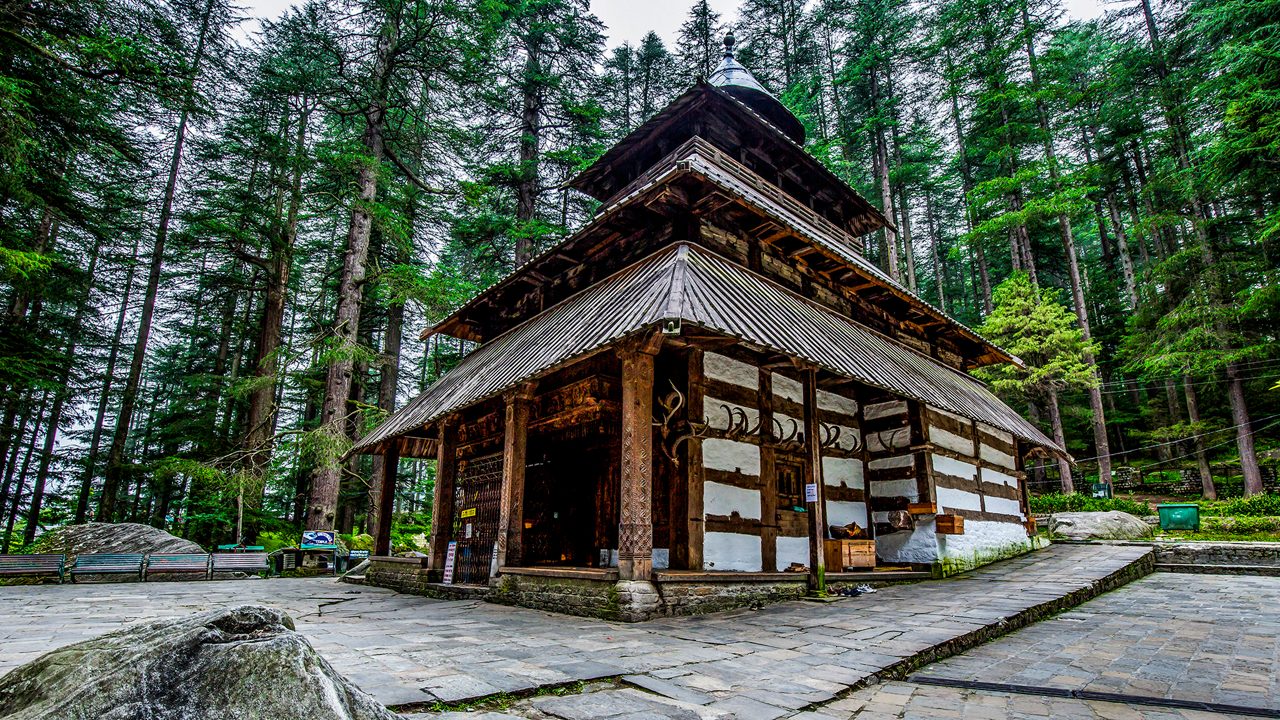
President Droupadi Murmu visits the Hidimba Temple in Manali during the second day of her visit to Himachal Pradesh. The news highlights key factual features of the Hidimba (Hadimba/Dhungari) Temple, including its location, dedication, and architectural characteristics.
Hidimba Temple:
| Dimension | Key Details |
|---|---|
| Alternate names | The temple is locally known as Dhungari Temple, and is also known as the Hadimba Temple. |
| Dedication | The temple is dedicated to Hidimbi Devi, wife of Bhima, a figure in the Indian epic Mahābhārata. |
| Surroundings | The temple is surrounded by a cedar forest called Dhungiri Van Vihar at the foot of the Himalayas. |
| Construction and ruler | The temple is built in 1553 during the reign of Kullu ruler Bahadur Singh, who rules from 1546 to 1569. |
| Architectural style | The temple follows a Pagoda style of architecture, which is common in Nepal and Tibet. |
| Structure | The temple has a wooden structure with a four-tiered roof. |
| Roof support | The roof has 24 wooden pillars that support it. |
| Roof adornments | The roof comprises metal bells, brass cones, and horns. |
| Building material and property | The roof is made of deodar wood, which is resistant to insects and decay. |
| Carvings | The temple has intricate carvings on its wooden walls, doors, and windows that depict animals, plants, dancers, musicians, and scenes from the Mahabharata epic. |
| Sanctum feature | An enormous rock occupies the inside of the temple, with only a 7.5 cm (3 inch) tall brass image representing goddess Hidimba Devi. |