|
Meghalaya Cabinet Extends GHADC Term by Six Months
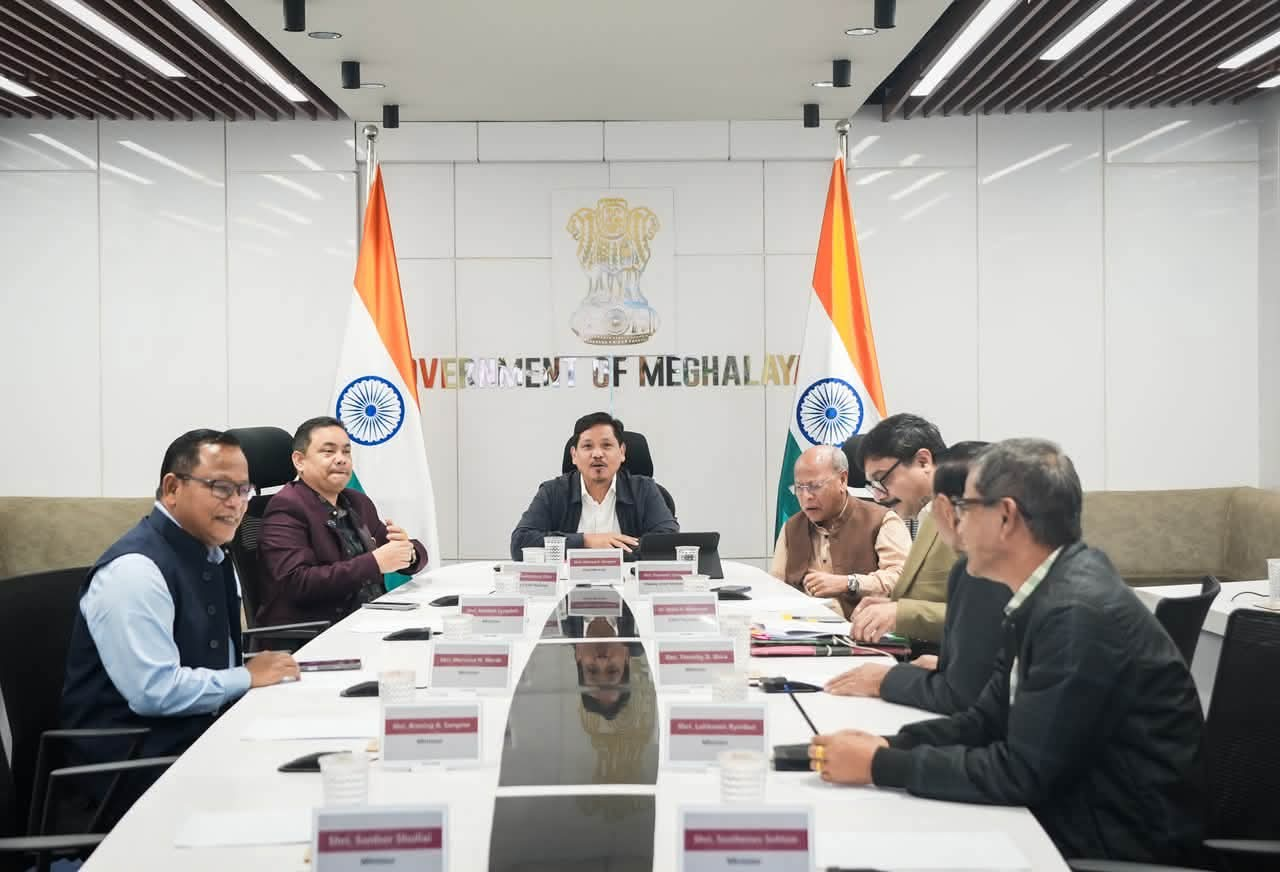
The Meghalaya cabinet authorises a second 6-month extension of the Garo Hills Autonomous District Council (GHADC) term. GHADC elections apply no earlier than early next year due to the extended term.
Garo Tribe:
| Dimension | Key Details |
|---|---|
| Ethno-linguistic group | The Garo comprise a Tibeto-Burman ethnic group. |
| Geographical distribution | The Garo comprise populations primarily in the Garo Hills of Meghalaya, with smaller populations in Assam, Tripura, Nagaland, and West Bengal. |
| Size in Meghalaya | The Garo comprise the second largest tribal community of Meghalaya. |
| Origin narrative | The Garo origin narrative comprises origin in Tibet and migration to India 400 years ago. |
| Language classification | The main language, Garo (also known as “Garrow” and “Mande”), comprises the Bodo branch of the Bodo-Naga-Kachin family of the Sino-Tibetan phylum. |
| Livelihood and agriculture | Community life comprises agriculture, including shifting (jhum) and wet rice cultivation; crops comprise rice, millet, and vegetables. |
| Matrilineal system | The Garo comprise one of the last remaining matrilineal tribes in the world; property and clan lineage inheritance is governed by the female line. |
| Social organisation | Villages comprise exogamous clans, and social life comprises communal work, festivals, and traditional music and dance. |
| Housing | Homes comprise stilt-built structures reflecting adaptation to the hilly terrain. |
| Beliefs | Beliefs comprise Songsarek, an indigenous animistic religion centered on worship of spirits, nature deities, and ancestors, and Christianity as the predominant faith since the late 19th century. |
| Festival | Festivals comprise Wangala, the harvest festival. |