|
Oldest Quasar Pair Seen 670 Million Years After Big Bang
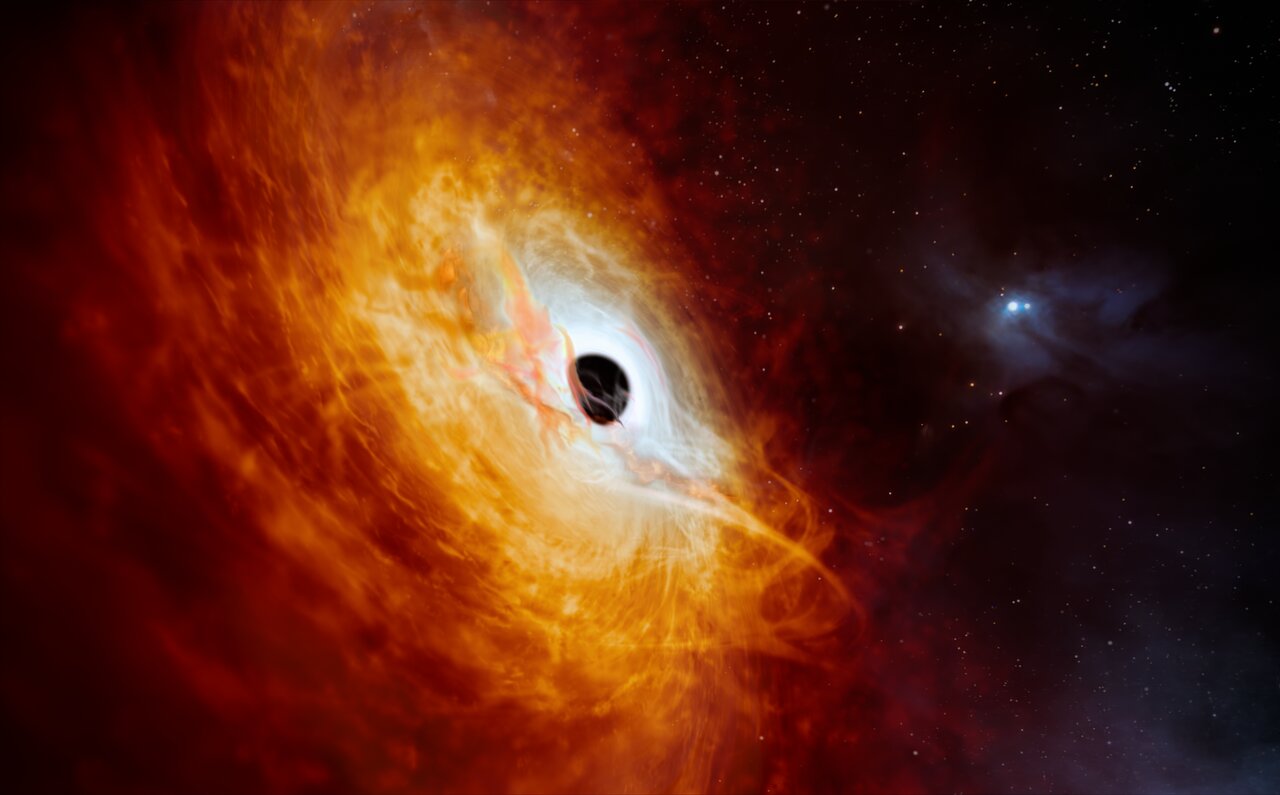
An international team of astronomers using the European Space Agency’s Euclid telescope discovers 31 quasars. The observations include the 2 oldest ever quasars, dating to when the universe is 670 million years old.
Quasars and Euclid Telescope :
| Dimension | Key Details |
|---|---|
| Quasars: definition | Quasars are the intensely luminous cores of distant galaxies powered by supermassive black holes. |
| Brightness | Quasars shine with the light of a trillion suns due to gravitational energy converted into radiation. |
| Scientific relevance of observation | Quasar observations provide insights into early galaxy formation, black hole growth, and the epoch of reionisation, which is the end of cosmic dark ages. |
| Key finding: oldest pair | 2 oldest ever quasars are observed, dating back to when the universe is 670 million years old, which is 5% of its current age. |
| Key finding: scale | Supermassive black holes weighing billions of solar masses exist in the infancy of the universe. |
| Key finding: mystery | The discovery raises questions about how such massive objects grow so quickly. |
| Euclid: status | Euclid has been launched in 2023. |
| Euclid: discoveries | Euclid has doubled the number of discoveries of ancient quasars for 2 years. |
| Epoch of reionisation | Quasars act as “lighthouses” to trace how the universe transitions from dark ages to an ionised state. |
| Cosmic puzzle | Galaxies and quasars appear far bigger and more evolved than expected at such early times. |
| Future goal | Researchers provide for building a quasar chronicle of the first billion years to understand black hole and galaxy evolution. |