|
Nilgiris Wood Pigeon (Columba elphinstonii)
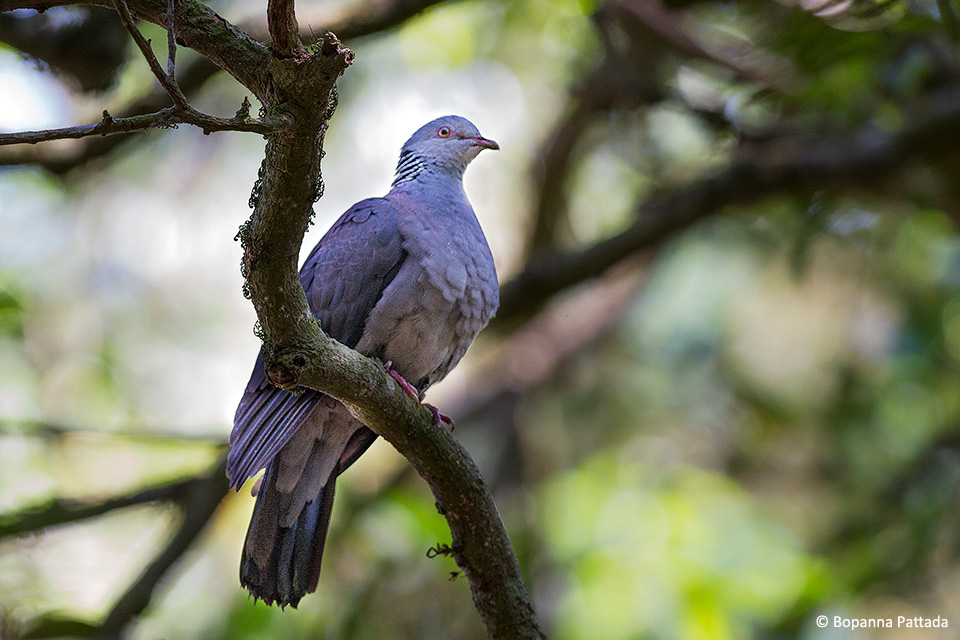
A recent study warns that climate change may significantly reduce the suitable habitat of the Nilgiris Wood Pigeon in the Western Ghats by the end of the century. The findings highlight potential habitat contraction and shifts in elevation.
Nilgiris Wood Pigeon:
| Dimension | Key Details |
|---|---|
| Scientific Name | Columba elphinstonii. |
| Family | Belongs to the family Columbidae. |
| Distribution | Endemic resident of the Western Ghats with patchy distribution at mid and high elevations. |
| Habitat | Occurs in moist evergreen, semi evergreen and moist deciduous forests including high elevation shola forests and wooded ravines. |
| Elevation Range | Recorded mainly between 900 metres and 2,250 metres. |
| Geographic Range | Recorded across hill ranges including the Nilgiris, Anamalai and Biligirirangan hills. |
| Distinctive Identification | Displays a bluish grey head, darker neck and chest and a clear black and white patch on the back of the neck. |
| Body Colour | Dark grey to slate grey body with a maroon or chestnut sheen on the upper back. |
| Sexual Difference | Male provides a lighter grey crown while the female appears duller and browner. |
| Behaviour | Non migratory species showing local or nomadic movements linked to food availability and climate. |
| Breeding Period | Breeds mainly from March to July in natural forests. |
| Diet | Feeds primarily on fruits, seeds, flowers, leaf buds and some ground invertebrates. |
| Conservation Status | Listed as Least Concern on the IUCN Red List. |
| Major Threats | Climate change driven habitat contraction and upslope shifts along with forest loss, degradation and fragmentation. |