|
Cassava Brown Streak Disease
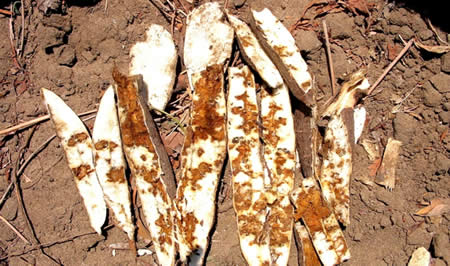
A recent study warns that more than one third of Africa is at risk from the spread of a deadly cassava viral disease. The disease threatens cassava crops in East and Southern Africa and can cause complete loss of edible root yield.
Cassava Brown Streak Disease (CBSD):
| Dimension | Key Details |
|---|---|
| Nature of Disease | Viral disease affecting cassava crops in East and Southern Africa. |
| Causative Viruses | Caused by Cassava brown streak virus and Ugandan cassava brown streak virus. |
| Crop Impact | Causes vascular necrosis in cassava roots leading to loss of edible root yield up to 100 percent. |
| Symptoms | Leaf chlorosis and brown rotting streaks in roots. |
| Primary Vector | Spread primarily by whitefly Bemisia tabaci. |
| Efficient Vector Groups | Sub Saharan Africa 1 and Sub Saharan Africa 2 whitefly populations provide efficient transmission of the virus. |
| Spread Drivers | High whitefly population densities linked with climate change and agricultural intensification in East and Central Africa. |
| Farming Practice Factor | Reuse of infected cassava cuttings as planting material provides continued spread of infection. |
| Varietal Vulnerability | Some cassava varieties developed to resist Cassava Mosaic Disease provide vulnerability to Cassava Brown Streak Disease. |
| Management Measures | Planting CBSD resistant or tolerant clean planting material and removing infected plants while controlling whitefly populations. |
| Country Status | Ethiopia provides one of the few countries in East Africa where the disease has not been reported. |