|
White-rumped Vulture (Gyps bengalensis)
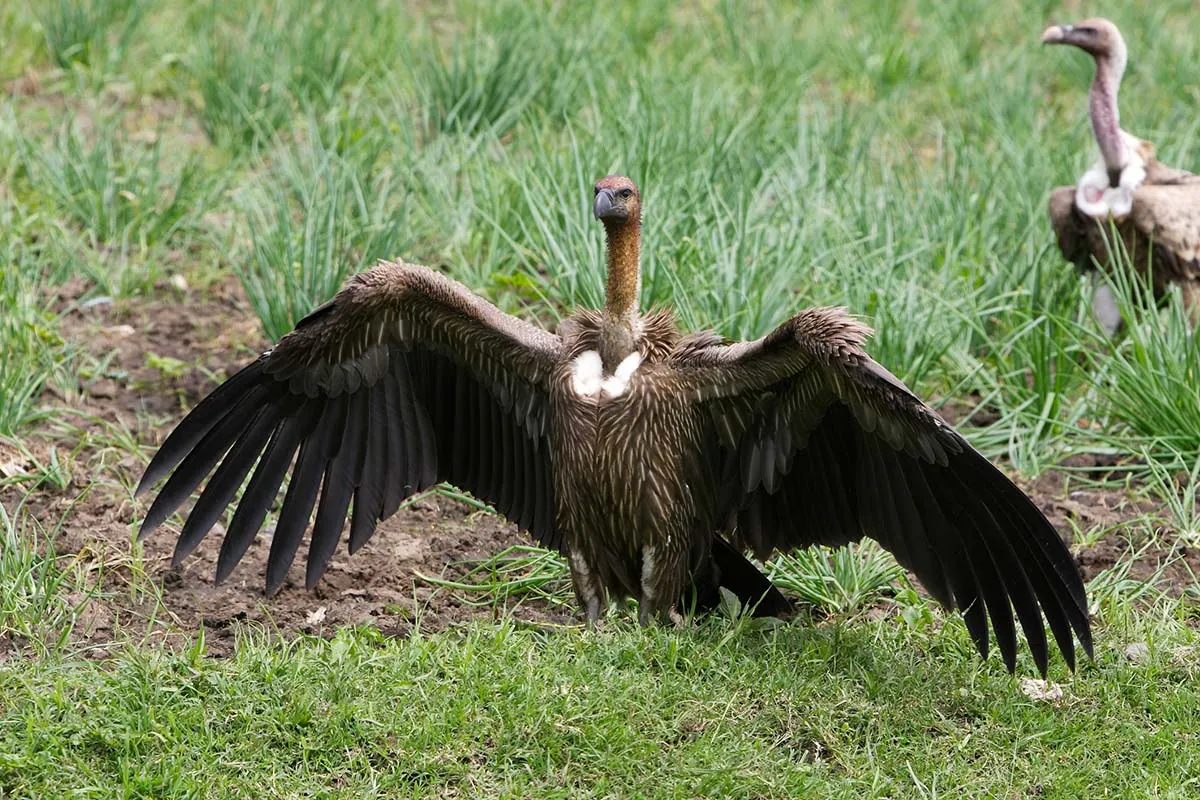
Experts have reported stable populations of the White-rumped Vulture in Wayanad despite reduced breeding. Invasive plants and human activity are affecting nesting areas.
White-rumped Vulture (Gyps bengalensis):
| Dimension | Key Details |
|---|---|
| Scientific Name | Gyps bengalensis |
| Family | Accipitridae |
| Habitat | Mostly plains with open areas light woodland villages and cities and occasionally found in hilly regions |
| Distribution | Native to India Nepal Bangladesh Bhutan Pakistan Myanmar and Cambodia |
| Regional Status | Possibly extinct in Afghanistan Iran Laos Thailand and Vietnam and extinct in China and Malaysia |
| Key Identification | Medium sized vulture about 75 to 85 cm with mostly black body feathers white neck ruff white rump silvery wings dark head and short thick silver coloured bill |
| Juvenile Characteristics | Brown body feathers with white streaks on wings and back and soft down on head and neck |
| Behaviour | Highly social species that aggregates at carcasses forms large flocks and communal roosts |
| Breeding | Breeds in colonies in tall trees often near human habitation |
| Diet | Obligate scavenger feeding on fresh and decaying animal carcasses |
| Conservation Status | IUCN Critically Endangered and listed under Schedule I of the Wildlife Protection Act 1972 |
| Major Threats | Decline caused by veterinary Non Steroidal Anti Inflammatory Drugs such as diclofenac aceclofenac and ketoprofen used in livestock |
| Drug Impact | Consumption of carcasses of treated livestock causes kidney failure and visceral gout in vultures |
| Other Threats | Habitat loss deforestation poisoning electrocution collisions and reduced food availability due to livestock management changes |
| Vultures in India | India has 9 vulture species including Oriental White backed Long billed Slender billed Himalayan Eurasian Griffon Egyptian Red headed Cinereous and Bearded vultures |