|
Global Uranium Production Rebounds Post‑Pandemic
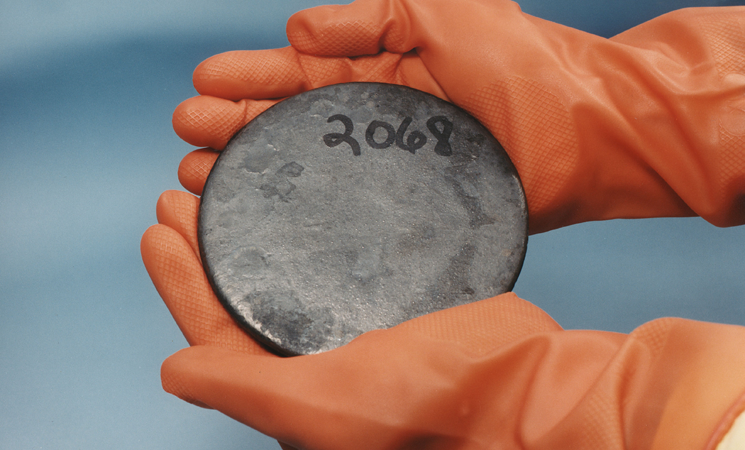
Global uranium production rebounds post-pandemic, with Kazakhstan, Canada, and Namibia emerging as dominant suppliers. The news highlights uranium’s basic properties, isotopes, enrichment levels for power and weapons, and the latest country-wise global supply shares.
Uranium (U) and Global Uranium Supply:
| Dimension | Key Details |
|---|---|
| Elemental Identity | Uranium has symbol U and atomic number 92. |
| Group | Uranium is grouped under actinides. |
| Occurrence | Uranium is found in rocks, soil, water, oceans, and even in human bodies. |
| Radioactivity (Mechanism) | Radioactivity comprises an unstable nucleus, a natural decay process into smaller more stable ones, and energy release as radiation (alpha, beta, gamma) or heat. |
| Nuclear Power | Nuclear power uses controlled chain reactions of uranium-235 fission in reactors to release heat that is converted into electricity. |
| Nuclear Weapons | Nuclear weapons use uncontrolled chain reactions that release huge energy instantly, causing destructive explosions. |
| Natural Uranium Isotopes | Natural uranium exists in 3 main forms: U-234, U-235, and U-238. |
| Key Fissionable Isotope | U-235 is the key isotope that can undergo fission to release energy and it constitutes 0.72% of natural uranium. |
| Enrichment (Nuclear Power Plants) | For nuclear power plants, enrichment to 3–4% U-235 is enough to sustain a controlled chain reaction for electricity generation. |
| Enrichment (Nuclear Weapons) | For nuclear weapons, enrichment must reach 90% U-235, enabling an uncontrolled chain reaction and massive energy release. |
| Chain Reaction (U-235 Fission) | When a U-235 nucleus splits, it releases 2–3 neutrons that can split more U-235 atoms, creating an exponential reaction that produces huge amounts of energy. |
| U-238 (Abundance and Properties) | U-238 constitutes 99.3% of natural uranium and is not directly fissionable with slow neutrons, so it cannot sustain a chain reaction on its own. |
| U-238 (Conversion) | U-238 absorbs neutrons and transforms into Plutonium-239 (Pu-239), which is fissionable and used in reactors and weapons. |
| U-238 (Non-fuel Applications) | U-238 is used in non-fuel applications due to its density, including armour, projectiles, and radiation shielding. |
| U-234 (Abundance and Origin) | U-234 is present in trace amounts at 0.005% and is formed as a decay product of U-238. |
| U-234 (Fission and Enrichment Hazard) | U-234 is radioactive but not fissionable, and during enrichment of U-235, the proportion of U-234 also increases, raising the radiation hazard of enriched uranium fuel. |
| Th-232 (Properties and Conversion) | Th-232 is a naturally occurring radioactive metal, more abundant in Earth’s crust than uranium, fertile but not fissile, and it absorbs a neutron and converts into Uranium-233 (U-233) which is fissile. |
| India Link (Thorium) | India has large thorium reserves and thorium is central to India’s 3-Stage Nuclear Programme. |
| Reprocessed Uranium (RepU) | Reprocessed uranium (RepU) provides for recycling spent nuclear fuel at special plants, with recovered uranium reused as a new type of fuel to reduce waste and extend resources. |
| Global Uranium Supply (Shares) | Global uranium supply comprises shares from Kazakhstan (39%), Canada (24%), Namibia (12%), Australia (8%), and Uzbekistan (7%). |