|
India’s Per Capita Water Availability Seen Falling
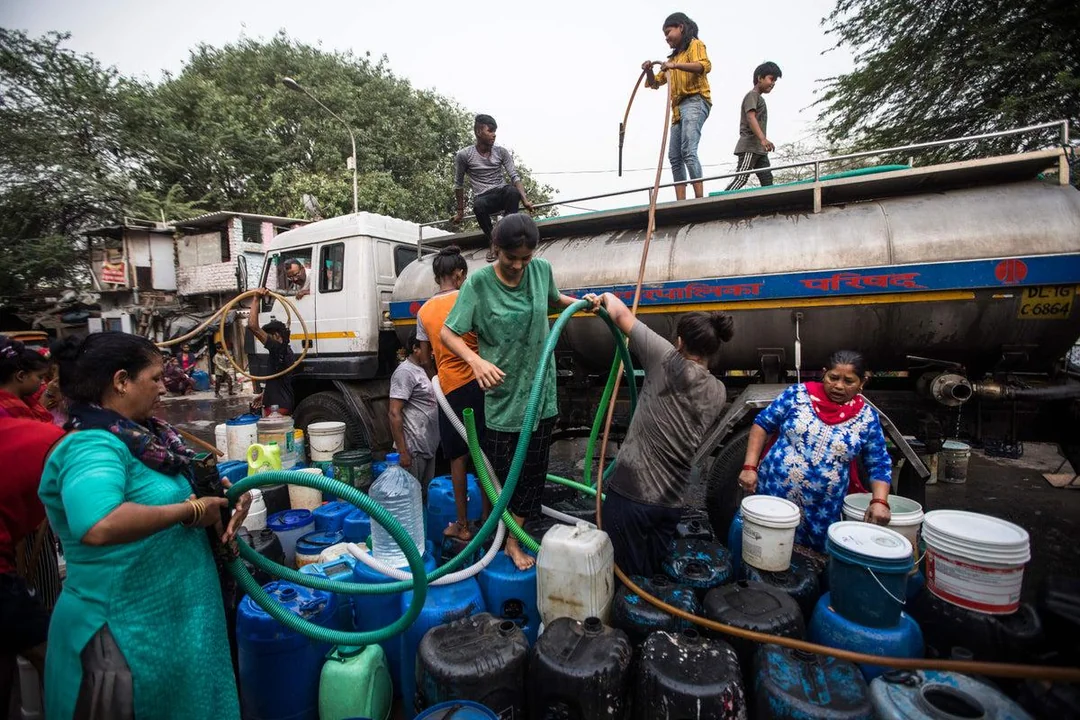
India’s annual per capita water availability is projected to drop from about 1,500 cubic meters to below 1,200 cubic meters by 2050. The article links this projection to demand-supply imbalance, groundwater depletion, agricultural over-extraction, water pollution, and climate change impacts. It lists strategies for water resilience, including a National Circular Water Mission model and city-specific reuse plans.
India: Per Capita Water Availability and Water Resilience Measures
| Dimension | Key Details |
|---|---|
| Per capita water availability (projection) | India’s annual per capita water availability is projected to drop from about 1,500 cubic meters to below 1,200 cubic meters by 2050. |
| Water scarcity threshold | The water scarcity threshold is 1,000 cubic meters. |
| Demand-supply imbalance (NITI Aayog) | As per NITI Aayog, India’s water demand is projected to double available supply by 2030. |
| Groundwater depletion (projection) | Groundwater depletion is projected to triple by 2041 to 2080. |
| Agricultural over-extraction | Paddy cultivation in Punjab and Haryana is associated with drastic declines in water tables. |
| Pollution of water bodies (CPCB) | As per Central Pollution Control Board (CPCB) reports, more than 350 river stretches in the country are polluted. |
| Climate change impacts | Erratic monsoons and increased frequency of floods and droughts reduce water accessibility and availability. |
| National Circular Water Mission model | A National Circular Water Mission model provides for a transition from “use-and-dispose” to a circular model. |
| Four pillars under the circular model | The circular model comprises four pillars: Technology, comprising decentralized fecal sludge treatment plants in expanding peri-urban areas; Institutions, comprising empowering urban local bodies to create special-purpose vehicles that run reuse projects as businesses; Finance, comprising market-based pricing and targeted subsidies for vulnerable groups; Behaviour, comprising behavioral nudges to normalize everyday use of treated water. |
| City-specific reuse plans (examples) | City-specific reuse plans comprise examples such as Delhi and Bengaluru prioritising peri-urban farming, Chennai focusing on lake rejuvenation, and Surat targeting industrial use. |