|
Brain-Eating Amoeba Reports Rise in Kerala
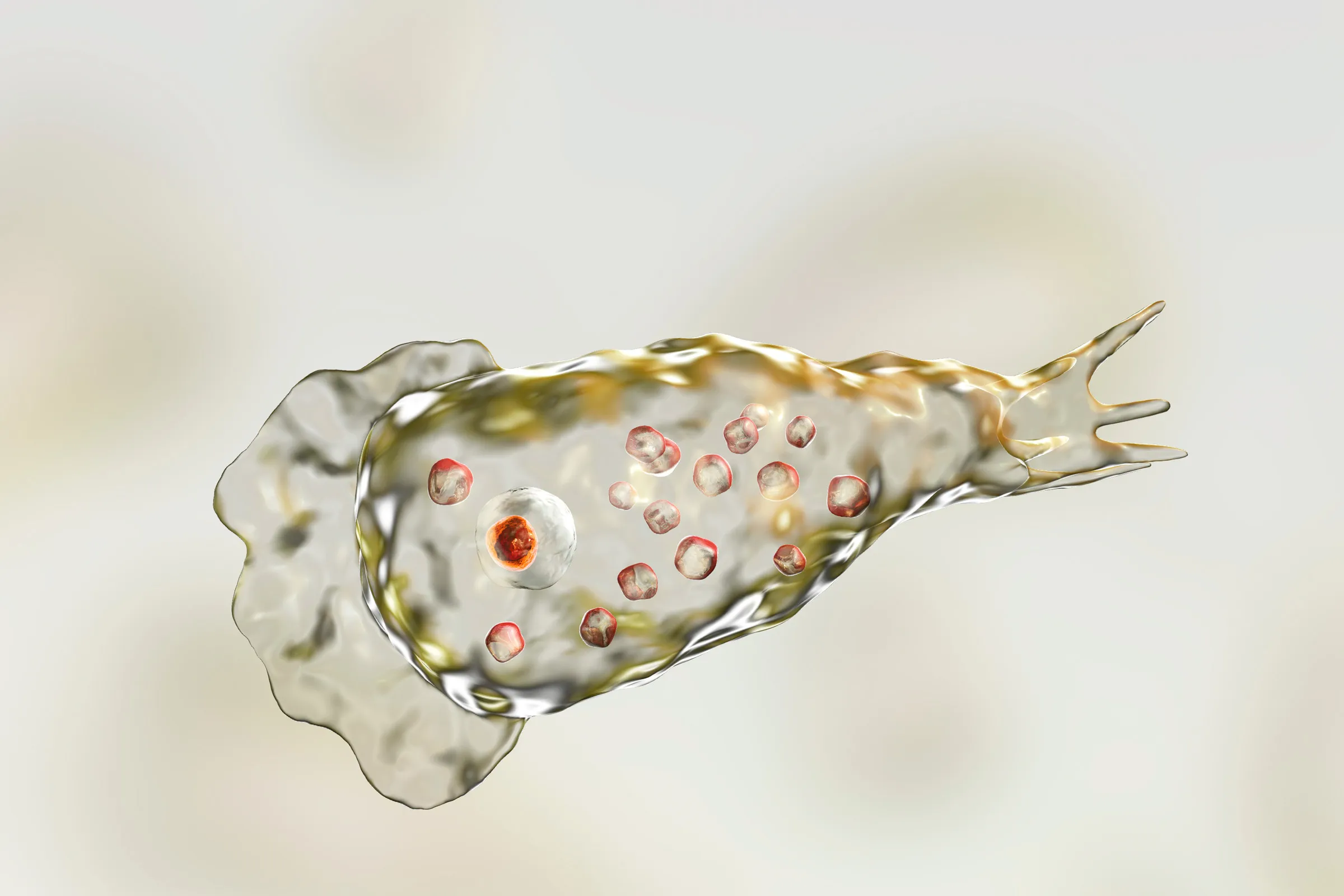
Kerala reports a surge in “brain-eating amoeba” cases, mainly due to Acanthamoeba associated with contaminated water. The news highlights free-living amoebas that can infect the brain and cause severe, often fatal, disease.
Brain-Eating Amoeba (Free-living Amoebas):
| Dimension | Key Details |
|---|---|
| Nature | The “brain-eating amoeba” category comprises free-living, single-celled amoebas. |
| Habitat | Habitat comprises warm freshwater bodies, such as lakes, rivers, and hot springs, and soil. |
| Types known to cause severe disease in people | Severe disease in people comprises three free-living amoebas: Acanthamoeba (Granulomatous Amoebic Encephalitis, GAE), Naegleriafowleri (Primary Amoebic Meningoencephalitis, PAM), and Balamuthiamandrillaris. |
| Transmission routes | Transmission routes comprise entry through the nose, skin, and inhalation, and can involve brain infection. |
| Why called “brain-eating” | The term “brain-eating amoeba” comprises destruction of brain tissue, leading to severe brain infection. |
| Fatality (PAM) | PAM comprises a rare disease that is almost always fatal. |