|
Giant African Snail Spreads in Tirunavaya Panchayat, Kerala
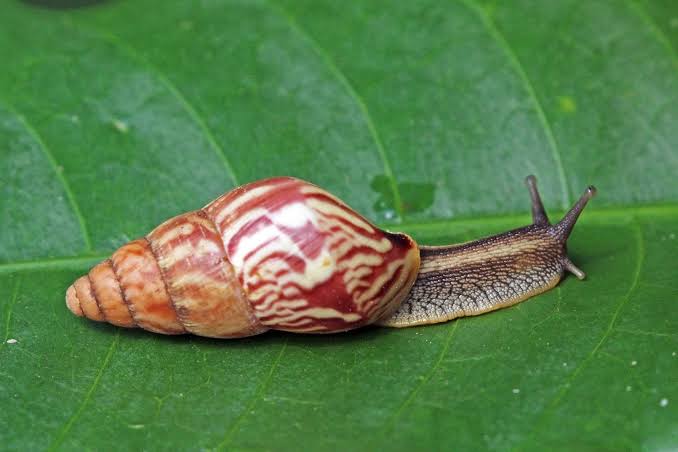
The giant African snail is spreading rapidly across Tirunavaya Panchayat in Kerala, raising health concerns among students. The species is identified as an invasive species in India and is linked to disease-causing organisms.
Giant African Snail (Lissachatina fulica):
| Dimension | Key Details |
|---|---|
| Scientific name | The giant African snail is scientifically known as Lissachatina fulica. |
| Why in news | It is spreading rapidly across Tirunavaya Panchayat in Kerala, raising health concerns among students. |
| Category | It is one of the invasive species in India. |
| Native range | It is native to Eastern Africa. |
| Global distribution and habitat | It is established in most tropical countries, especially in forest habitats. |
| Introduction to India | It is introduced to India in 1847 and reaches Madras in the early 1900s. |
| First report in Kerala | It is first reported in Kerala in the 1950s at Elapully, Palakkad. |
| Major spread waves (Kerala) | Major spread waves follow in the 1970s and again in 2005. |
| Size | The adult shell is typically 50-100 mm long, but can grow up to 200 mm. |
| Appearance | Adult snails are very large with a long, narrow, cone-shaped shell. |
| Colour | They vary in colour, but are usually light brown, with alternating brown and cream bands on their upper whorls. |
| Diet | They eat plant matter (leaves, fruits, and vegetables), and also occasionally dead animal remains, eggshells, stones, sand, bones, and concrete for calcium to strengthen shells. |
| Lifespan | They live for 3 to 5 years, and sometimes up to 10 years in captivity. |
| Conservation status | It is not listed in the IUCN Red List, but is recognised by IUCN as one among the world’s 100 worst invasive alien species. |
| Impacts | It affects plants by eating more than 500 crops and ornamental plants, and carries disease-causing organisms including rat lungworm that causes meningitis, and bacteria linked to septicemia and peritonitis. |