|
Bandipur Tiger Reserve, Karnataka
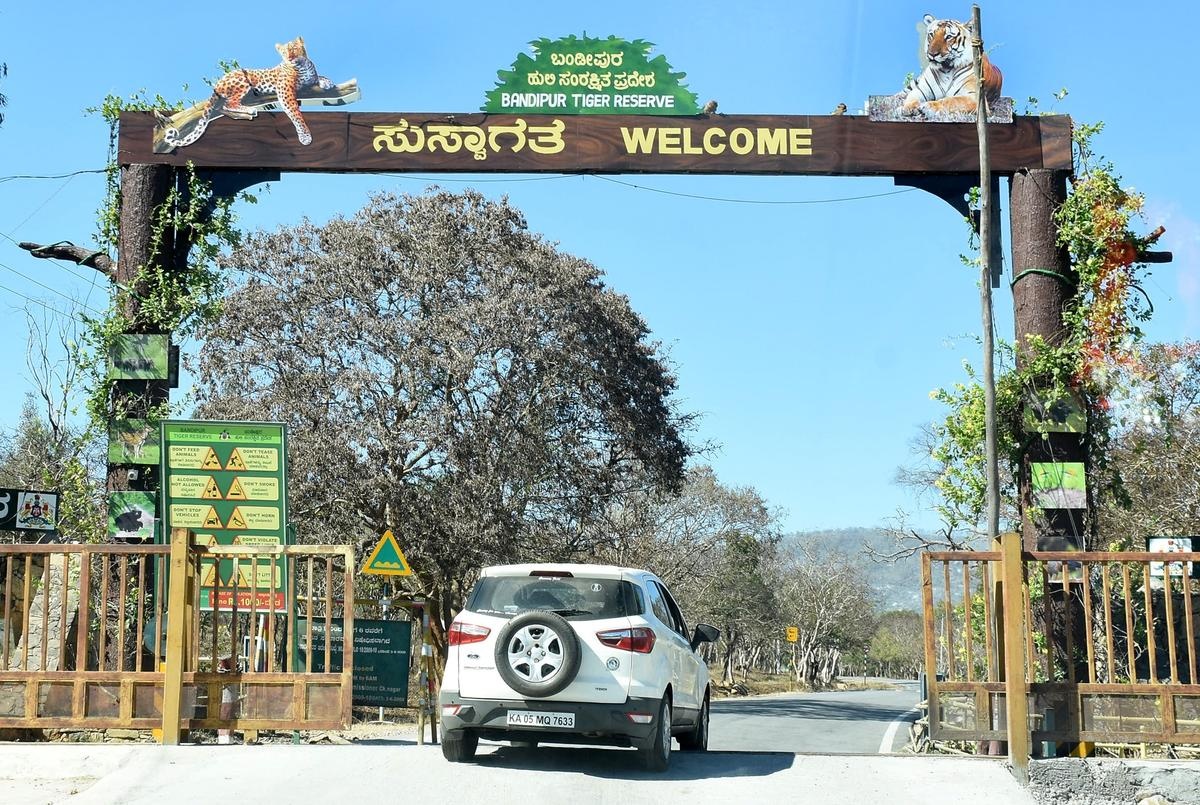
Forest department personnel rescue a 12-year-old female tigress and 5 cubs from the Bandipur Tiger Reserve in Mysuru. The news highlights Bandipur Tiger Reserve in Karnataka and its location, ecology, and conservation-related features.
Bandipur Tiger Reserve, Karnataka:
| Dimension | Key Details |
|---|---|
| Location (districts) | Bandipur Tiger Reserve is located in the Chamarajanagar and Mysore districts of southern Karnataka. |
| Origin and establishment | It is established in 1931 by the Maharaja of the Kingdom of Mysore as the Venugopala Wildlife Park. |
| Tri-junction location | It sits at the tri-junction of Karnataka, Tamil Nadu, and Kerala. |
| Ecological setting | It serves as a critical ecological corridor where the Western Ghats meet the Eastern Ghats. |
| Bordering protected areas | It is bordered by Nagarahole Tiger Reserve (Karnataka) to the northwest (separated by the Kabini Reservoir), Mudumalai Tiger Reserve (Tamil Nadu) to the south, and Wayanad Wildlife Sanctuary (Kerala) to the southwest. |
| Climate | It has a typical tropical climate with distinct wet and dry seasons. |
| Forest types | Forest types comprise scrub-type forest, southern tropical dry deciduous-type forest, and southern tropical moist deciduous-type forests. |
| Rivers | It is bound by the Kabini River in the north and the Moyar River in the south, and the Nugu River flows directly through the heart of the reserve. |
| Highest peak | The highest peak is Himavad Gopalaswamy Betta, a hill located in the park. |
| Flora (listed) | Flora comprises valuable timber including teak (Tectona grandis), rosewood, and sandalwood (Santalum album), alongside giant clumping bamboo. |
| Fauna (listed) | Fauna comprises Bengal Tiger (high-density source population), Leopard (holds the 2nd largest population in India after Panna), and Sloth Bear. |
| Project Tiger linkage | In 1973, it is selected as one of the first 9 tiger reserves in India launched under the flagship Project Tiger initiative. |
| UNESCO linkage | It is part of the larger Nilgiri Biosphere Reserve, which is recognised as a UNESCO World Heritage Site. |