|
Creatine Improves Muscle and Strength in Middle-Aged Adults
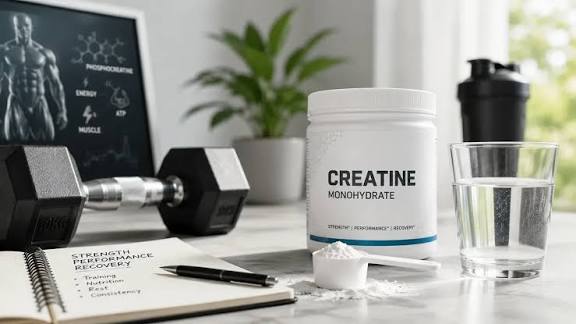
A new 12-week study provides for findings that creatine helps middle-aged adults gain muscle and strength even without a structured workout program. The study provides for renewed focus on creatine as a naturally occurring compound and as a manufactured dietary supplement.
Creatine:
| Dimension | Key Details |
|---|---|
| Chemical nature | Creatine comprises a naturally occurring nitrogen-containing organic compound. |
| Energy role in muscles | Creatine provides for a natural source of energy that helps skeletal muscles flex (contract). |
| Energy supply during exercise | Creatine provides for a steady supply of energy in muscles so they can keep working, especially while exercising. |
| Dietary contribution | About half of the body’s supply of creatine comprises intake from diet. |
| Dietary sources | Dietary sources comprise red meat (pork, veal, and beef), seafood (fish and shellfish), and animal milk (cow, goat, and sheep milk). |
| Endogenous production | The other half of creatine supply comprises natural production in the liver, kidneys, and pancreas from amino acids such as arginine, glycine, and methionine. |
| Storage distribution | Creatine storage comprises about 95% in skeletal muscles and about 5% in the heart, brain, and other tissues. |
| Storage form in skeletal muscles | Most creatine stored in skeletal muscles comprises phosphocreatine. |
| Cellular energy link | Phosphocreatine provides for making adenosine triphosphate (ATP), the primary energy currency of cells. |
| Exercise relevance | Creatine in muscles provides for the energy needed during exercise. |
| Supplement manufacture and use | Manufacturers provide for creatine supplements, and some people take them because they work out a lot or do not get enough creatine in their diet. |
| Common supplement form | Most creatine supplements comprise creatine monohydrate. |