|
Codex Alimentarius Commission
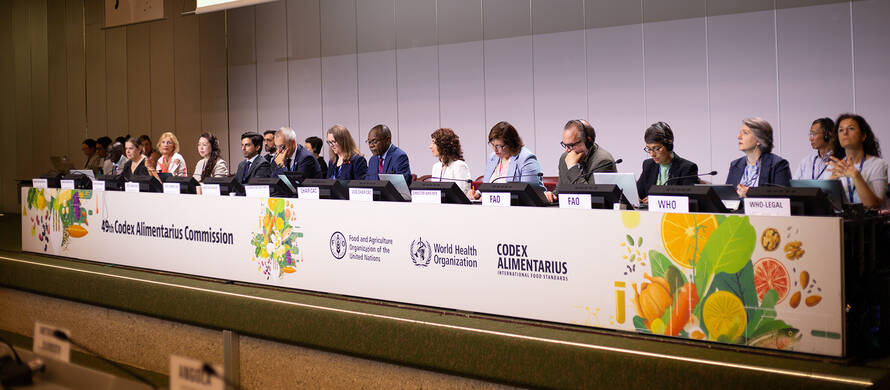
India achieves milestones at the 49th Session of the Codex Alimentarius Commission (CAC49) held in Geneva, Switzerland. The news highlights the Codex Alimentarius Commission as the international food standards-setting body and its key institutional features.
Codex Alimentarius Commission (CAC):
| Dimension | Key Details |
|---|---|
| Nature | Codex Alimentarius Commission provides for international food standards-setting. |
| Establishment | The Commission is established under a joint initiative of the Food and Agriculture Organization (FAO) and the World Health Organization (WHO) in May 1963. |
| Objective | The Commission provides for protecting consumer’s health and ensuring fair practices in the food trade. |
| Headquarters | The Commission comprises its headquarters in Rome. |
| Membership eligibility | Membership applies to all Member Nations and Associate Members of FAO and WHO which are interested in international food standards. |
| Membership strength | The CAC comprises 189 Codex Members made up of 188 Member Countries and 1 Member Organization, the European Union. |
| India’s membership | India is a member of CAC since 1964. |
| Governance structure | The CAC comprises the following main organizational elements: Commission, Executive Committee, Codex Secretariat, and Codex subsidiary bodies. |
| Sessions | The Commission provides for meeting in regular session once a year, alternating between Geneva and Rome. |
| Funding | Funding is governed by the regular budgets of WHO and FAO, with all work subject to approval of the two governing bodies of the parent organisations. |