|
India at CITES Plants Committee 28
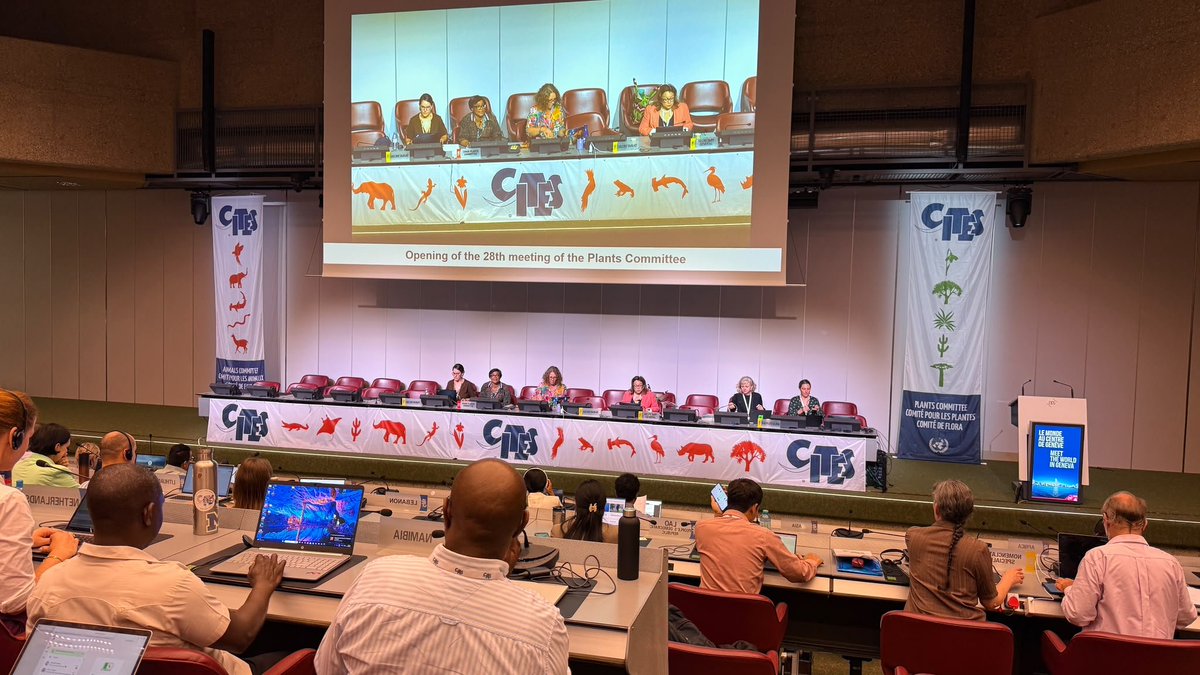
The 28th meeting of the CITES Plants Committee (PC28) is being held in Geneva. PC28 is the first plant-focused meeting since CoP20 (Samarkand, Uzbekistan, Nov–Dec 2025) and begins a new 3-year cycle leading up to CoP21 (Panama City, Nov 2028).
CITES Plants Committee (PC28):
| Dimension | Key Details |
|---|---|
| Cycle and linked CoPs | PC28 is the first plant-focused meeting since CoP20 (Samarkand, Uzbekistan, Nov–Dec 2025) and marks the beginning of a new 3-year cycle leading up to CoP21 (Panama City, Nov 2028). |
| Status under CITES | The Plants Committee is one of two permanent scientific bodies under CITES; the other is the Animals Committee. |
| Mandate | The Plants Committee provides scientific and technical advice on species subject to trade rules. |
| Membership | Membership comprises around a dozen members and alternates elected from Africa, Asia, Europe, North America, Central and South America, the Caribbean, and Oceania. |
| Agenda (consolidated) | The PC28 agenda comprises strategic and capacity-building matters, illegal trade and enforcement, exemptions and special trade rules, regional reports, and nomenclature. |
| Nomenclature | Nomenclature provides standard scientific naming for consistent permits across 185 member countries. |
| New agenda dimension | Fungi is discussed as a separate agenda item for the first time. |
| CoP20 decisions: protections retained | CoP20 decisions retain protections for red doussié, African padauk, and Parlatore’s podocarp. |
| CoP20 decision: Chilean palm | CoP20 adds the Chilean palm to Appendix I. |
| CoP20 decision: guggul listing and exemption | CoP20 lists guggul (Commiphora wightii) under Appendix II after debate and provides an exemption for finished retail products, including capsules, tablets, perfumes, and incense. |
| India’s position on guggul | India argues for stronger scientific backing before listing guggul under Appendix II, supported by the Central African Republic and Congo. |
| India’s stake: guggul | The Appendix II listing of guggul affects India’s Ayurvedic industry, and exemptions soften the impact. |
| Agarwood: review status | India has kept Aquilaria malaccensis out of the Review of Significant Trade, citing cultivation in Assam, Manipur, Nagaland, and Tripura. |
| Agarwood: quota and working group | India has secured a higher export quota for agarwood and is part of the working group refining agarwood trade guidance. |
| India-linked species mentioned | India is home to red sanders, sandalwood, orchids, and medicinal plants. |
| Trade-related decision areas | Decisions on naming, monitoring, and sustainability directly affect export quotas and enforcement rules. |